



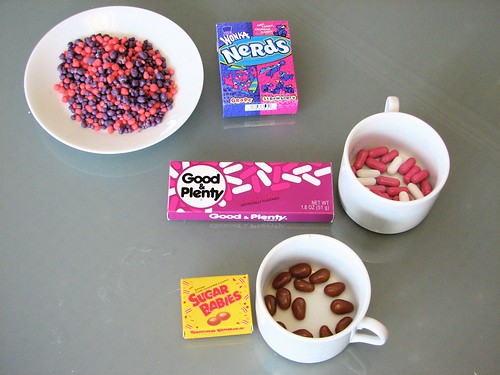
Supposing that you’re less than omnivorous, you may not always be in the mood to eat insects. You might be vegetarian, or your religion tells you that you shouldn’t eat insects, or maybe you’re just on a strict non-bug-eating diet. Here are a couple of simple hints to help you identify foods that contain bugs, illustrated with a few common supermarket candy items.
(Note: This article has been moved here from Instructables, where it was previously published. It has also been slightly updated.)
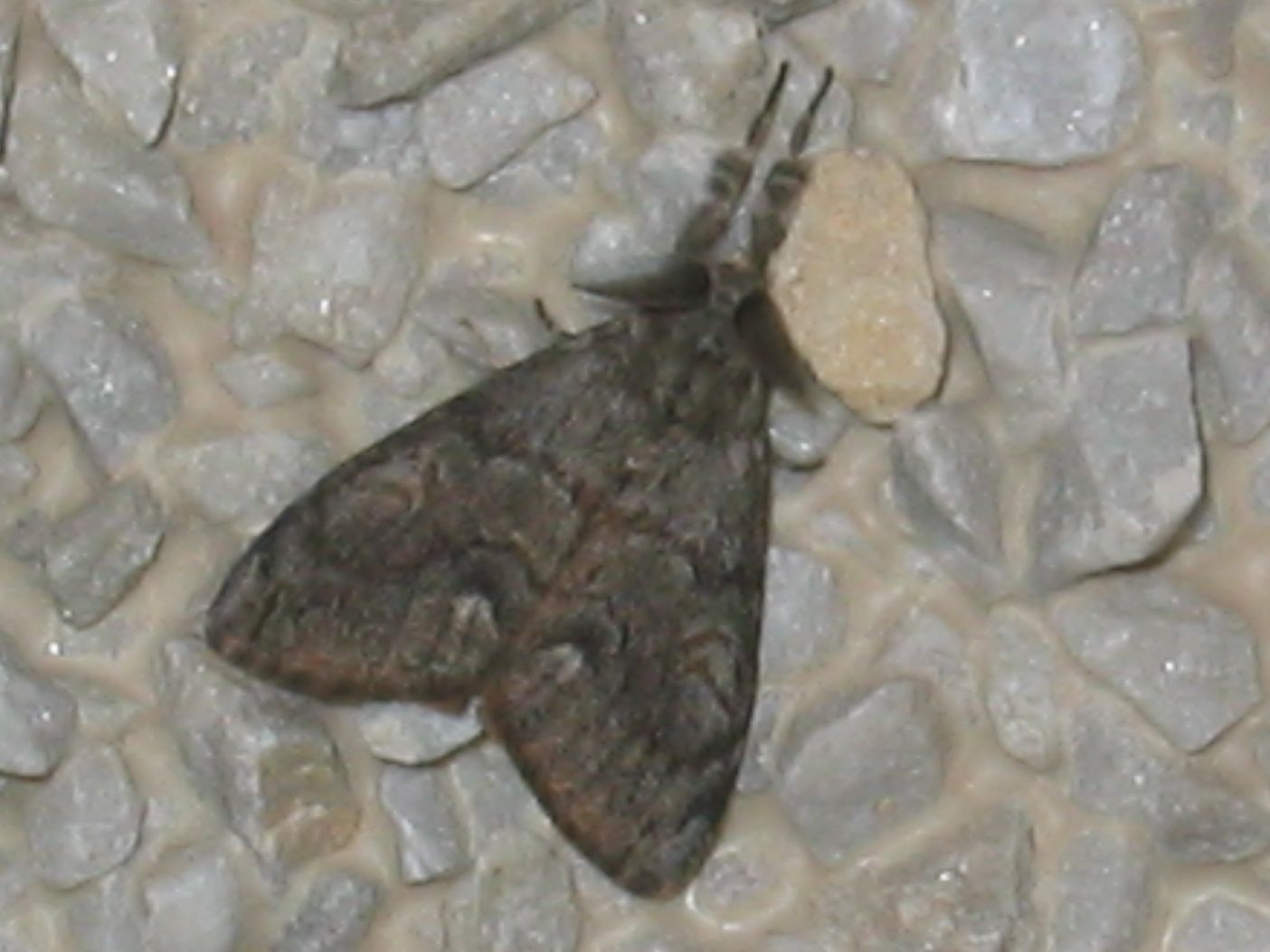
Prologue: This a moth. Don’t eat it.It seems that some people will eat just about anything. If you are of the highly omnivorous persuasion, congratulations. This story won’t be any help at all, so please run along and eat some cute animals of some sort.Let’s be perfectly clear about this: this article is titled “How to eat fewer insects.” It is meant to help you eat fewer (not zero) insects IF that is your choice. We do not make any judgements or claims about whether, when, or how many insects you should eat. Yes, lots of people like to eat insects, and lots of people don’t like to eat insects. However, please keep in mind that it is not the topic under discussion here and don’t leave a comment about how much you love to eat insects. (We get it already, okay?)If you’re still interested, let’s look at a box of candy next:
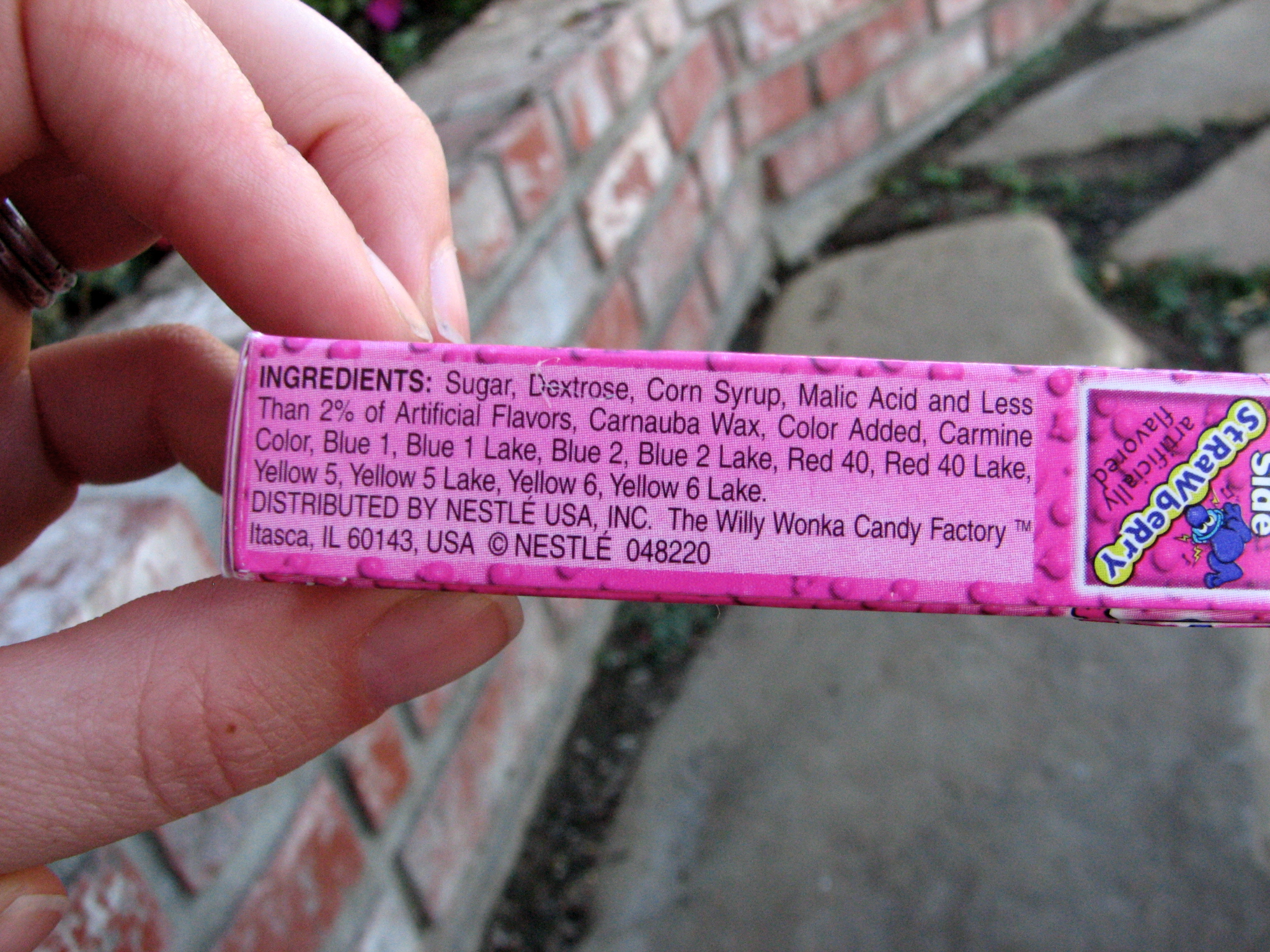
The big secret: Look at the ingredients.
Just about every kid raised in the US in the last thirty years has eaten these. And yet, just look at what’s in the list of ingredients: Carmine. Carmineis a pigment produced by cochineal insects, which are ground up and purified to produce the pigment. A less purified form of the pigment, called cochineal extract, is also sometimes found in foods.Carmine, also called carminic acid, is a powerful red pigment that is found in a wide assortment of places where crushed insects (presumably) do not belong: Yoplait strawberry yogurt, Tropicana grapefruit juice, maraschino cherries, and it might make you question just why pink lemonade needs to be pink.
[Update: Campari used to be on that list, but we have received confirmation
that “Campari ceased using carmine in the vast majority of its worldwide
production (including the US) in 2006.”]
Because carmine is a “natural” (not synthetic) additive, government regulations on its labeling are lax, which is quite surprising since some people may suffer severe anaphylactic shock upon eating these or other insects. Not all products containing carmine label it at all, some merely say “added color,” “natural color” or (also surprisingly) “artificial color.”
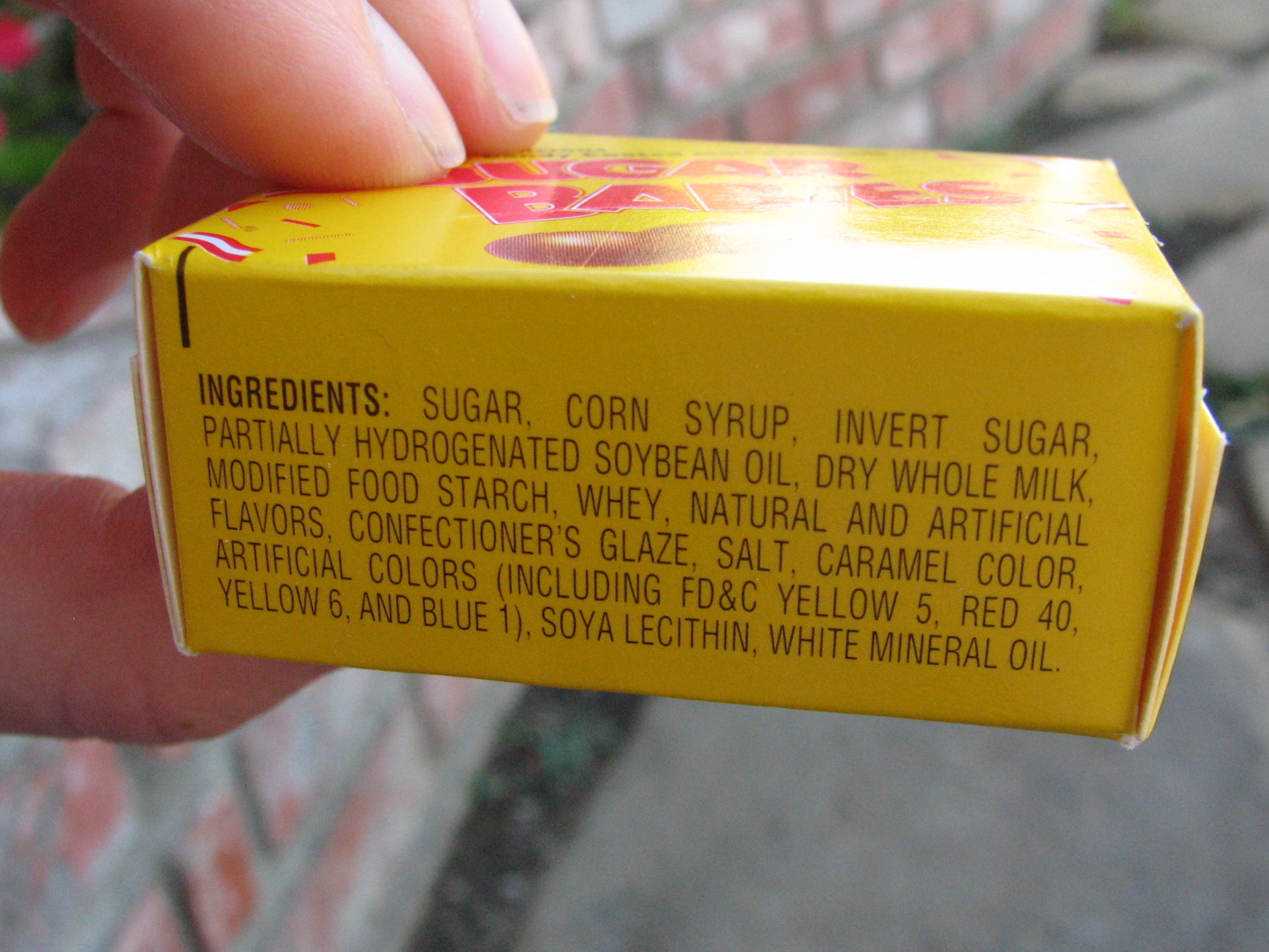
Another lovely euphemism
Confectioner’s glaze, food glaze, resinous glaze, and pharmaceutical glaze are pretty names for shellac, the excretion of a certain type of beetle. While perhaps that’s not so very different from honey, the difference is that shellac is harvested beetles-and-all. (Yum!)(Confusing the issue is that a corn protein, zein, may also be labeled as “Confectioner’s glaze.” While I’ve seen a great many companies that make and use shellac-based confectioner’s glaze, I have yet to see any that use a zein base. If you know of any examples of zein-based confectioner’s glaze, please leave it as a comment!)
 <
<
The best of both worlds
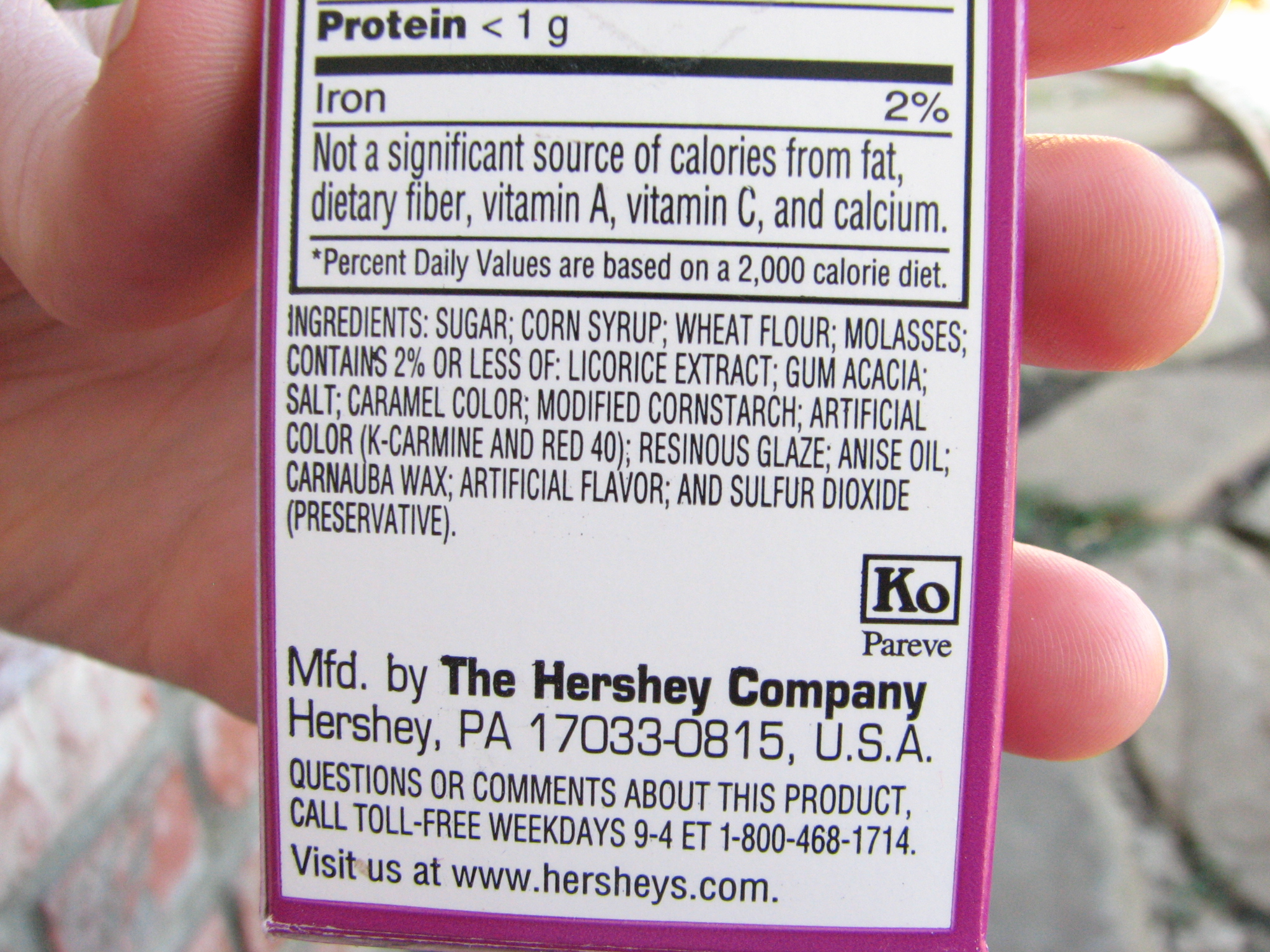
I have fond memories of eating Good & Plenty as a kid; however, those were somewhat colored (pink?) by recently noticing what’s on the label: carmine and shellac, this time disguised as “RESINOUS GLAZE.”Here’s what really gets me: That little “kosher” indicator below the ingredient list. According to the Wikipedia article on kosher diets, “The consumption of insects involves five violations of Torah law, so according to Jewish Law it is a greater sin than the consumption of pork.”
Religion and religious law aside, many people would agree that eating insects is worse than eating pork. Exactly what are these Hershey folks trying to pull here? (And as long as we’re kicking The Hershey Company while they’re down, what’s with that grainy texture in Special Dark?)
Notes Added: (1.) No, wikipedia is not the final authority on jewish law– nor is anything else (that isn’t subject to interpretation). (2.) Even grasshoppers aren’t necessarily an exception. (3.) We don’t eat a kosher diet and aren’t experts. This kosher thing on the boxes just strikes us as weird, that’s all. End of story. (4.) Dude, END OF STORY, okay?
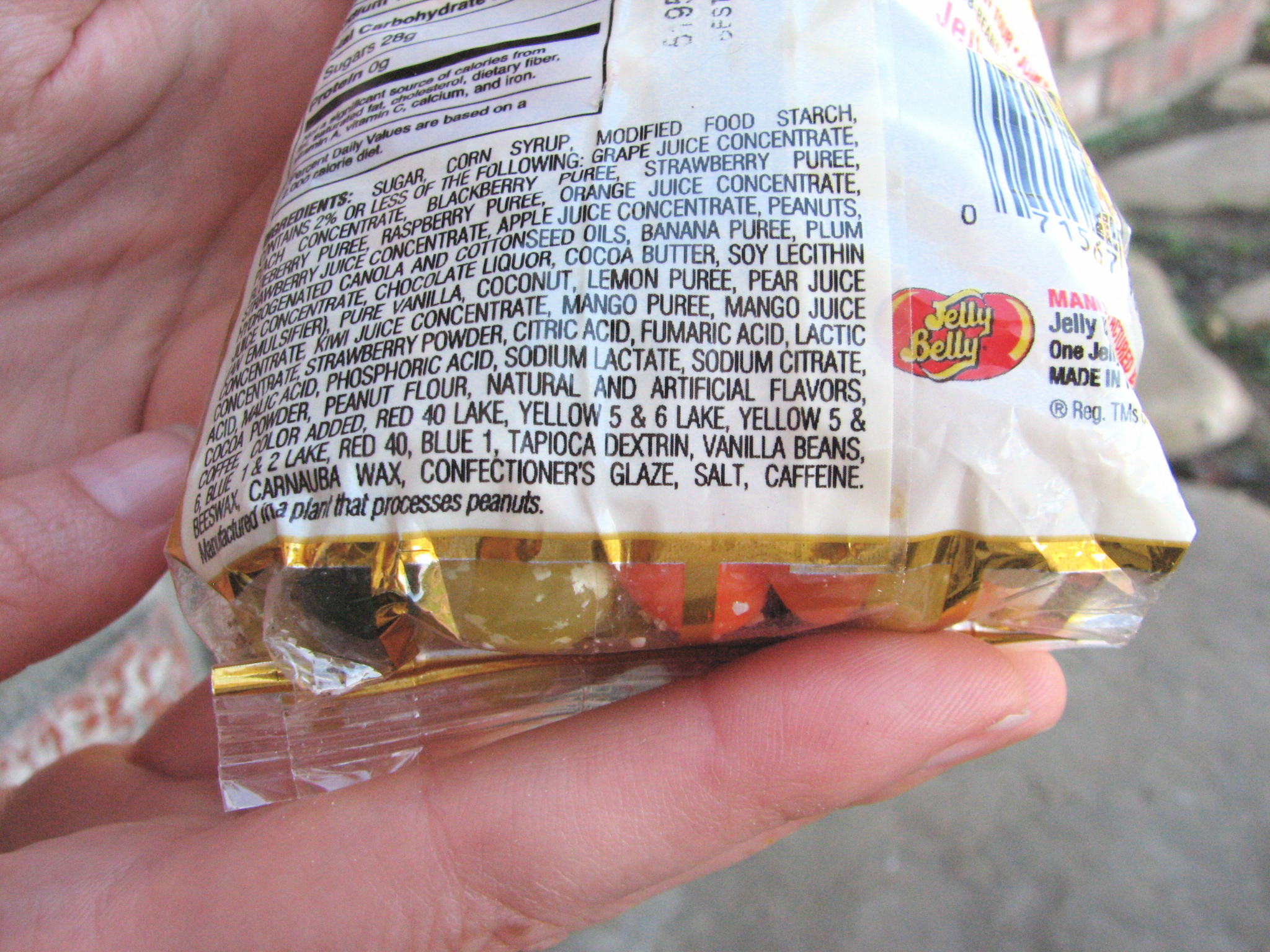
What’s in jelly beans?
Jelly Bean is my cat. She eats the bugs that she sometimes catches. Likewise, the jelly beans pictured here contain insects. Look at the last line of the list of ingredients: Confectioner’s glaze. The list of ingredients is extremely long, but cut the guys some slack; that’s a comprehensive list for the ingredients of a lot of different flavors of beans.Interestingly, these are also labeled kosher. Even more interesting, they are certified by the very same folks that certified the Good & Plenty. (I see a pattern here. Look for certified kosher bacon next year!)
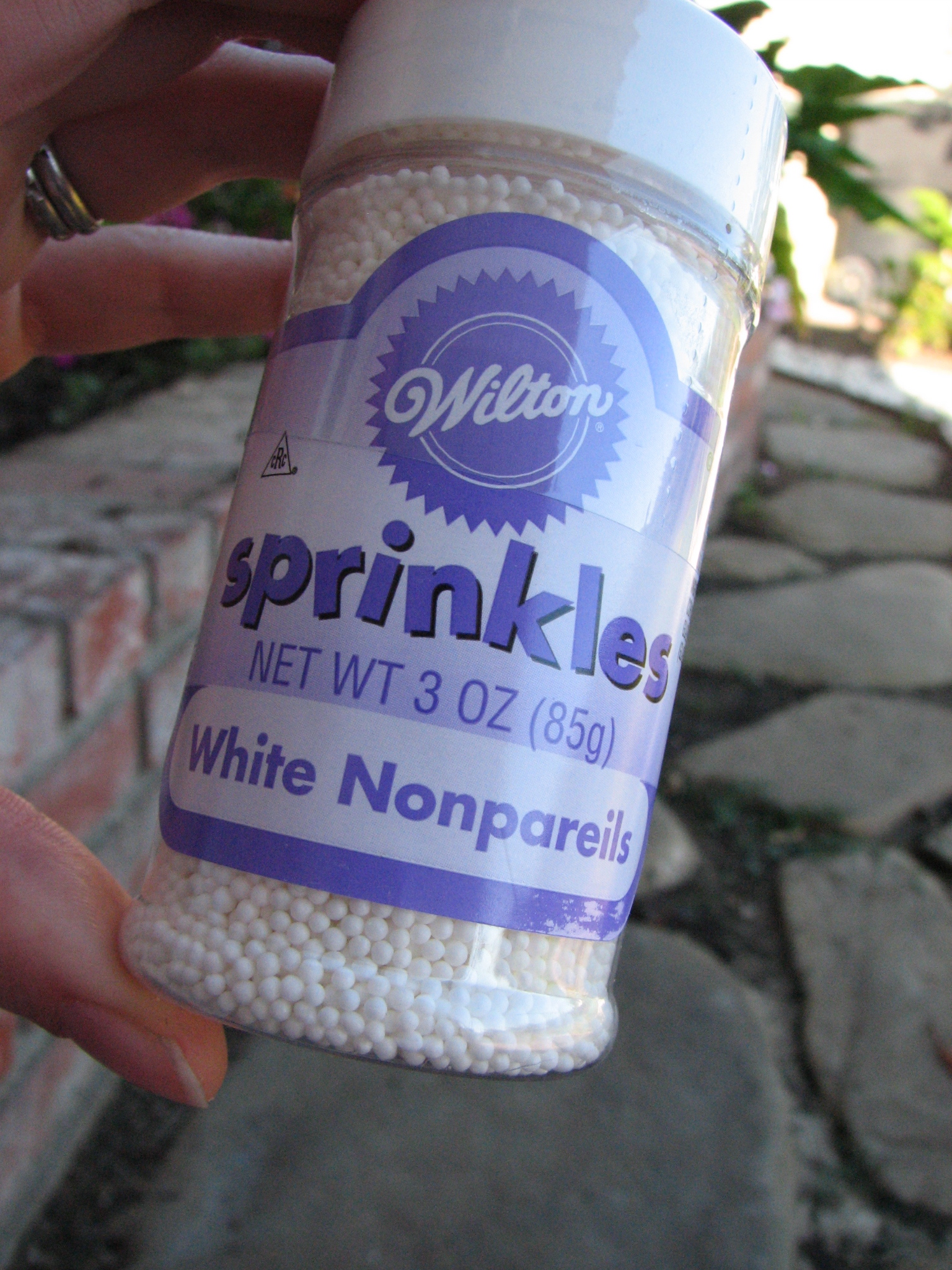
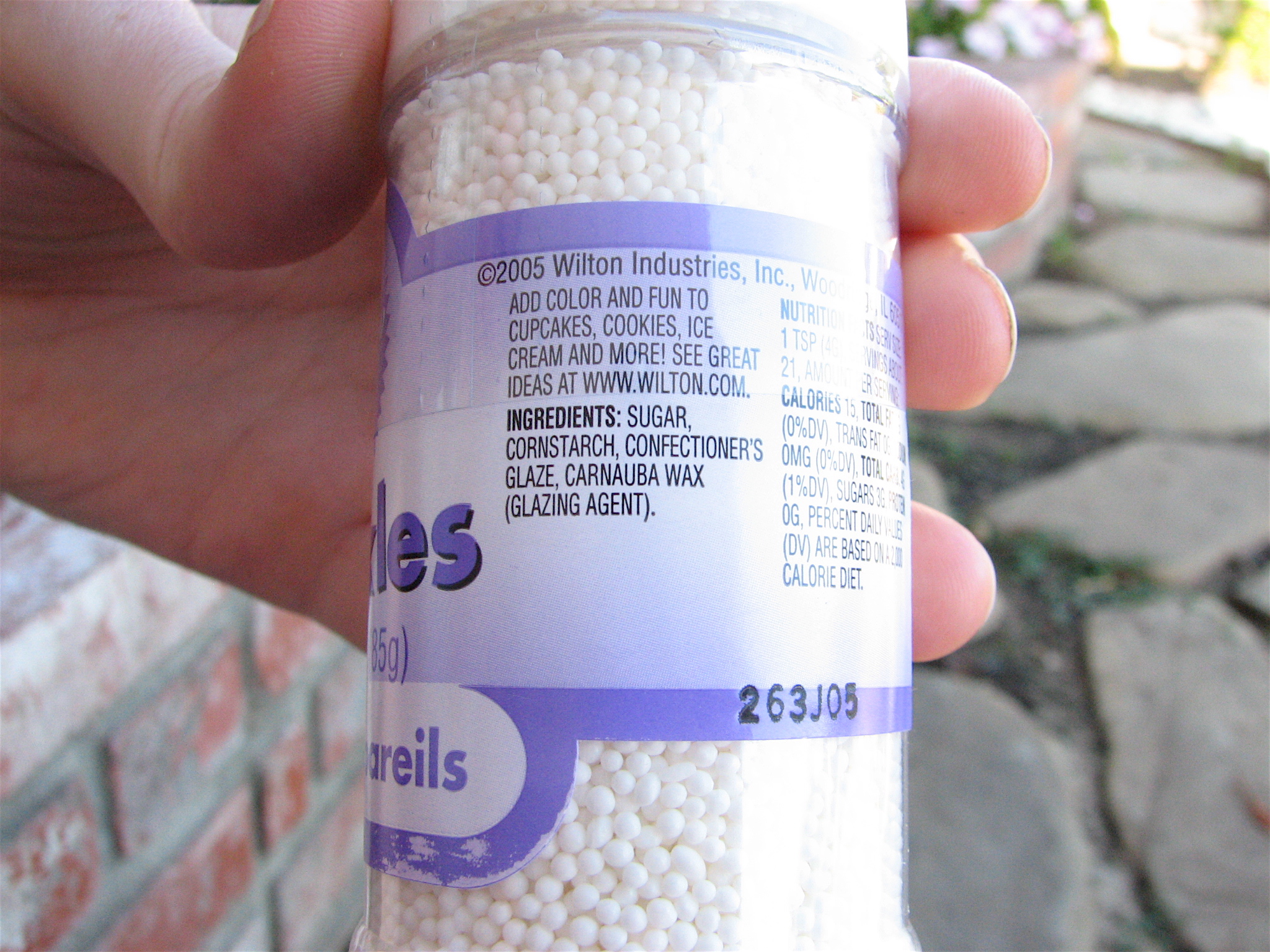
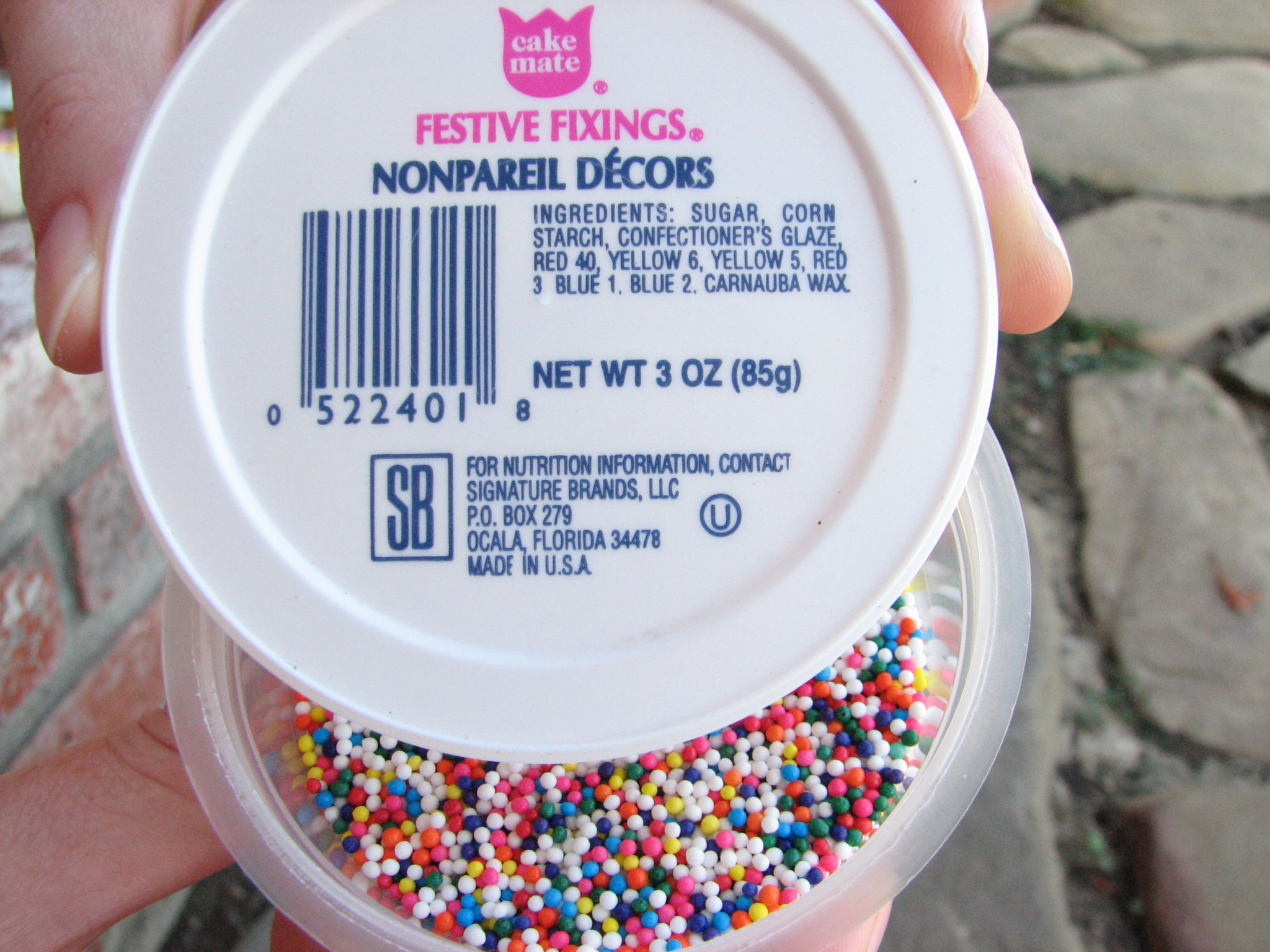
What’s in other confections?
The degree to which ingredients like carmine and confectioner’s glaze are integrated into things that we eat is quite surprising. Once you know what to look for, you’ll start noticing them all the time.Hopefully, you’re now armed just a little bit better to protect yourself against unwittingly eating insects.

One has to wonder how much processing, biological or not, insects (or any other food product) must pass through in order to surrender its previous identity and become something entirely else. When does the bug stop being a scale bug and start being carmine? Is wine still a grape? Was potted meat ever actually meat? From a strictly food-science point of view, there may be some threshold states that are readily defined (grass stops being grass and starts being beef when it crosses the wall of the small intestine) but theologically speaking, for food law purposes, there must be some spiritual quality of uncleanliness that taints the end product, yes?
I hate semantics. But I still like Good-n-Plenty’s.
— Dave
If an insect is chemically processed in a factory to produce a dye, it is considered "eating an insect". But if an insect dies, falls on the ground, decomposes, and becomes constituent molecules in say, cauliflower, this is not considered "eating an insect". This seems arbitrary and illogical to me. This is why I am omnivorous; another reason is that my biological organism is designed to be omnivorous, but I won’t go into that. I don’t worry much about what being previously owned the molecules I use. I worry more about which molecules I use. But that’s just me.
Another item of interest is "formic acid."
I’m not positive what it is made from currently, but around the 80s there was an effort to make everything ‘less chemical sounding’ in the food industry.
Lots of these chemicals have a specific function, as you noticed. Coloration is one, also as anti-foaming agents, stiffening agents (think whipped egg white), surfactants and other properties.
So in the 70s when people were wigging out about ‘formic acid’ and other signs of excess chemicals, "Big Food" went looking for replacements. Instead of vat-made formic acid (that can be made to an insanely high purity), we now have ground ants. Yes, they aren’t just thrown in whole. But separating the acid from the solids and the other liquids inside an ant is (obviously) not done on an ant-by-ant basis. They’re all ground to a paste and separated… chemically. And it doesn’t even get the dignity of a place on the label normally – it is ‘Natural Flavoring.’
Organic too.
The word natural has no meaning as to the properties of the product, Why don’t you have a glass of radon water it’s natural you know. The word organic runs the same way, "oh no I ate the ricin pill by mistake." said a fool, "Don’t worry it’s organic." said the other.
Ah, but where are you going to find organic radon, pray tell? ;)
— Dave
The idea of anything truly being *not* natural is almost as weird. To the extent that things like bird nests and termite mounds are natural– things built by animals on earth– then so are sand castles, (so-called) synthetic diamonds, jumbo jets, and laptop computers. It’s all natural. =)
—
Windell H. Oskay
drwho(at)evilmadscientist.com
http://www.evilmadscientist.com/
bugs bugs bugs. Bugs in everything – http://vm.cfsan.fda.gov/%7Edms/dalbook.html
I know this sounds disgusting but natural food coloring is probably better than synthetic. Synthetic food colorings such as Erythrosine (red#3) are suspected carcinogens.
If you are really concerned about this, don’t eat garbage such as candy or drink cool aid and orange pop etc.
Humans evolved to eat insects. They provide a very good balance of nutrients. From NGS:
Hamburger, for example, is roughly 18 percent protein and 18 percent fat. Cooked grasshopper, meanwhile, contains up to 60 percent protein with just 6 percent fat. Moreover, like fish, insect fatty acids are unsaturated and thus healthier.
Insect farming is arguably much more efficient than cattle production. One hundred pounds (45 kilograms) of feed produces 10 pounds (4.5 kilograms) of beef, while the same amount of feed yields 45 pounds (20 kilograms) of cricket.
http://news.nationalgeographic.com/news/2004/07/0715_040715_tvinsectfood.html
It’s a matter of perception.
They aren’t ‘bugs’. They’re ‘features’. =}
Like so?
—
Windell H. Oskay
drwho(at)evilmadscientist.com
http://www.evilmadscientist.com/
There are wasp heads in Fig Newtons, too. I wish I were kidding.
so if you are allergic to wasps, will you be allergic to these? my son is allergic to wasps. should i be worried? are they in other food products?
Anything certified with that [Ko] may certainly have insect products.
The last two photos show products with OU and CRC kosher certifications. They are strict when it comes to using insect products — they just don’t allow it. (A search for carmine or cochineal on the oukosher.org website will yield a few articles on the subject.) So, I’m pretty certain that the confectioners glaze in those sprinkles are purely vegetarian.
I agree with this. The Union Of Orthodox Rabbis is THE heavyweight champ in kosher certification. You can buy off lesser certifications, but not the circled U. Just today I bought a bag of candy corn with their mark. Most candy corn contains confectioner’s glaze. A quick check of the ingredients on the certified kosher bag turned up confectioner’s glaze as well. I searched the web, expecting to find the bag had been certified by mistake. Now, I’m sure the glaze in question is zein. I will now eat the candy corn.
Found this interesting tid-bit on the Straight Dope.
http://www.straightdope.com/classics/a3_118.html
I am also highly allergic to wasps and a whole lot of other things, many of which are food related. It’s a ocndition, in my case, called "angioedema" which means swelling beneath the surface of the skin. Hives are one form. Mine unfortunately takes place in the tongue and lips so can be life-threatening, the throat eventually closes up totally (takes 20-30 minutes) which of course causes DEATH! There are a lot of triggers, food coloring and additives are just a few. I was diagnosed back in 2000, told how to treat it (benedryl capsule broken between teeth, spread powder over and under tongue) takes care of it. I also take zyrtec and benedryl every night.
Your son may be allergic to many things besides wasps; as I’ve gotten older I’ve become more allergic to more things. I’ve written an article on this (which hasn’t been accepted for publication yet) but will send you a copy if you wish. It has detailed lists of foods to avoid.