
Our AxiDraw MiniKit was recently reviewed in IEEE Spectrum.
Thank you to Stephen Cass for the review! We’re glad you have enjoyed it.


Our AxiDraw MiniKit was recently reviewed in IEEE Spectrum.
Thank you to Stephen Cass for the review! We’re glad you have enjoyed it.

I was recently interviewed for HackSpace Magazine and just got the copy in the mail! It’s a meandering conversation about how Evil Mad Scientist got started and covers some of the wide variety of projects we’ve worked on.

In the same issue, there’s a clock kit review that is very complimentary of the Alpha Clock Five and mentions the Bulbdial Clock Kit which they reviewed in a previous issue.

Thanks to Hackspace for the opportunity to ramble on about the things we love!

It has been a great season for plums, so I’ve updated the lemon plum jam recipe that I’ve been gradually refining over the years. The new basic recipe is below along with other tips I’ve gathered.
Ingredients: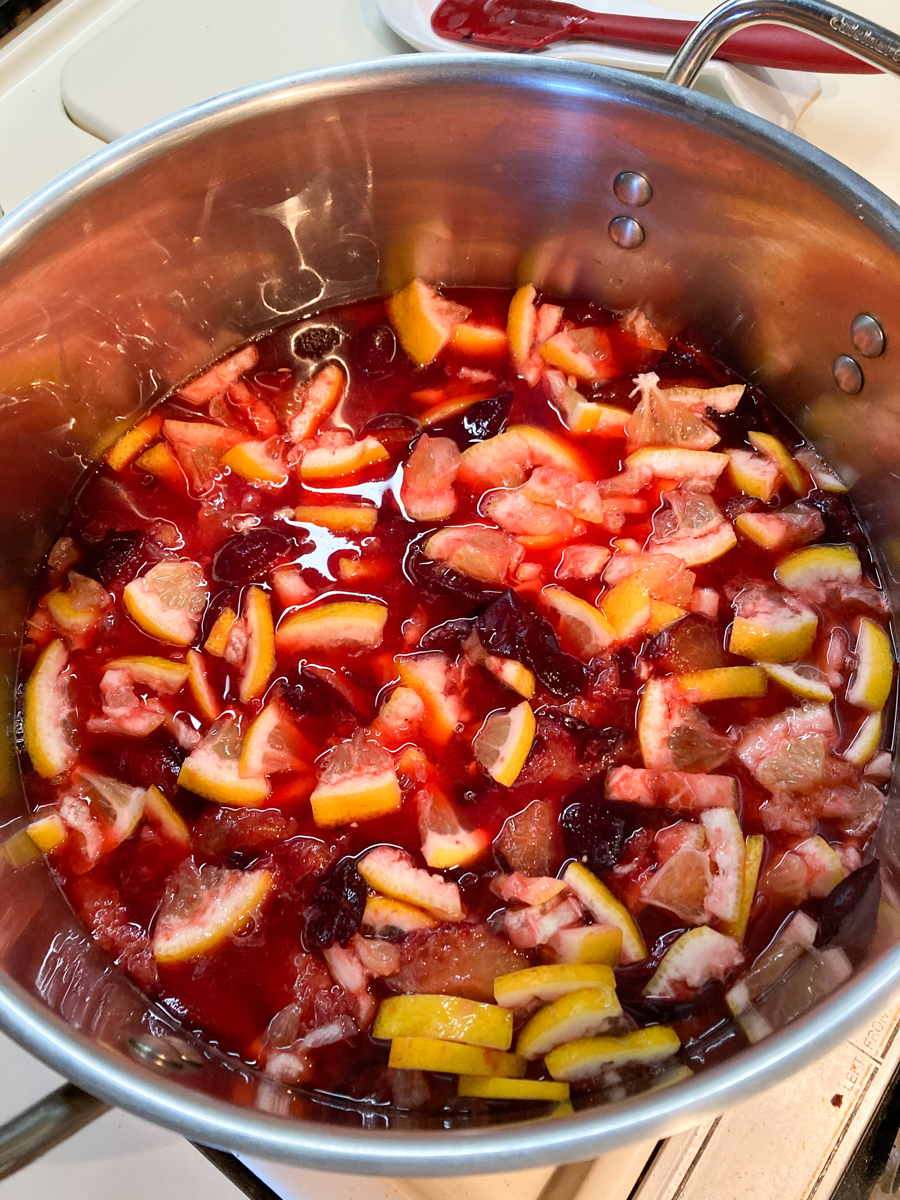
Procedure:
Put the plums, lemon pieces and lemon juice in a sauce pot and cook, stirring occasionally, until the fruit starts to soften. At this point, you can use a potato masher to crush the fruit pieces for a more even consistency.

Add sugar and cook, stirring regularly, until it thickens. You can test the consistency for doneness by putting a spoonful in a cold dish in the fridge for a few minutes. After chilling, it’s ready if it holds its shape a bit when you move a spoon or finger through it. You can also follow your favorite canning procedure for longer term storage. Makes about 4-5 pints.
Tips and techniques:
For cutting up the fruit, I like to put a small cutting board inside a baking sheet. This catches the juice much better than any cutting board with a moat that I’ve ever used. It makes cleanup much easier, and you can pour the juice from the baking sheet into the cooking pot.
Most jam recipes call for approximately equal quantities of sugar and fruit. I prefer my jam a little more tart, so I’ve revised down the sugar.
I’ve stopped adding water to my preserves. It cooks a little faster without as much liquid, and there’s enough liquid in the lemon juice to get it started cooking even if the fruit isn’t covered.I also often leave the lemon peel out for the preserves I make (other than marmalade). The peel gives it a stronger lemon flavor, but keeps the jam from gelling as well. If you want a thicker consistency that gels a little earlier, you can leave the peel out. If you want zingier lemon flavor, leave the peel on and cook a little longer.
During fruit season, I try to preserve as much as I can by making jams and chutneys, but I usually run out of time and end up cutting up the last of the crop and freezing it. Using frozen fruit for jams seems to work just as well as fresh. I measure out 8 cups and store it in a one gallon freezer bag. Then it’s ready to pull out start a batch of jam. I also recently revised my Plum Chutney recipe, and it starts with 8 cups of fruit as well.
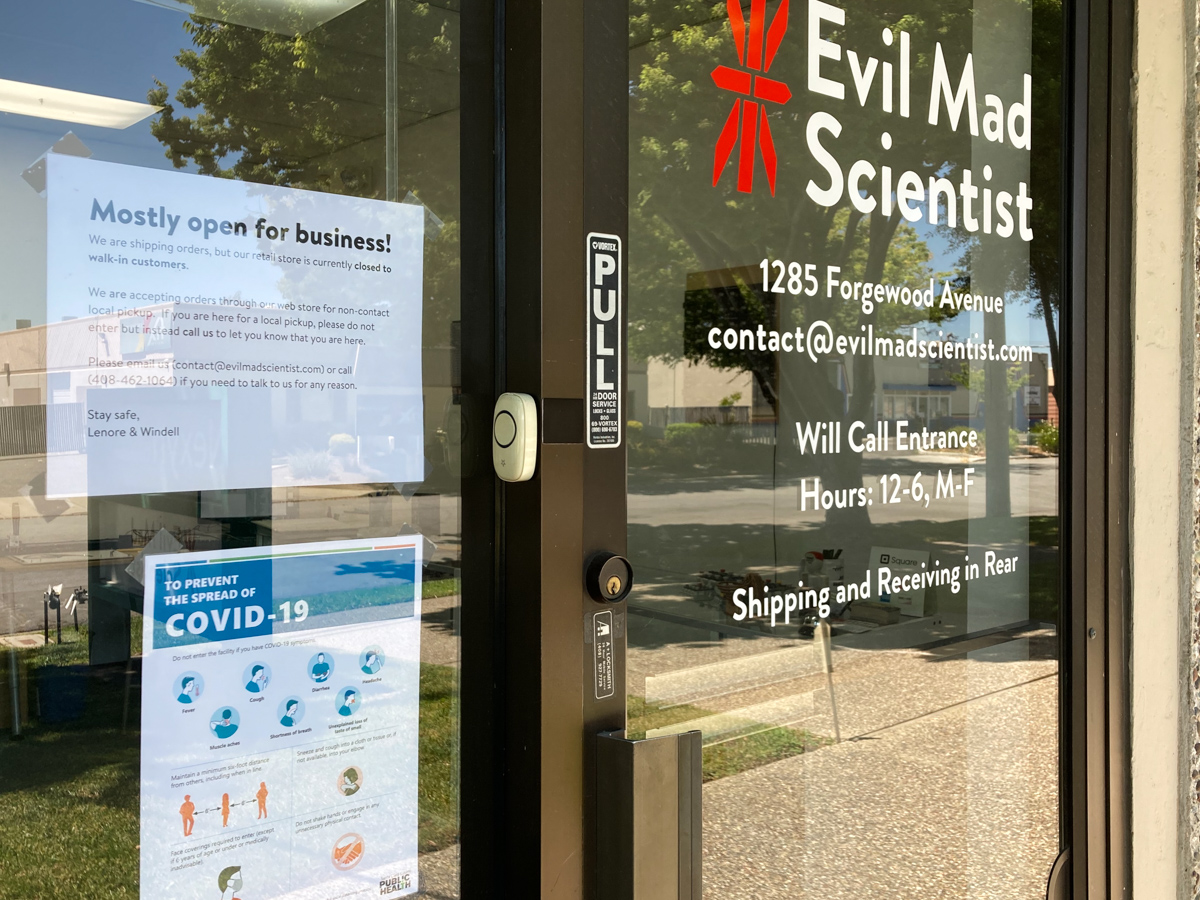
A couple of months ago, we wrote about our status under our county’s shelter in place order and it’s time for an update! The situation has been gradually changing locally and the newest guidelines allow for us to bring our employees back to work. With their help, we’re starting to ramp production back up and that feels great.
Our Sunnyvale retail location will remain closed to walk-in business for the time being, but we are offering no-contact local pickup for orders placed online.
We have been excited to be able to help out on a few COVID-19 research projects during this time. We want to reiterate that if your order is related to health care or related to COVID-19 research, please let us know so that we can prioritize and expedite your order.
We’re grateful to all of our customers and community for being so understanding and helpful during this time.

I recently had the pleasure of talking with Sven of the KidsLab podcast and the Evil Mad Scientist episode is now live!
KidsLab is “a podcast for parents, educators and everybody passionate about #STEAM education.”

Heather Seeba wrote in to let us know about a gathering she has hosted around the EggBot.

The EggBot brunches have been big hits with my friends. Seeing the fascination and excitement showing new people my EggBot has to be my favorite part of playing with it. The inspiration came when I took the ‘bot to my (engineering) office so colleagues could make eggs for their kids: people were skeptical then couldn’t stay away. Thus for an EggBot brunch, invite awesome nerdy people over, feed them, and gather round the EggBot.
Heather told us about her events earlier this year, before the advent of physical distancing. Many of her suggestions can be adapted for family groups living together and we’ve added some suggestions for remote attendees as well.


Some recommendations for an EggBot brunch include:
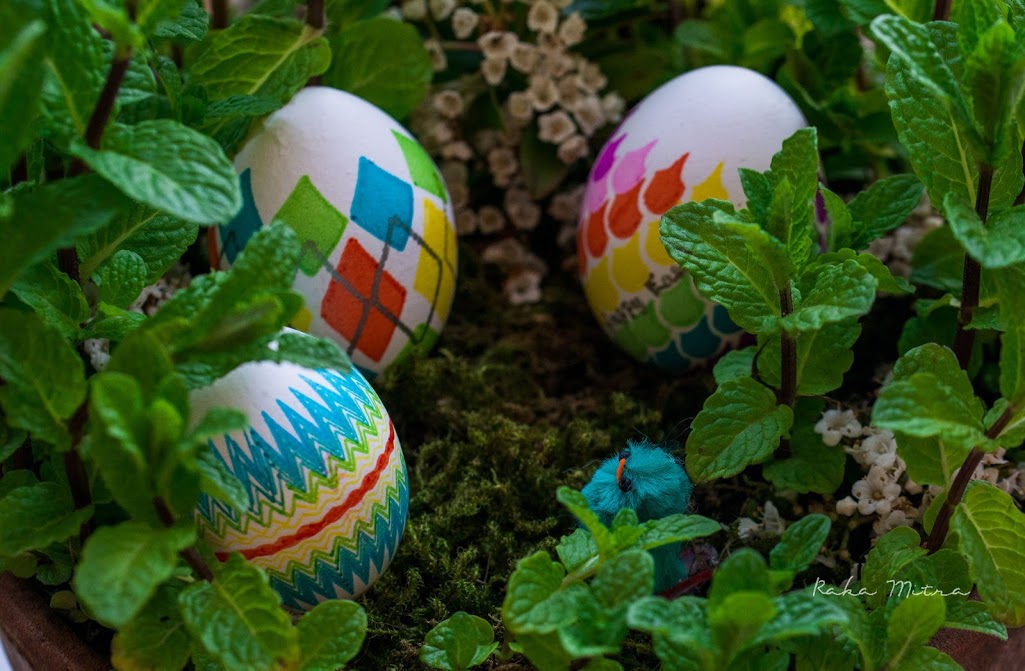

The photo booths can be used even for eggs decorated without the EggBot!

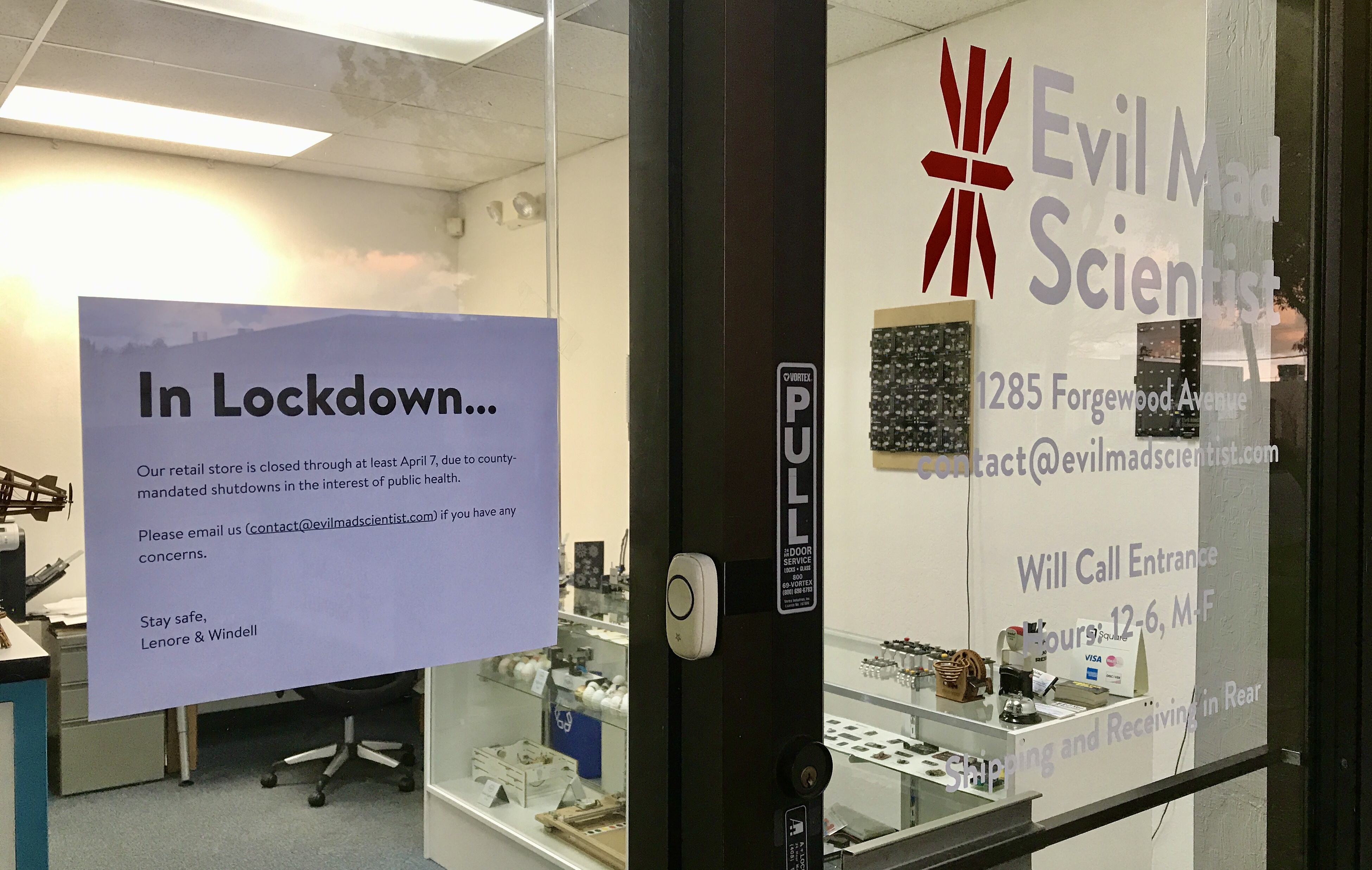
We started Evil Mad Scientist Laboratories in 2006 as a “personal project blog”, to capture, organize, and share some of the things we do for fun. It has evolved over time to become a resource for our customers as well as a way for us to share interesting and educational information from a variety of sources. It also gradually become our livelihood, as the hobby projects started to take over more and more of our lives.
Right now, we want to let you know where we’re at. Here in Santa Clara County (the south end of the San Francisco Bay Area), we are under a Shelter in Place order due to COVID-19. Windell and I are working from home, and checking in on Zener at the shop regularly. We’re bringing work home with us, and have even been able to start shipping some orders again. Our employees cannot come in, which means that assembly, kitting, packing and shipping have slowed to what the two of us can do.
We’ll be doing our best to communicate with our customers about their orders and we’re doing tech support and customer service as usual. Orders will likely be going out every few days instead of every day. Some items will not be restocked as quickly.
As we work through these details, there are a lot of resources here on the blog that may be useful to all of you doing your part by staying at home.
We have many tutorials for projects that can be made from things you can find around the house. We have lots of cooking projects, some of which are also math or science projects. We have a series of basics articles you may enjoy for people getting started in electronics. And our linkdumps have lots interesting links to occupy your time.
We want you all to stay safe and healthy! Please reach out to us if you have questions, concerns, blog post ideas, or pictures of projects that we may have helped you instigate!
Thank you all for being such a great community, such amazing customers, and sharing with and helping each other so generously!

The tenth annual Open Hardware Summit will be in New York held online on March 13. I’ll be participating in a panel looking back at the past ten years of open source hardware and looking forward to the next decade as well. The schedule is filled with great speakers and I’m looking forward to seeing so many friends, old and new.
Note: the session has been turned into a podcast so you can listen at your leisure!
Edited March 11 to reflect the change to online.
Edited March 18 to add podcast link.


