Category Archives: EMSL Projects

StippleGen: Weighted Voronoi stippling and TSP paths in Processing

grace2k-2

One of the perennial problems that we come across in a variety of contexts, including CNC artwork and producing artwork for the Egg-Bot, is the difficulty of creating good-quality toolpaths– i.e., vector artwork representing halftones –when starting from image files.

One of the finest solutions that we’ve ever come across is TSP art,” where the image is represented by a single continuous path. You can generate a path like this by connecting all of the dots in a stipple diagram. Designing a route that visits each dot exactly once is an example of the famous Travelling Salesman Problem (or TSP). From the standpoint of toolpaths (for the Egg bot and most other CNC machines), a “TSP” path is even nicer than stipples, because little or no time is spent raising and lowering the tool.

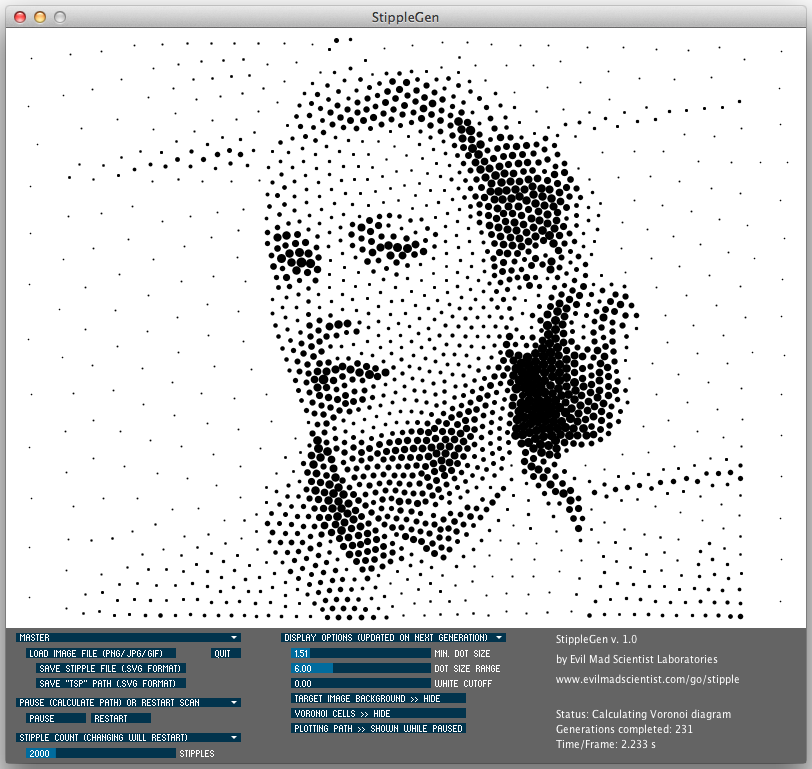
Today we’re releasing a new program, StippleGen, which can generate stipple diagrams from images, using Secord’s algorithm. StippleGen saves its files as editable, Eggbot-ready Inkscape SVG files, which can in turn be opened by other vector graphics programs, or re-saved as PDF files for use in other contexts. It can also generate a TSP path from the stippled image, and either save that path as an SVG file or simply use that path as the order of plotting for the stipple diagram.

StippleGen is free and open source software, written in the Processing development environment. It comes ready to run on Mac, Windows, and Linux, and it is available for download now.

Continue reading StippleGen: Weighted Voronoi stippling and TSP paths in Processing
OSHWA – The Open Source Hardware Association -Coming soon

oshwlogo

The Open Source Hardware Association is Coming Soon!

OSHWA will be a non-profit
organization (status pending) working to spread the love of open source hardware. We’re still deep in the process of
working out all the details, but please bookmark oshwa.org, and check back there for
upcoming news.

OSHWA’s first project is a survey, “to better understand the Open Source Hardware community.” Catarina Mota has lead this project and created a survey along with David Mellis and John De
Cristofaro. The aggregate and anonymous results will be made publicly available in May. If you’re involved with the OSHW community, we’d invite you to take the survey.

Urban scientist: An unusual spider

Red-backed Jumping Spider 7

Red-backed Jumping Spider 3

It’s always good to keep your eyes open, ready to see new things. I came across this striking not-particularly-small spider with a bright red velvety abdomen, just hanging out on the concrete side of a building here in Sunnyvale, California.

I’ve never seen one of these before! How might you go about identifying it?

Continue reading Urban scientist: An unusual spider

Playtime – Videogame mythologies

Game of Life 15

The Maison d’Ailleurs (translated as “House of Elsewhere”), is a museum of science fiction, utopia and extraordinary journeys in Switzerland.

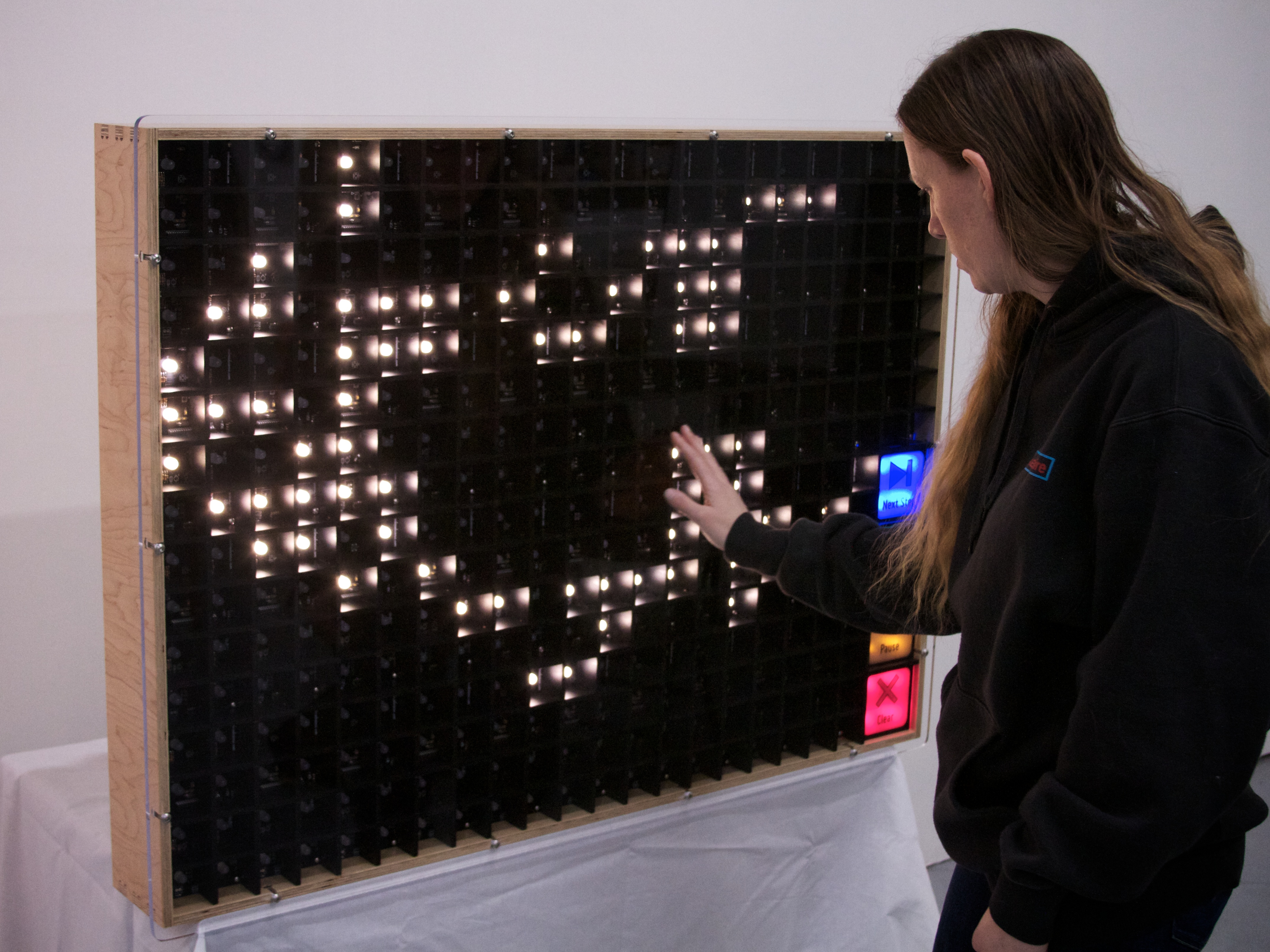
A new version of our Interactive Game of Life exhibit, shown above, is part of their new show, Playtime – Videogame mythologies. The show is devoted to the culture of video games, and exploring how the relationship between play, the various manners of gaming, and technology interrelate.

Playtime – Videogame mythologies runs through December 9, 2012 at Maison d’Ailleurs.

Here is a short video (YouYube link here) showing off the new museum display:

We’ve also just posted an extended introduction to this project here in our post about our new Interactive Game of Life kits.

Interactive Game of Life Kit

Game of Life 6

Game of Life 4

Game of Life 12

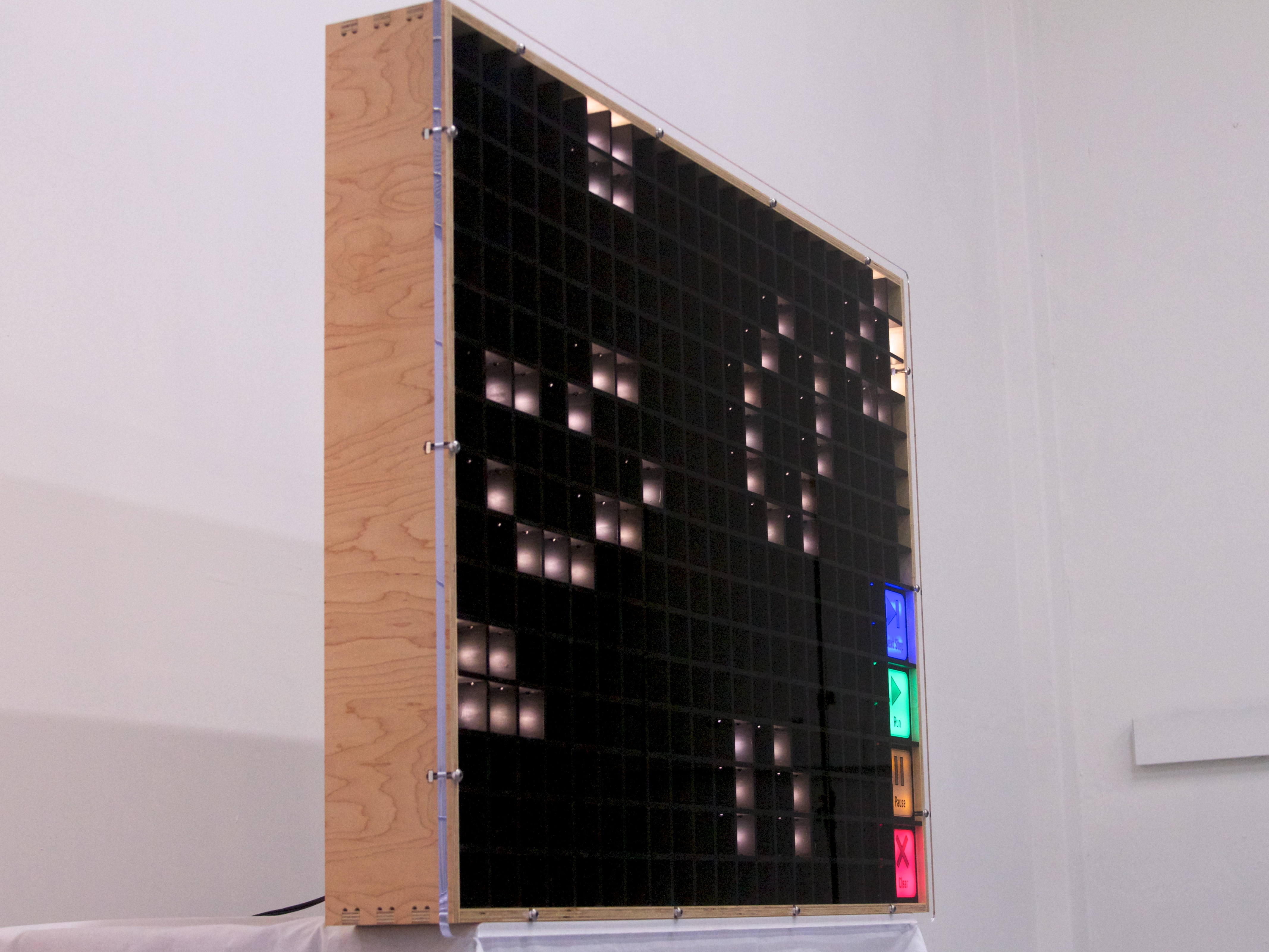
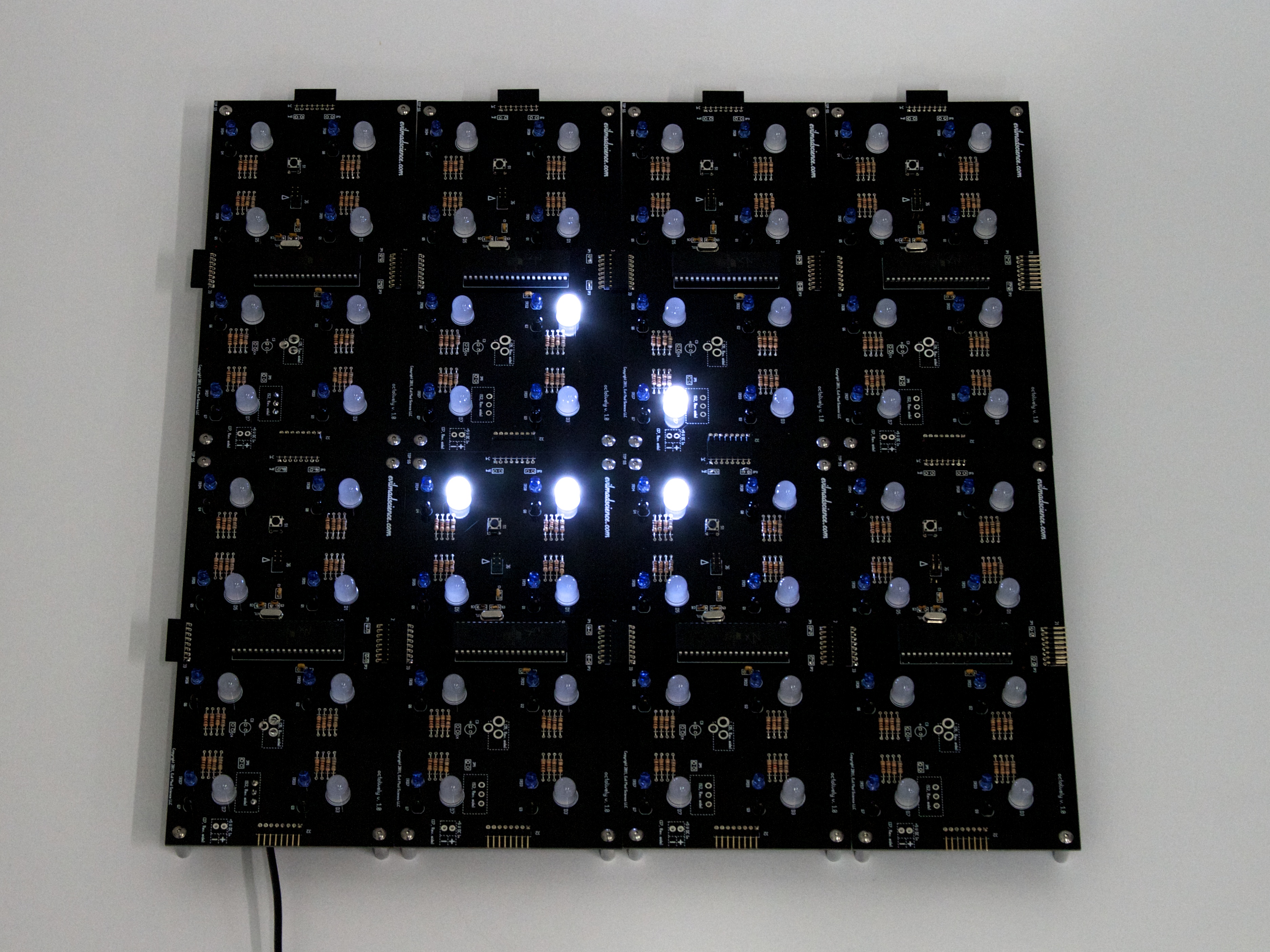
Two years ago we designed an interactive exhibit of Conway’s Game of Life for the San Jose Museum of Art. The hardware that we used for that project eventually became the basis for our Octolively interactive LED kits.

We’ve recently had occasion to revisit our Game of Life project, and to build an all-new version of the museum exhibit. Along the way, we’ve rewritten the firmware from scratch and added a number of features. And today we’re pleased to announce the result: our new Interactive Game of Life Kit.

Continue reading Interactive Game of Life Kit

Basics: Open Collector Outputs

SN7407N

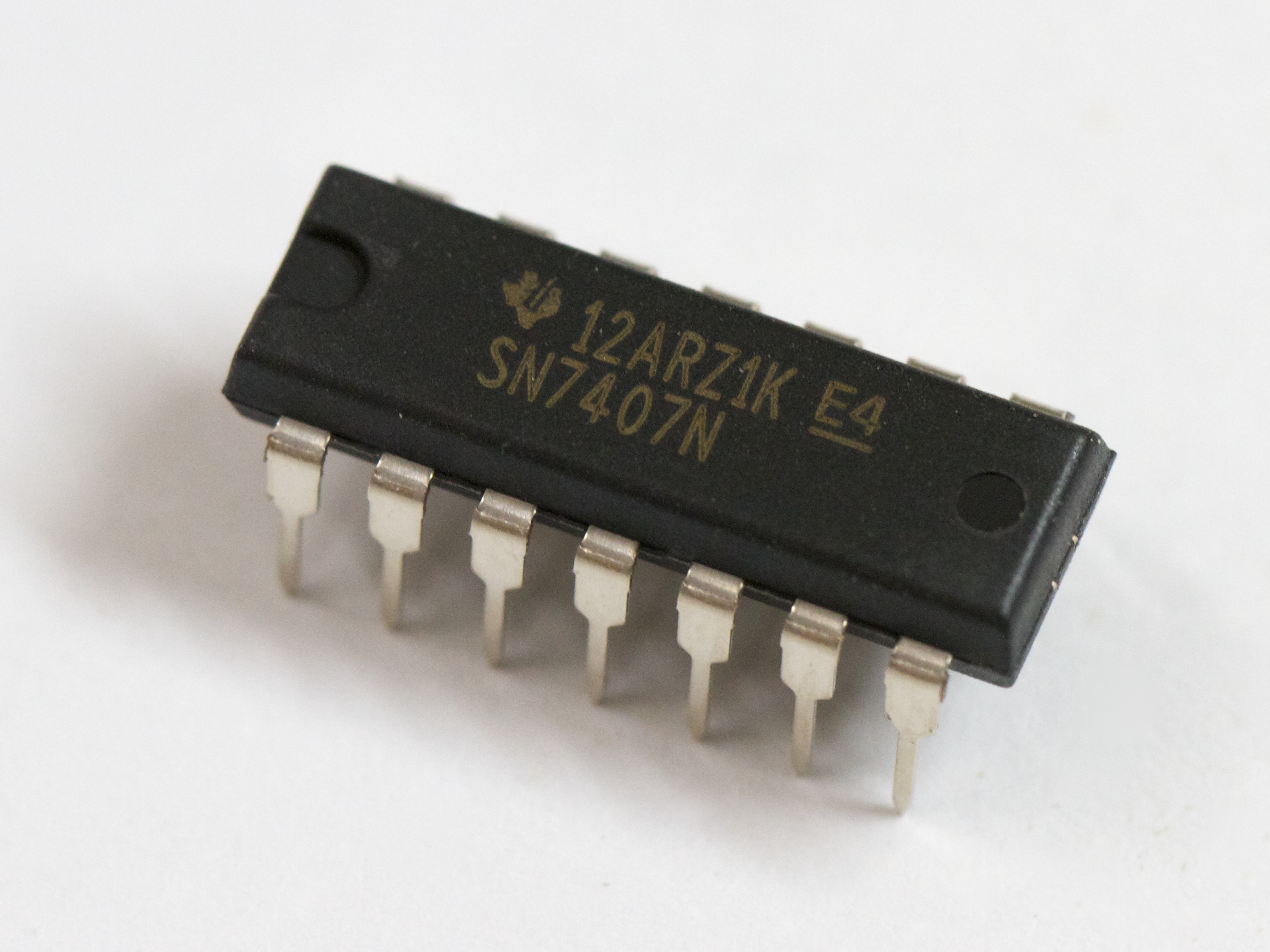
One of the joys of working with basic digital electronics– and logic gate ICs in particular –is that it almost works like building with a set of Lego blocks: One output goes here, which connects to the next input here, and so forth until it does what you wanted.

If you’ve played with chips like these, you’ve probably also come across chips with “open collector” outputs. And if not, they’re worth knowing about. Open-collector outputs form the basis of a number of clever tricks for level-shifting and interfacing between different types of logic, and from logic to other types of electronic circuits.

In what follows, we’ll work with the SN7407N, which is one of the most basic ICs with open-collector outputs. We’ll discuss what it means to have “open collector” outputs, and show some of the different ways that they are used. Continue reading Basics: Open Collector Outputs