Category Archives: EMSL Projects

Weekend Projects with Bre Pettis: Make a Joule Thief

Weekend Projects Podcast!
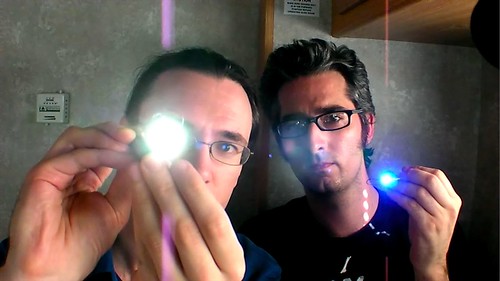
In this week’s Weekend Projects video podcast, Make Magazine’s Bre Pettis and I show you how to make a Joule Thief. The PDF file that goes with the podcast is here (450 kB PDF file).

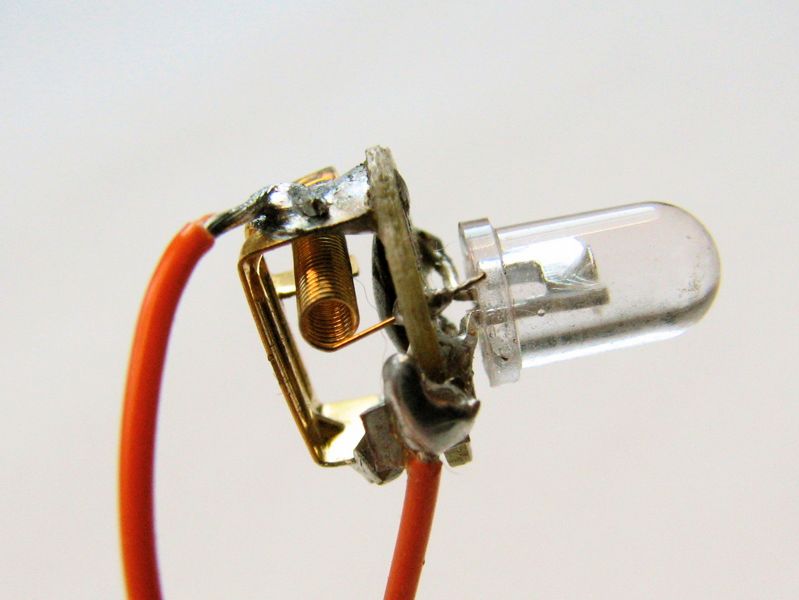
So whatsa Joule Thief? It’s a little wisp of a circuit that allows you to drive a blue or white LED from a low voltage. Normally, if you want to light up a blue or white LED you need to provide it with 3 – 3.5 V, like from a 3 V lithium coin cell. But a 1.5 V battery like a AA cell simply will not work. But using the Joule Thief, it works like a charm. Not only does it work with a brand new battery, but it works until the battery is nearly dead– down to 0.3 V. That’s well below the point where your other toys will tell you the battery is dead, so it can steal every last joule of energy from the battery (hence the name). To learn how to make one, watch the video, which is available in a variety of formats.

The original site where we learned about the Joule thief shows you how to make a miniature version of this circuit, such that you can fit it in a tiny flashlight. However, in the video we show you how to make it big, large enough (1) to make with clumsy hands and (2) that you can see what we’re doing.

After the jump, some detailed photos of how the coil is wound in case you need more detail than in the video.

Continue reading Weekend Projects with Bre Pettis: Make a Joule Thief

Proposal: Distributed seismometry

This evening Silicon Valley did a little dance with a 5.6 magnitude earthquake. While there wasn’t much damage here in the land of quake-resistant building codes, it was, as
ValleyWag notes, this was “the largest quake to hit the Bay Area since Loma Prieta in October ’89.”

After the house stopped shaking, and then swaying, the first thing we did was to get on the USGS web site and try and find out what we could about the quake. From the main information page, we quickly found the “Did you feel it?” questionnaire for the event, which we filled out. The DYFI program collates the data from responses like ours and uses them to create a map of the earthquake intensity by geographic region, as well as some additional data. The map shown above represents the intensity felt by 60,000 respondents in the first few hours after the quake. It is by far the finest example that I have ever seen of “citizen science” in action– apparently objective data collected over a wide area in a short period of time with (in many cases) good statistics.

Of course, it could be better. Much better. Like other Mac laptops (and many others), my computer contains a “sudden motion sensor” to protect the hard drive in case the computer is dropped. Fundamentally this is just an accelerometer and can be used for any arbitrary purpose besides just waiting for the computer to fall. A program called SeisMac has already been developed that can turn a Mac laptop into a makeshift seismometer. (SeisMac is freeware and based is on open source libraries for the sensor.)

Continue reading Proposal: Distributed seismometry

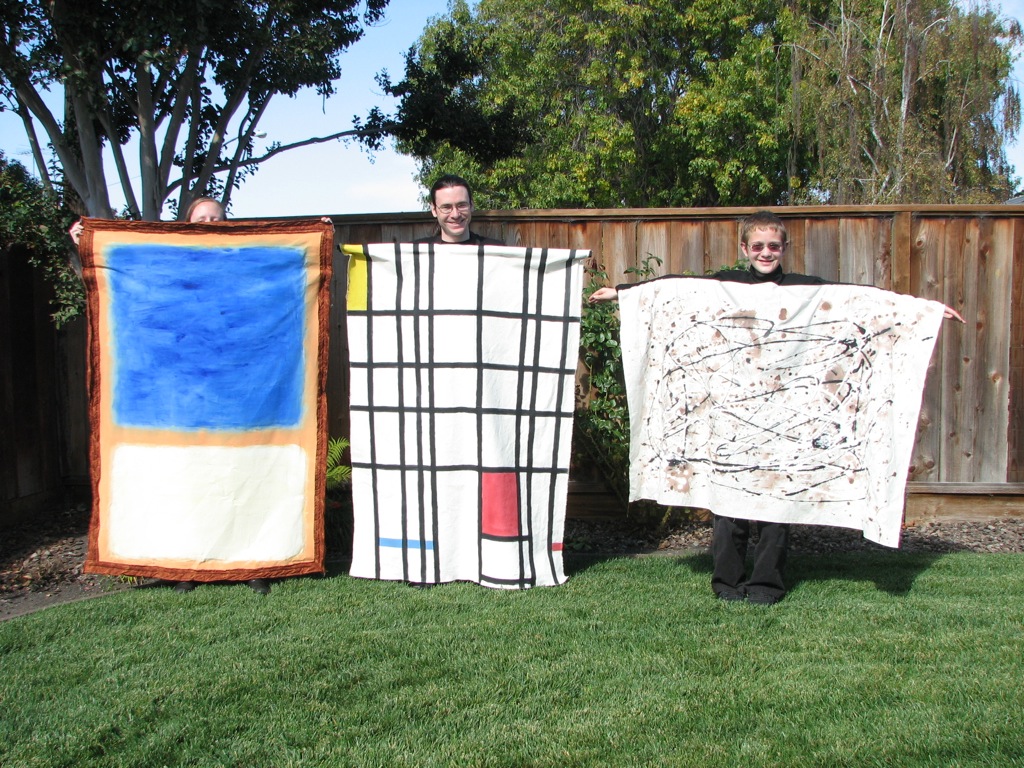
A Traveling Exhibition of Modern Art (the Halloween Costume)

In the daylight

For halloween this year, we put together a “group” costume: a traveling exhibition of modern art. Each person wears a painting in the style of a modern artist.
One of the cool things about this costume is that it is a fully extensible and scalable design: it will look better the more artists that are represented. Having a real crowd would let you include some less well known artists, while still being recognized as a modern art exhibition.

Continue reading A Traveling Exhibition of Modern Art (the Halloween Costume)

Make a Robotic Snap-O-Lantern!

Snapper - 02.jpg

Snapper - 06.jpg Snapper - 07.jpg Snapper - 09.jpg Snapper - 06.jpg

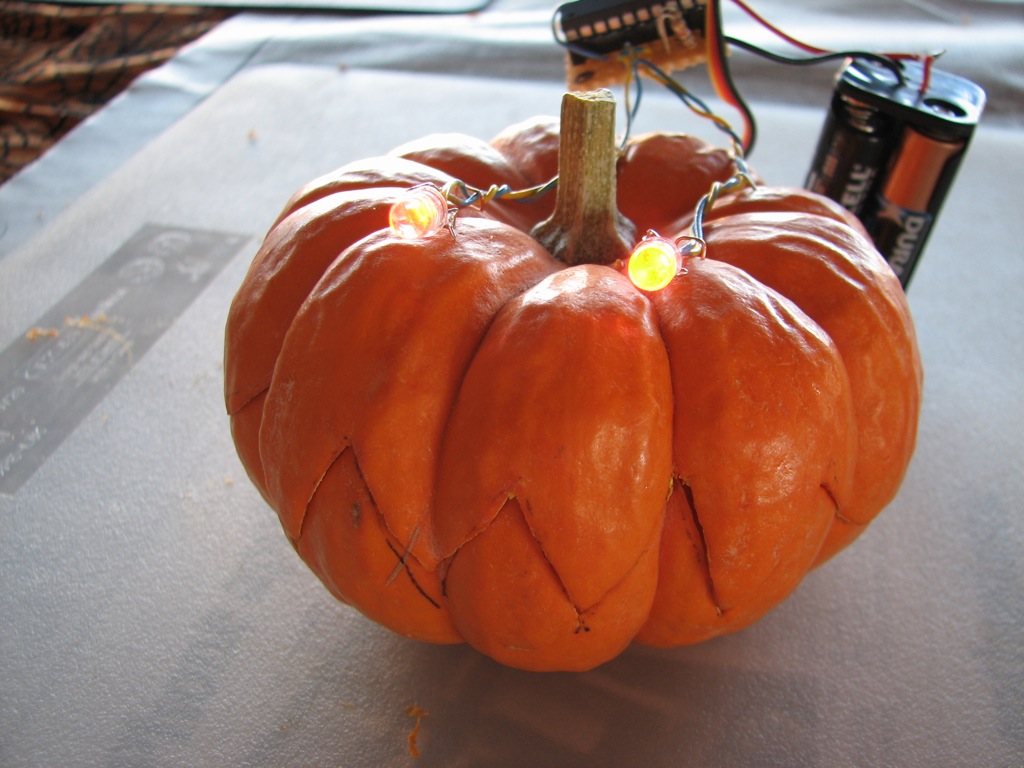
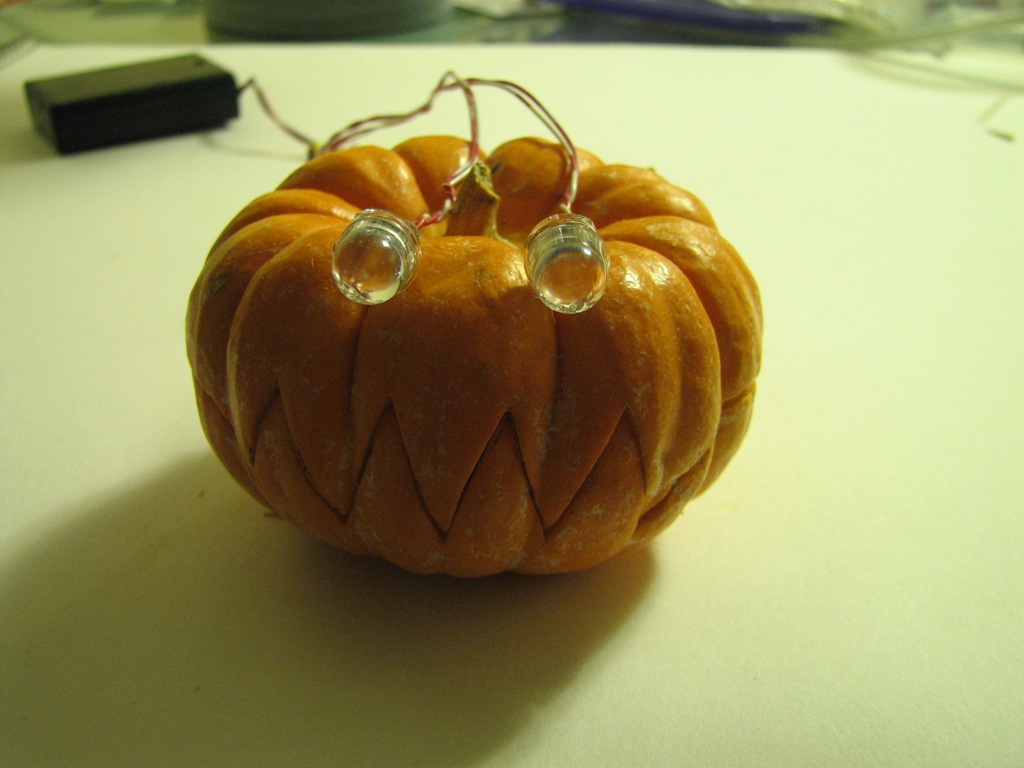
The Snap-O-Lantern is a robotic mini-pumpkin. Normally, it just sits there, in disguise as a boring old pumpkin. But, every twenty seconds he comes to life. His LED eyes turn on, his jaw slowly opens, and then SNAPS shut– and he goes back into stealth mode.

What’s inside? A small hobby servo motor, driven by an AVR microcontroller. This is a minimal microcontroller project, and is very straightforward if you happen to already have a setup for programming one. We’ll walk through the carving, setup, programming, and electronics. This is an open-source project, one of the world’s first “gpl-o-lanterns”; source code is provided.

Continue reading Make a Robotic Snap-O-Lantern!

Easy halloween project: 8-bit gourds!

Gourds

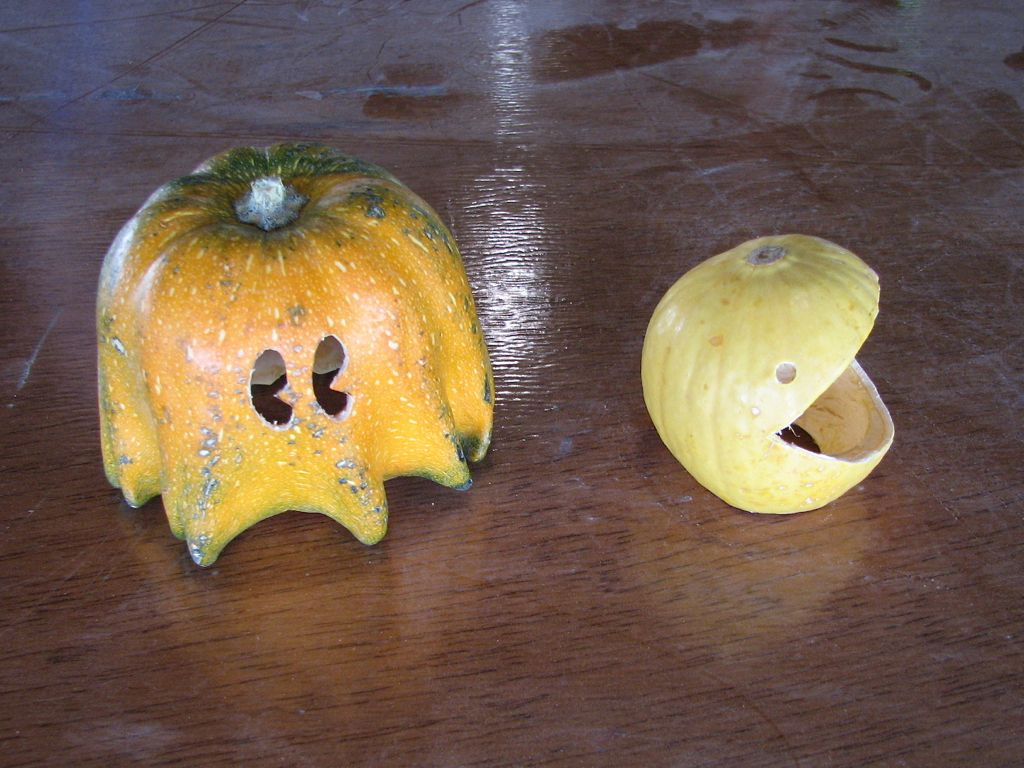
A quick, low-tech halloween project: we hollowed out a couple of miniature decorative gourds. You can get these by the bagful at the grocery store, next to the mini-pumpkins. The one on the left had a kind of wrinkly base that adapted itself well to this shape, and the one on the right had more of a conical tip that we cut off to make a flat base.

Gourds like these have a hard shell, about 3 mm thick, that is rather hard to cut through. We used a loose drill bit (turned by hand) to make the initial cut. From there, a regular hobby knife (e.g., x-acto) works well. Once the soft flesh and seeds are scooped out, the hard shell can dry to make a semi-permanent display.

It’s unreasonably fun to walk around with one of these in each hand, reenacting the age-old chase drama. Especially when the little yellow dude chomps a big white dot. Now who’s chasing who?!?!


You can find more pumpkin projects in our Halloween Project Archive.

MiniPOV Cylon firmware

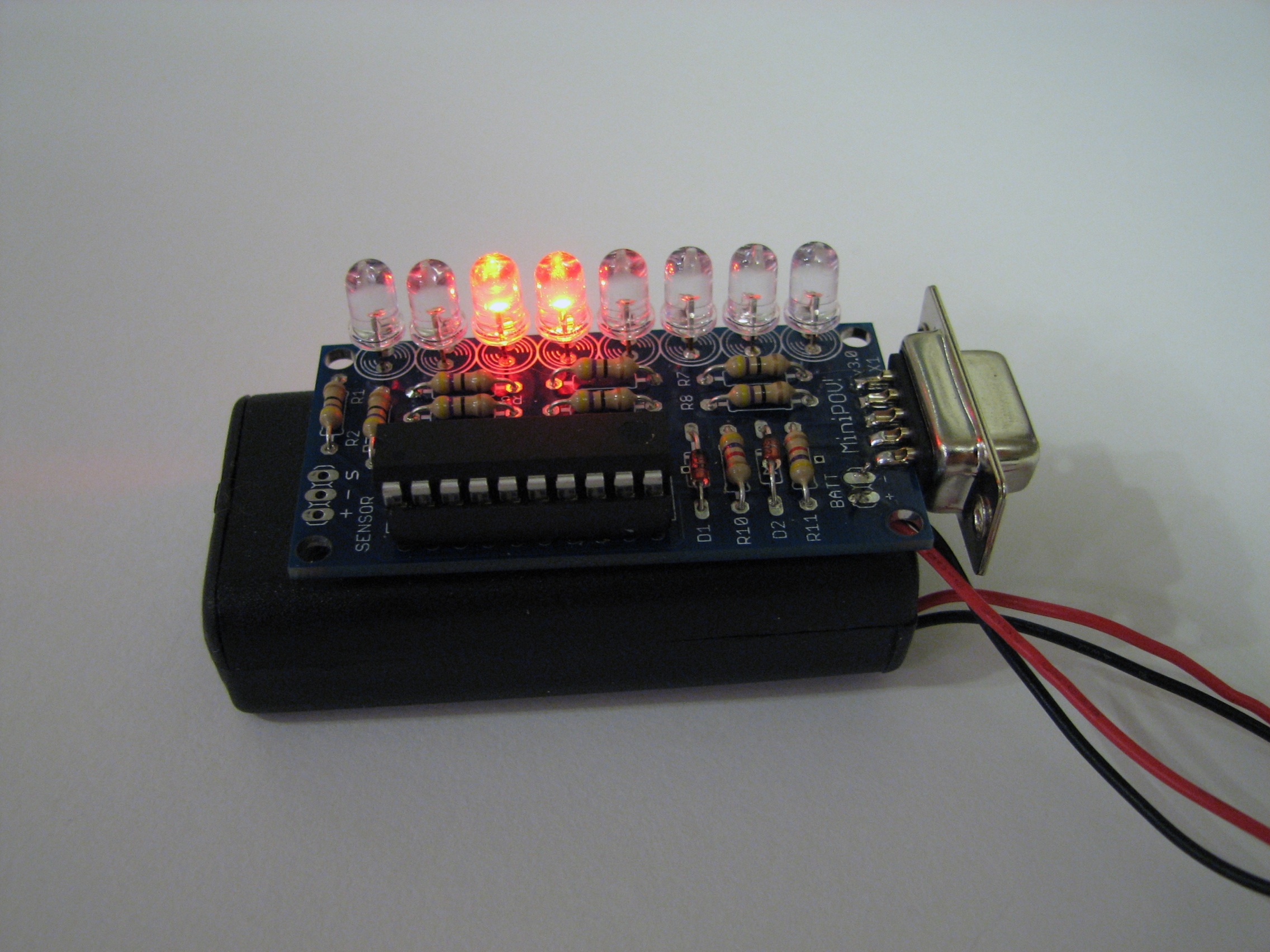
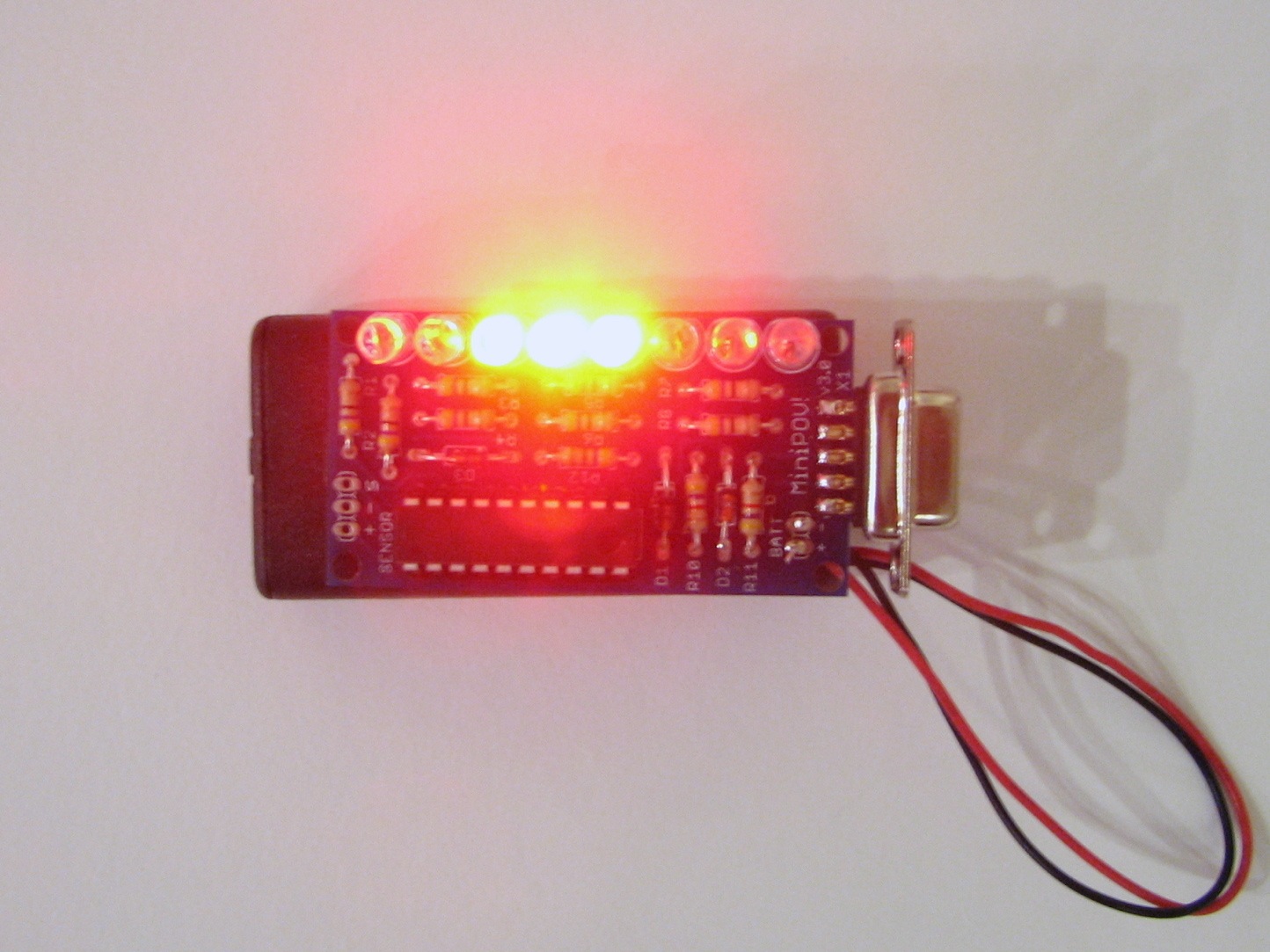
MiniPOV3 Cylon   MiniPOV3 Cylon head-on

The MiniPOVs were created by AdaFruit Industries. They Rebelled. They Evolved.
And now, they may be invading your front porch.

It’s an open secret that here at evilmadscientist we go both ways: analog and digital.

So, here is yet another way to get a Cylon pumpkin circuit– a useful component for halloween. (Yes, you can do KITT too, we won’t stop you.) We’ll spare you the carved pumpkins and dive right into the details.

There seem to be a lot of MiniPOV kits out there. If you’ve got one, this is a fast way to make a passable slowly-scanning eye.

Note that we are not using the “POV” part of the MiniPOV– you don’t need to wave your pumpkin back and forth; it really is just a slowly-moving image.

(You can get a MiniPOV direct from Adafruit or from the Make store, probably in time for the big day.)

This is a one minute project for some of you (you know who you are), but if you are really starting from scratch there isn’t any giant time advantage to going doing it this way instead of analog.

Once you have a working minipov, the first step is to download the firmware (4 kB .ZIP file) and unzip it. If you are programming the MiniPOV3 directly through its serial port,
pop open a terminal and move to the directory. Type (with a return after each line):

make all

make program

And… that’s it.

(If you have a GUI for programming AVRs and know how to use it, you can of course use that instead of programming through the terminal.)

If you are using some other AVR programmer or are programming a bare ATtiny2313 without a MiniPOV at all, you will need to edit the header of the included makefile to reflect the type of AVR programmer and the port where it is located. (And then, proceed with the instructions above.)

While this makes a pretty good looking pumpkin, there is still room for improvement in the firmware– the motion is reasonably smooth but doesn’t yet capture the incandescent fade that the analog versions do. I’ll leave it to the community to improve this firmware; if you have some better code, let me know and I’ll help roll it in.

Update:
Tim Charron sent in a greatly improved version of this program– please give it a try.


You can find more pumpkin related projects in our Halloween Project Archive.

Halloween projects and Texas

This week the lab staff is heading off to Austin, Texas, our former stomping grounds and site of the other Maker Faire this year!

As we noted earlier, we’ll be doing a demonstration of how to build an excellent Bat Costume out of an umbrella and a hoodie. However, our primary project there will be our booth: High-Tech Pumpkins, where we will show up to a dozen (fingers crossed) halloween-themed projects, TSA willing. (Thank FSM it’s Austin, not Boston.)

While we get everything together this week, our publishing schedule will be a little wonky. However, halloween is just around the corner, so it’s time to dust off a few projects from our halloween archives!

Headless horseman   
How to hack LEDs into Lego minifigures for Halloween (Link)


FSM Costume - 01.jpg   
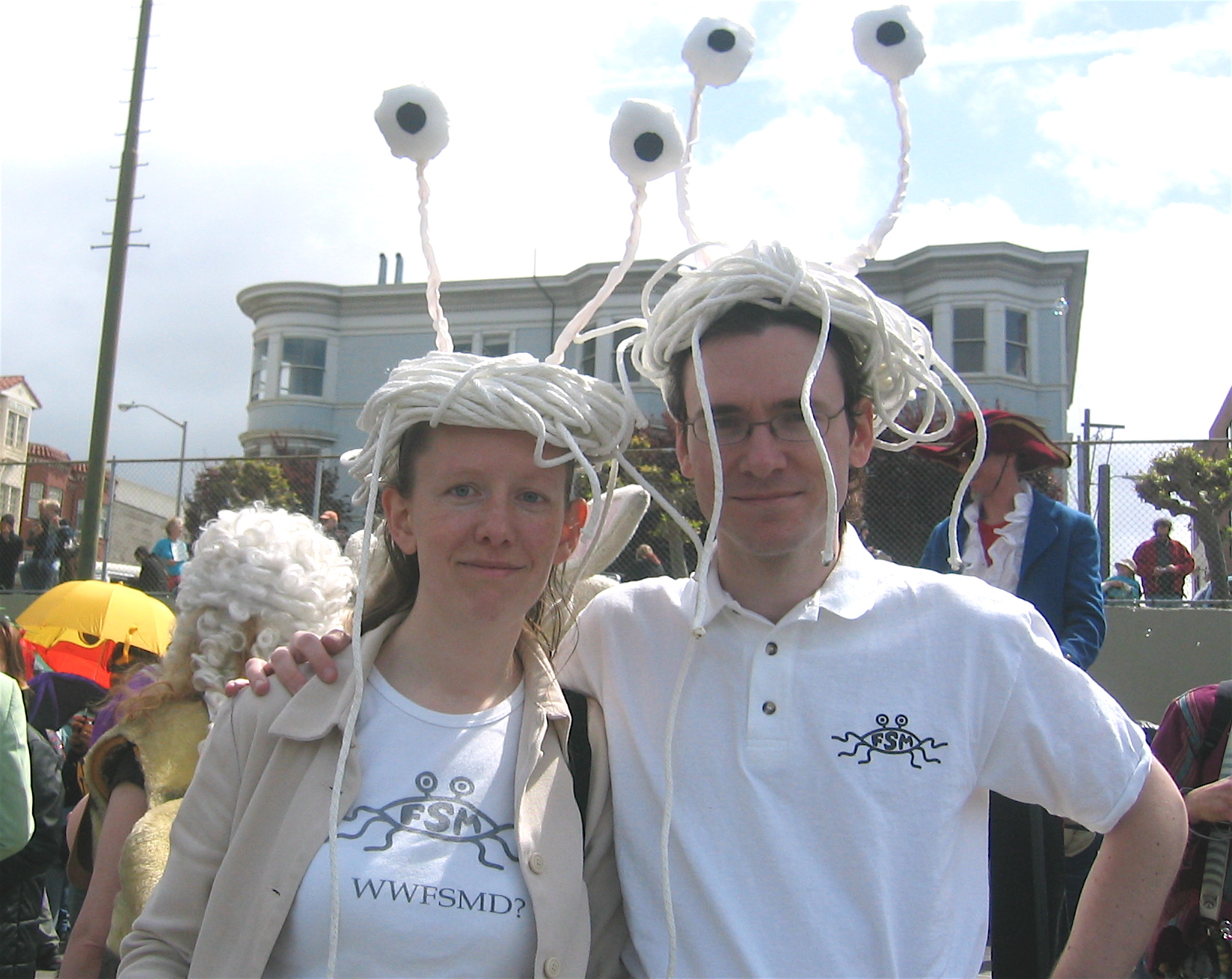
Make a Flying Spaghetti Monster Costume (Link)


   Croc Costume - 10.jpg
Crocodile Costume (Link)


Attaching long wires 2   
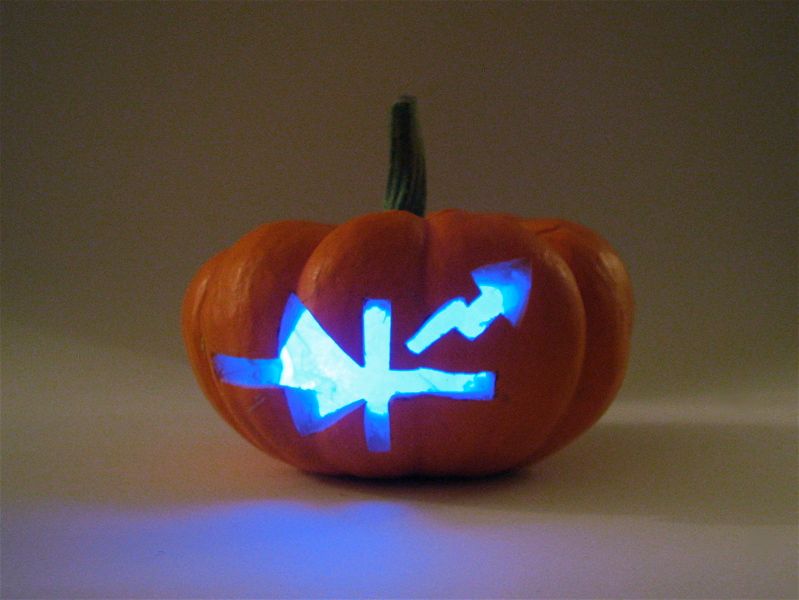
Easy Itty-Bitty Blinky LED Jack-O’-Lantern (Link)


Dalek Body-- under construction   
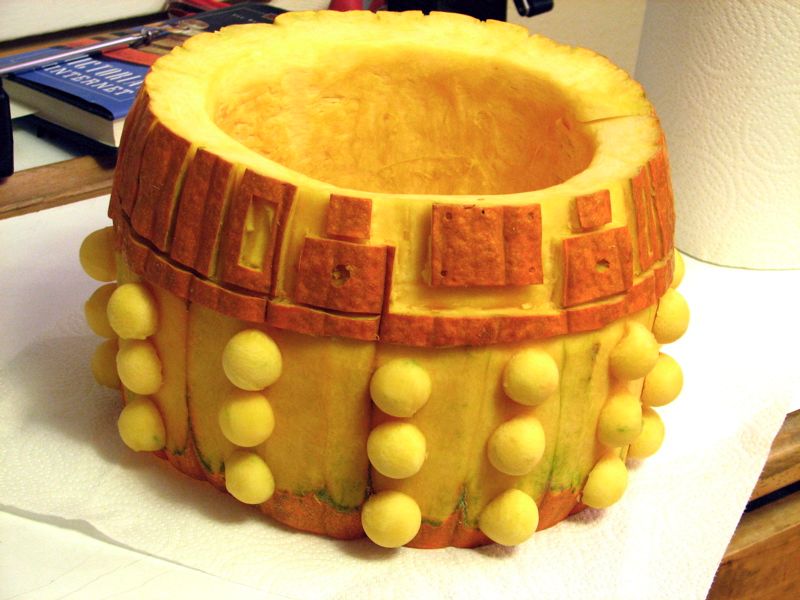
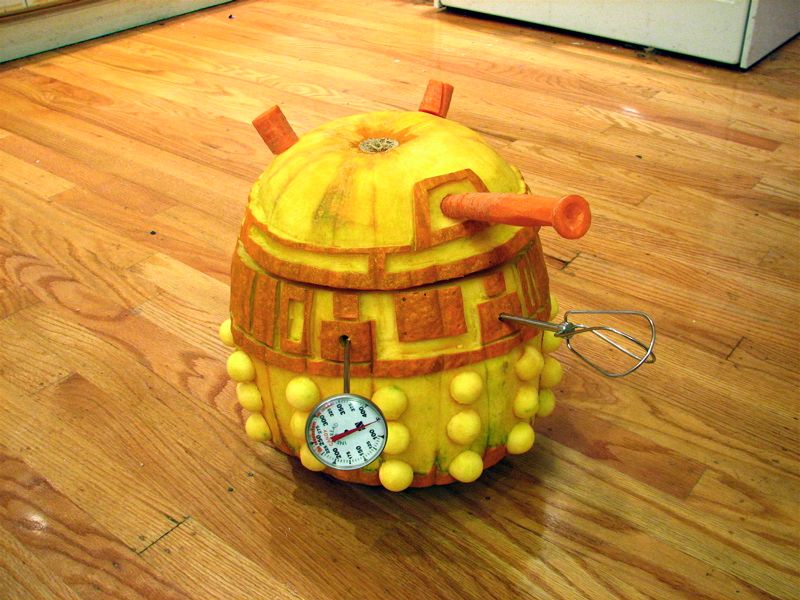
A Robotic Dalek Pumpkin (Link)


See also:

Pumpkin Spice Truffles

Truffles

The fall holidays are fantastic ones: Halloween is all about costumes and candy and Thanksgiving is all about food. Here is how to make one of our favorite fall treats: pumpkin spice truffles. (Yum.)

To get the note-perfect flavor of traditional American pumpkin pie, we use the spice ratio from the old-standard can of Libby’s pumpkin (here is the recipe from under the label). Bittersweet chocolate has a stronger flavor than that of pumpkin, so we actually use twice the spice of a pie for a small batch (well, small for us batch) of truffles. The amazing thing is that these pumpkin-free wonders taste uncannily like pumpkin pie. Not that anyone will have trouble distinguishing your truffles and a pie, but you just might get asked, “Are these actually made with pumpkin?”
Continue reading Pumpkin Spice Truffles

Time to Make a Cylon?

Make: HalloweenStarburst

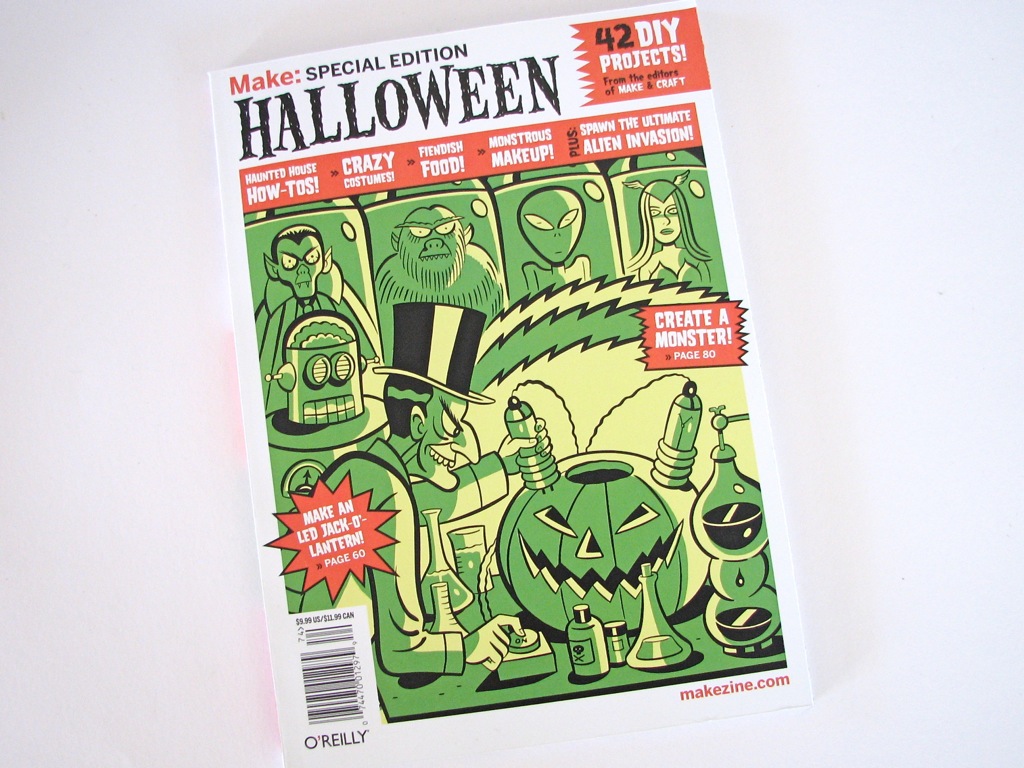
Yay! We finally got our copy of the Make: Halloween Edition.

This special issue is actually available in two different covers, but we particularly like thisversion because of that little starburst: “Make an LED Jack-O’-Lantern!”

On page 60, you can find the article that we wrote about how to build the Larson Scanner (named after Glen A. Larson); a scanning eye for your old-school Cylon or KITT pumpkin projects.

Red Eye

The article is actually a slightly updated version of our project from last Halloween, Make A Cylon Jack-O-Lantern. Last year’s how-to is still online— and we have recently checked to make sure that all the parts on the parts list are still available.

Either way, let’s see those Cylons! If you build one, please post your pictures in the Evil Mad Science Auxiliary.