Category Archives: EMSL Projects

The Larson Scanner Kit

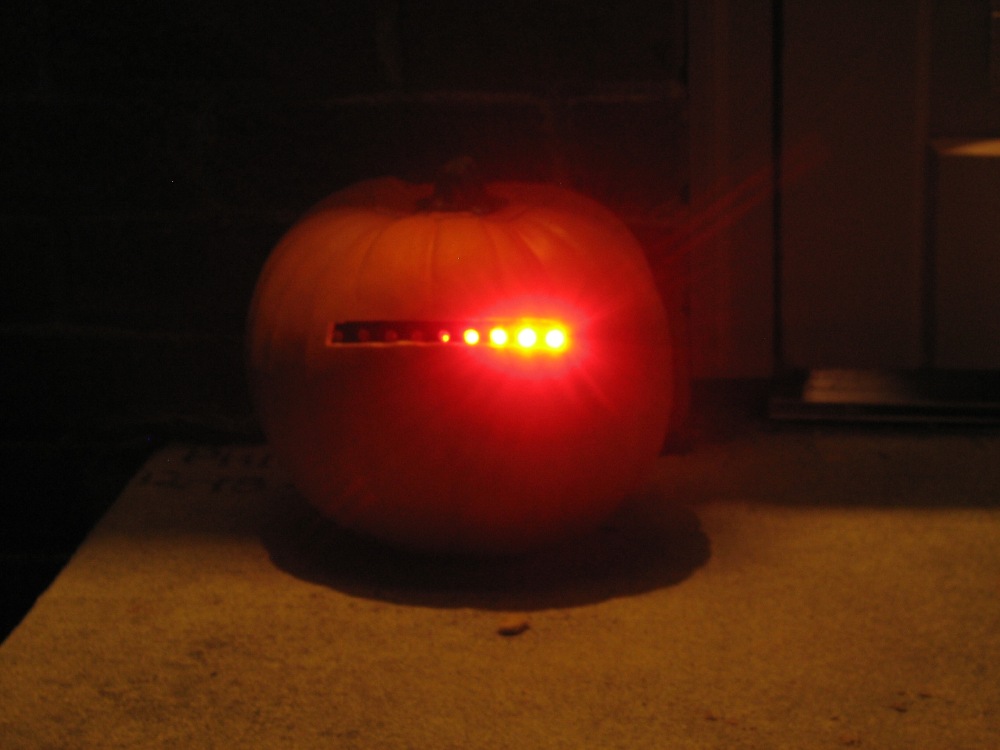
pumpkin
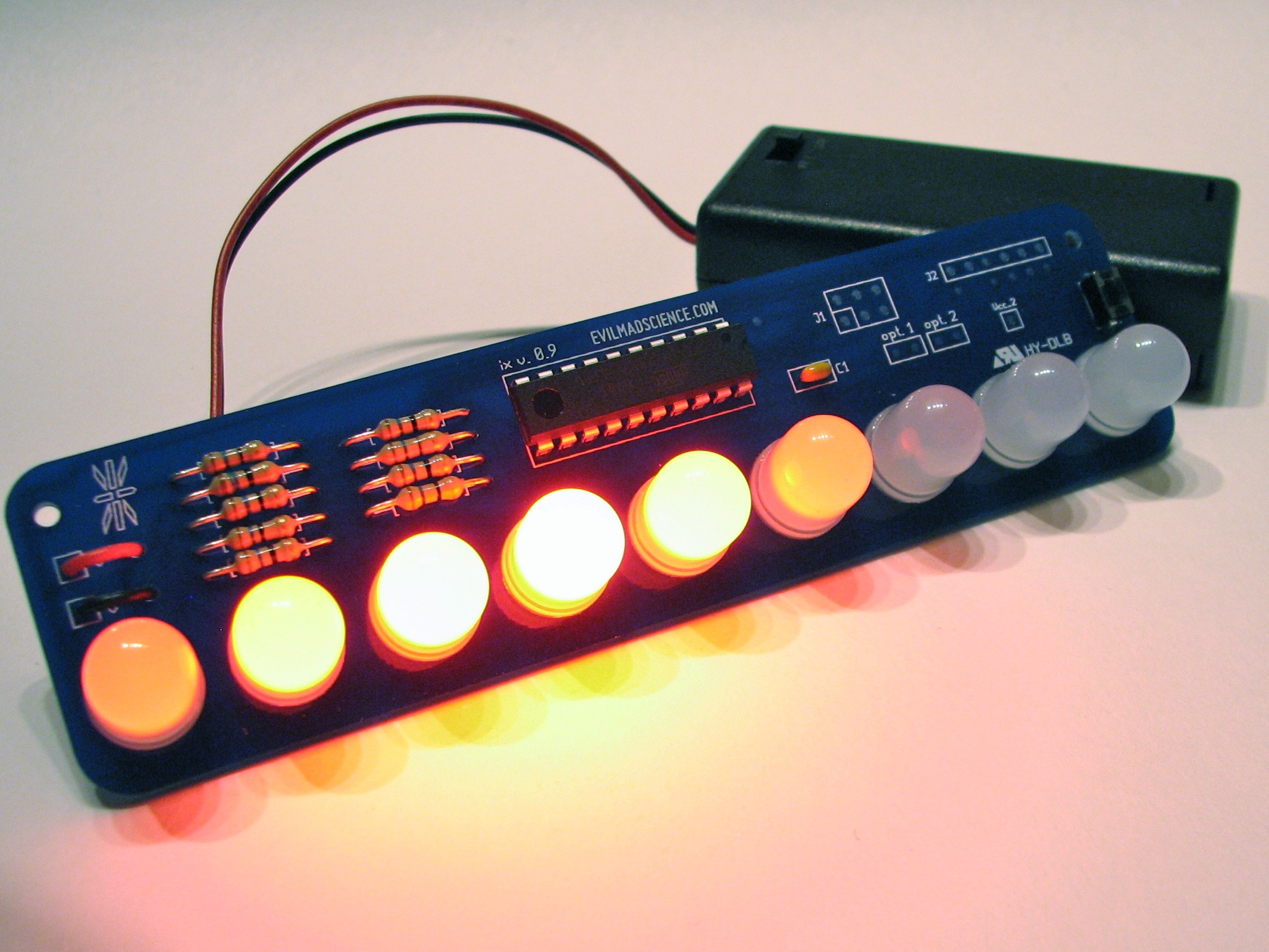
Today we’re releasing a new open-source project and kit, which is an updated approach to the “Larson Scanner.” The Larson scanner is named in honor of Glen A. Larson, the man responsible for producing both the original Battlestar Galactica and Knight Rider television shows, and consists of a set of red LEDs that scan back and forth.

Three years ago, we showed how to make a Cylon Jack-O-Lantern, in what has become one of our all-time most popular tutorials. The circuit for that project was based on a 555 timer, driving a 4017 decade counter, and has 6 pixels of resolution. To create the incandescent fading effect, we added low-pass transistor drivers. We also wrote up a version of that article for the 2007 Make Magazine Halloween special, which included a slightly nicer version of that same circuit.

And while it’s been popular, we’ve always had some nagging reservations about it, and in particular its battery life. This year, we decided to do something about it and made a much betterversion of the Larson Scanner, and so here it is:
bright
Continue reading The Larson Scanner Kit

Bookends for physics geeks

Bookend - 9

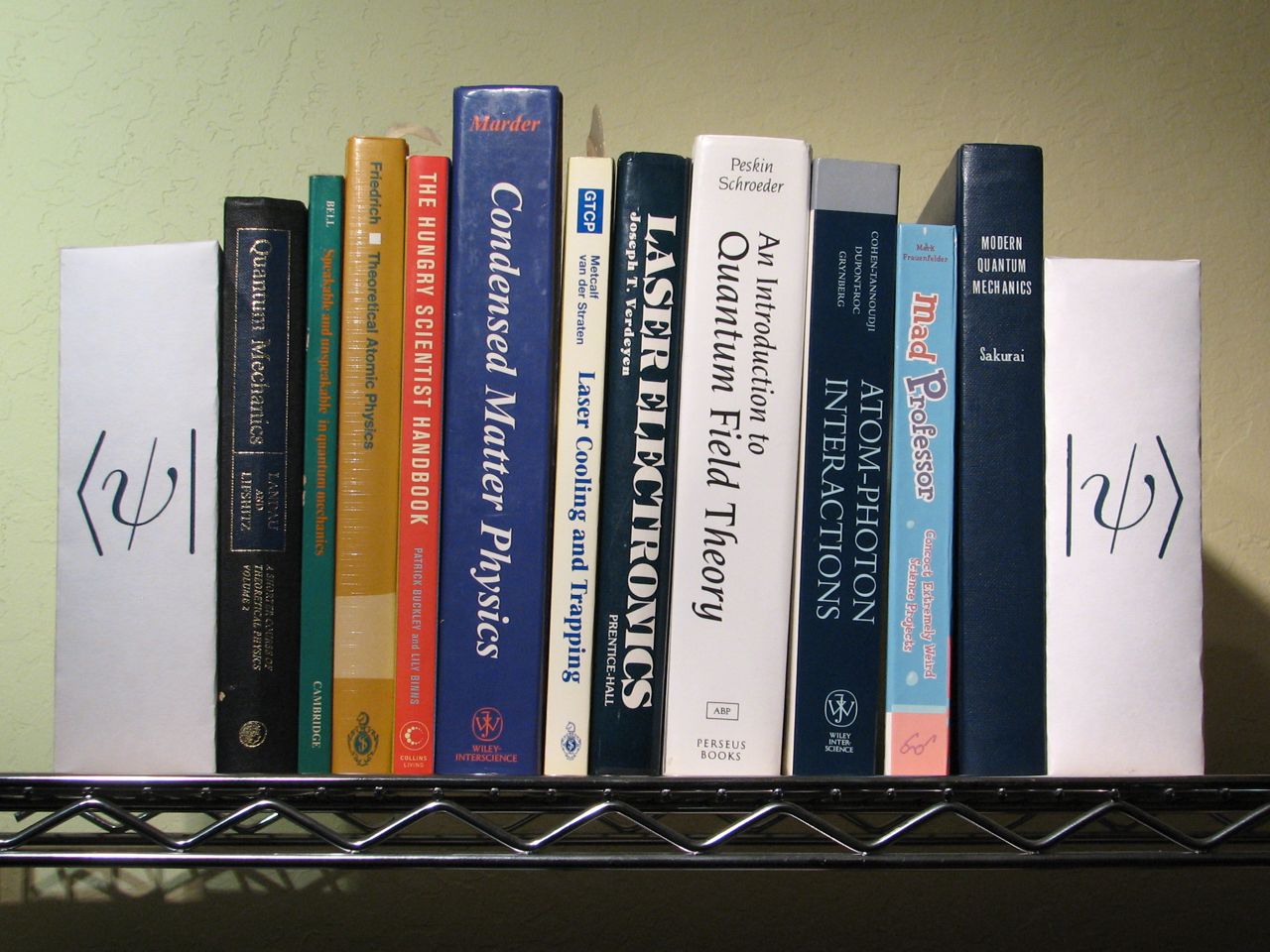
Books falling over? Here’s a simple bookend project. Total cost under a buck, and you can make them in just a few minutes.

The symbols on these particular bookends are in bra-ket notation, which is very common in many fields of physics related to quantum mechanics. Obviously, you can use other symbols as well– we put /* and */ around our programming books.

Continue reading Bookends for physics geeks

Some thoughts on throwies

Throwies - 03

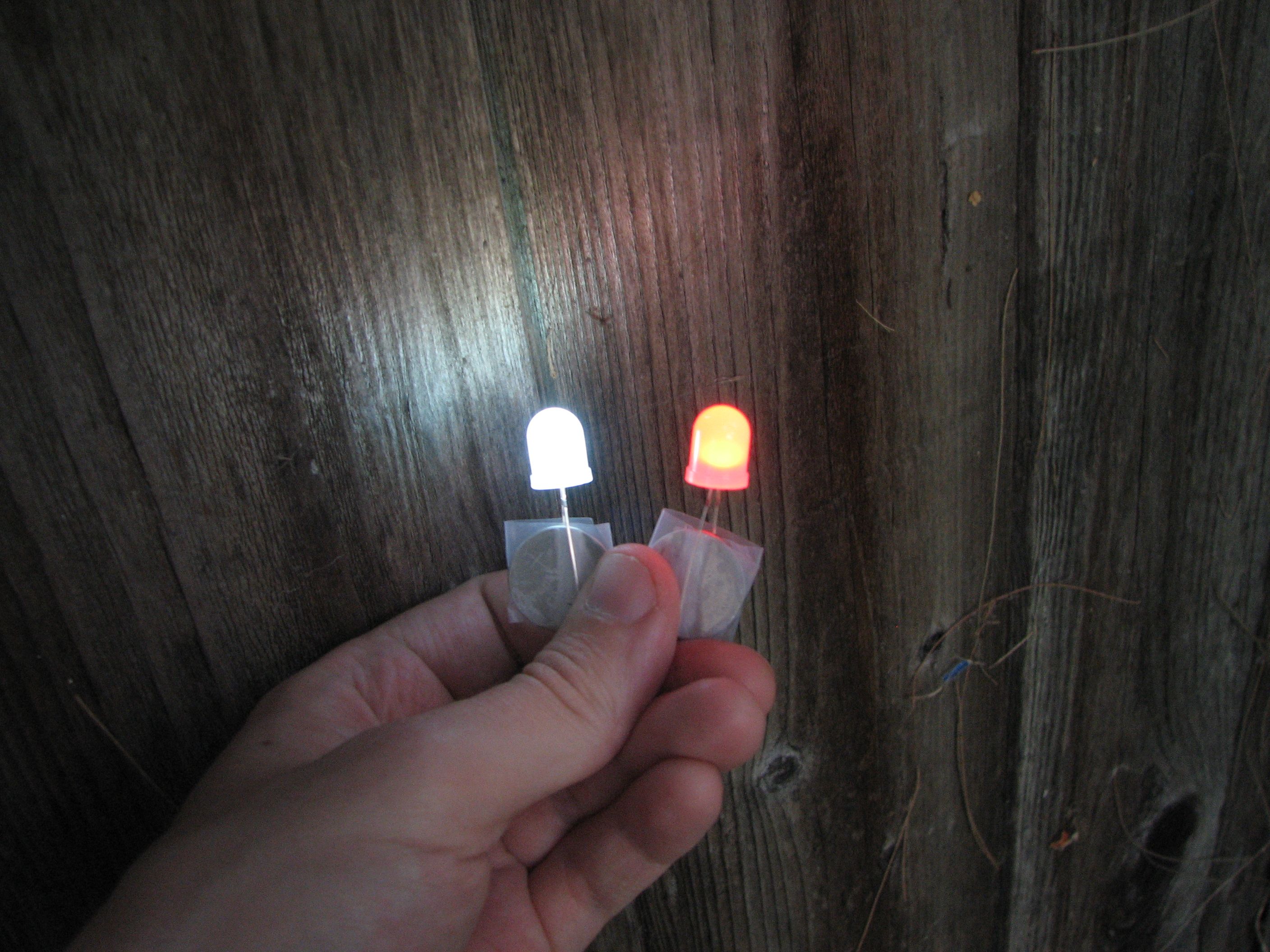
We’re big fans of LED throwies and derivative projects where you light an LED simply by connecting it across the terminal of a small lithium coin cell.

You’ll find this trick used in a lot of our projects that call for simply lighting up an LED in a tiny space, like the temporary LED lanterns, LED Ghosties, Robogames awards,
LED origami circuitry, light-up Lego minifigures, and edge-lit holiday cards. You’ll also find them in those little keychain flashlights– open one up and there’s just a battery and an LED.

So the throwie (and I use the term loosely, referring to devices with or without magnets) is a darned useful thing. But the first time that I was introduced to the concept, I asked what a lot of other electronics-oriented people do: “where’s the resistor?”

Turns out that it’s a fair question. LEDs aren’t normally driven directly from a battery. And yet (1) people were making throwies with every imaginable color of LED and (2) they apparently weren’t exploding. So what’s the deal?

Continue reading Some thoughts on throwies

Peggy goes wild

The Peggy 2 board is not small by PCB standards, but it was just not big enough for a couple of folks.

MonsieurBon built a Giant LED Board based on the Peggy 2 circuit with a 30 x 30 display area. Here’s his photoset and video on YouTube.
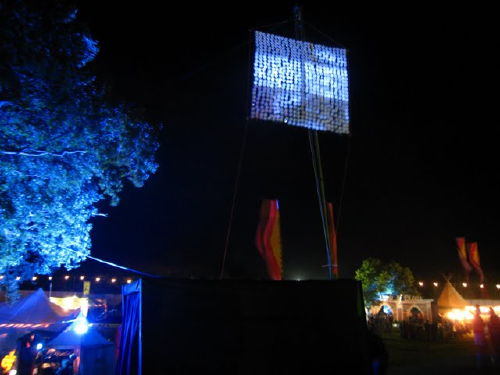

Dave took his Peggy 2 and mounted his LEDs off board for his u:moon project. Here’s the project page and video and photos.

You can read about more Peggy 2 projects in our earlier story, The Peggy Strikes Back.

Remaking a portable stool

Tie Stools10

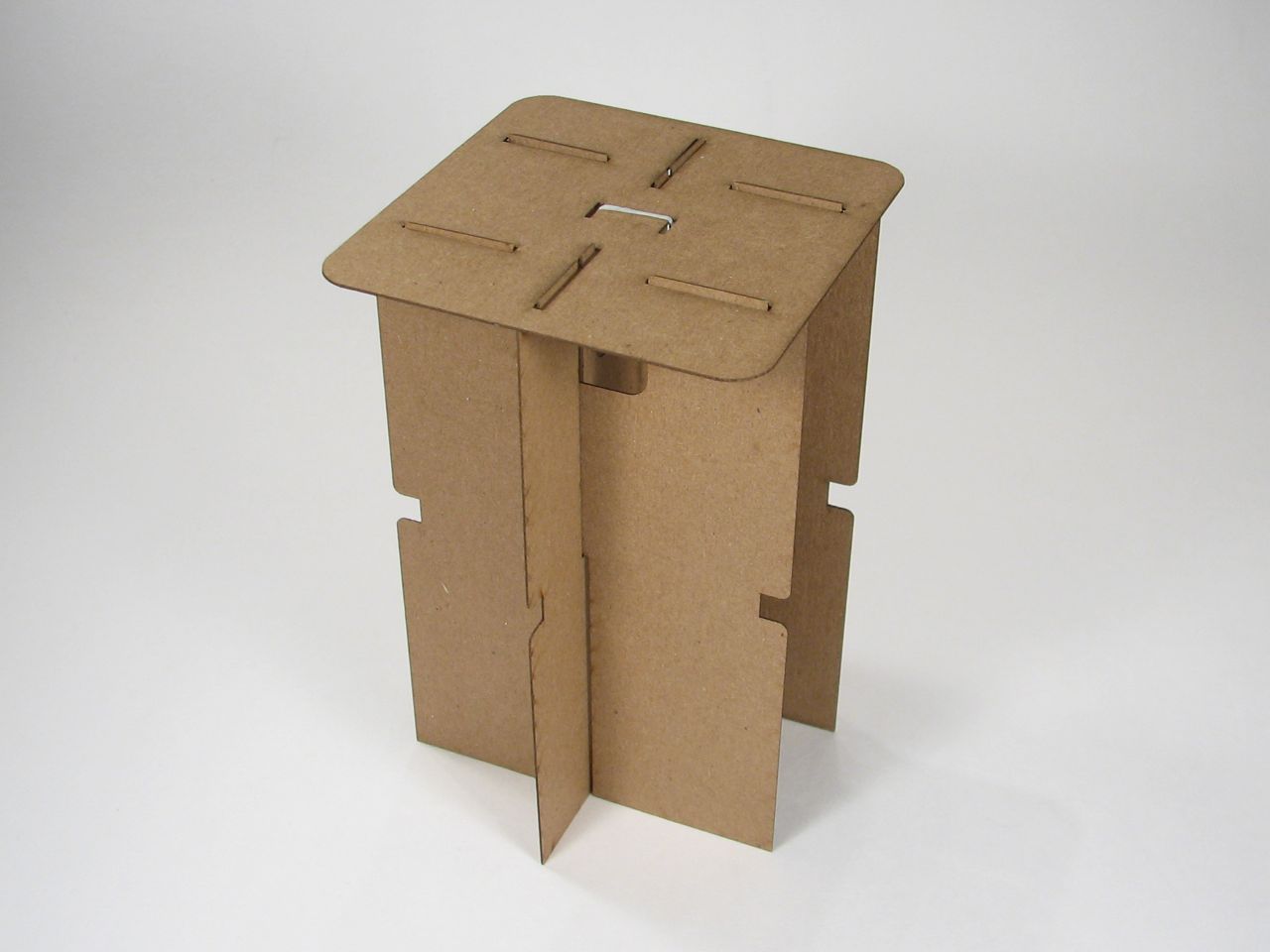
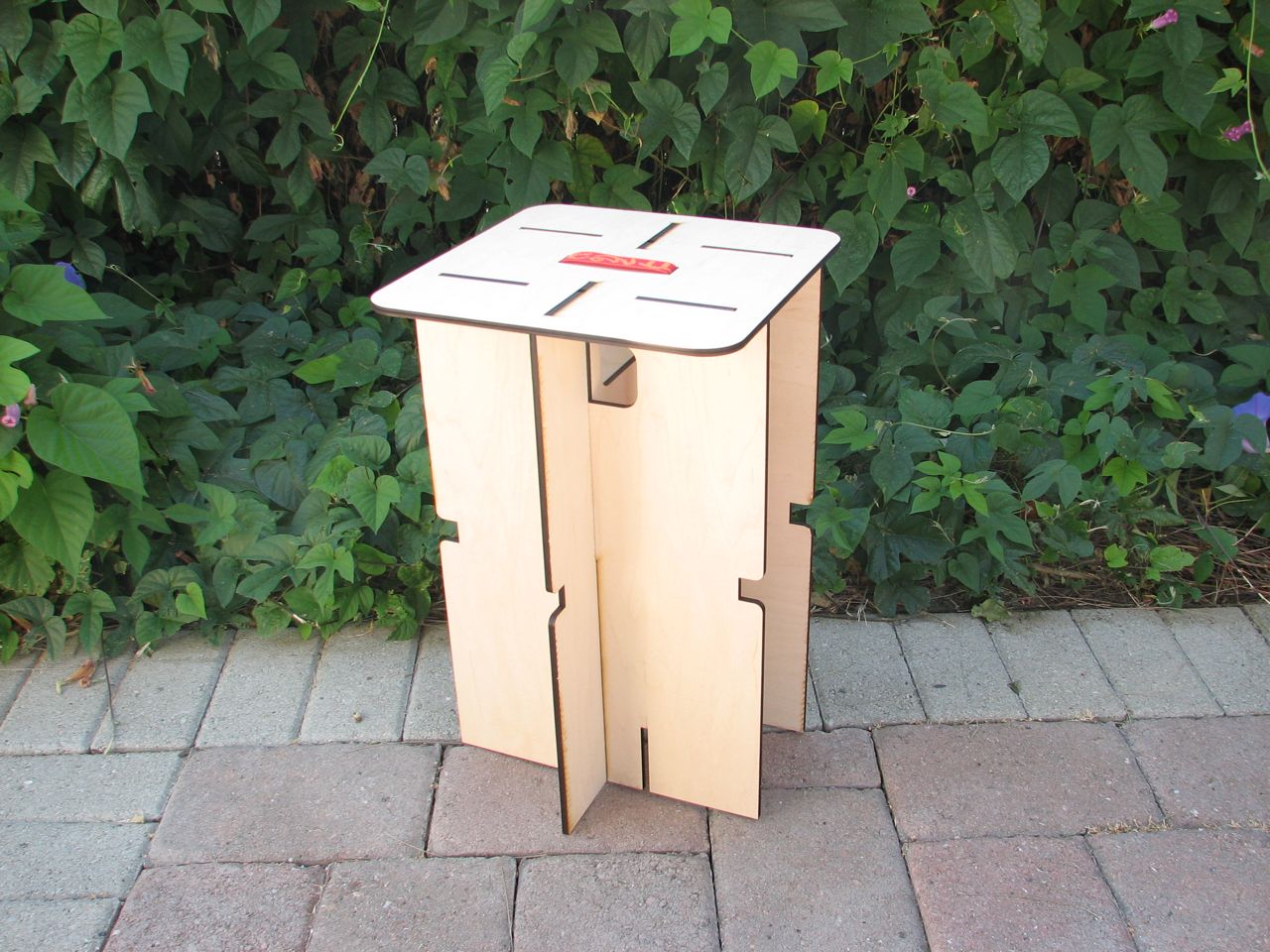
My grandfather used to make portable stools from a couple of thin pieces of wood that tied together with a simple string. Growing up we usually had a couple of these “tie stools” conveniently stashed around the house, and we always got them out for backyard barbecues and took them with us when we went camping.

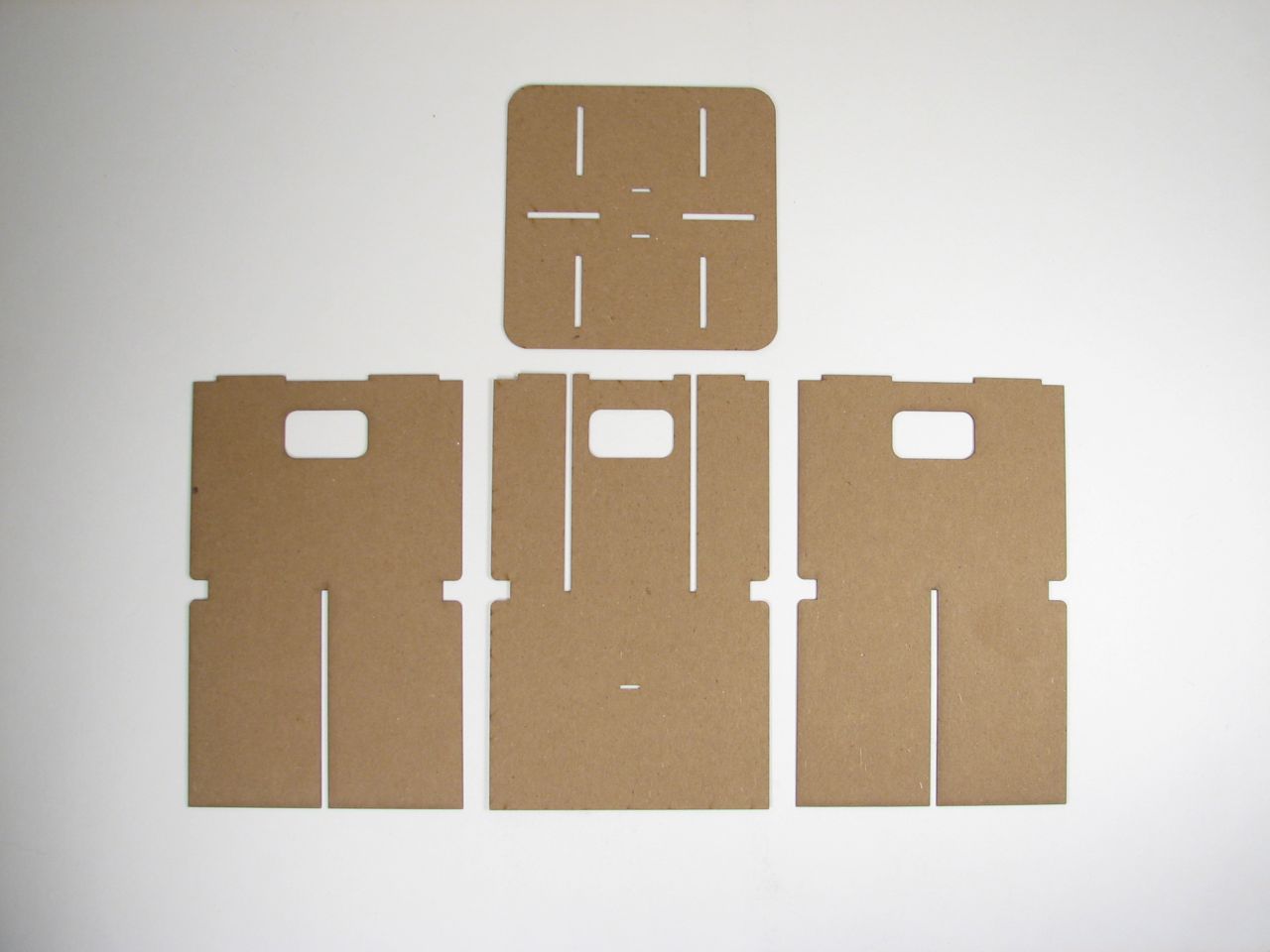
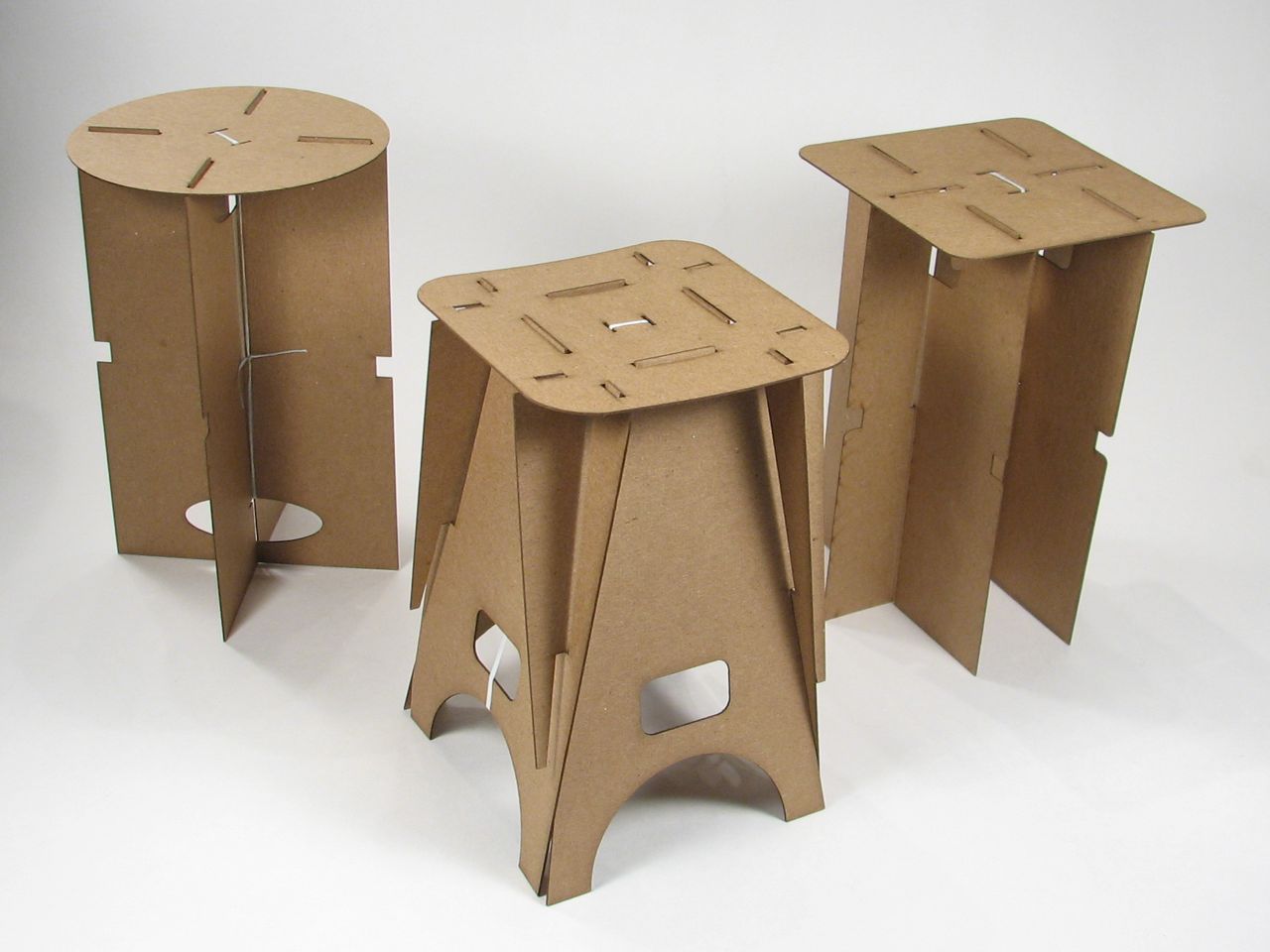
Although my woodworking skills are nowhere near what my grandfather’s were, we’ve been inspired by that stool to play around with making small, lightweight furniture that can be disassembled, stacked flat and tied together for easy transport. My first try was pretty wobbly, and felt like a little twist would splinter it. A couple of revisions later, I have a reasonably sturdy stool that is held together with a nylon strap. The leg pieces are notched on the sides so that when they are stacked together, the strap on the seat piece can be used to hold all the pieces together. There are handles cut into the leg pieces as well for easy carrying.

Tie Stools8   Tie Stools5

While plywood is inexpensive and a reasonable material for prototyping, miniatures in paperboard are much faster to make and are a pretty good analog for the behavior of the wood.

Tie Stools2
Continue reading Remaking a portable stool

More Tennis for Two

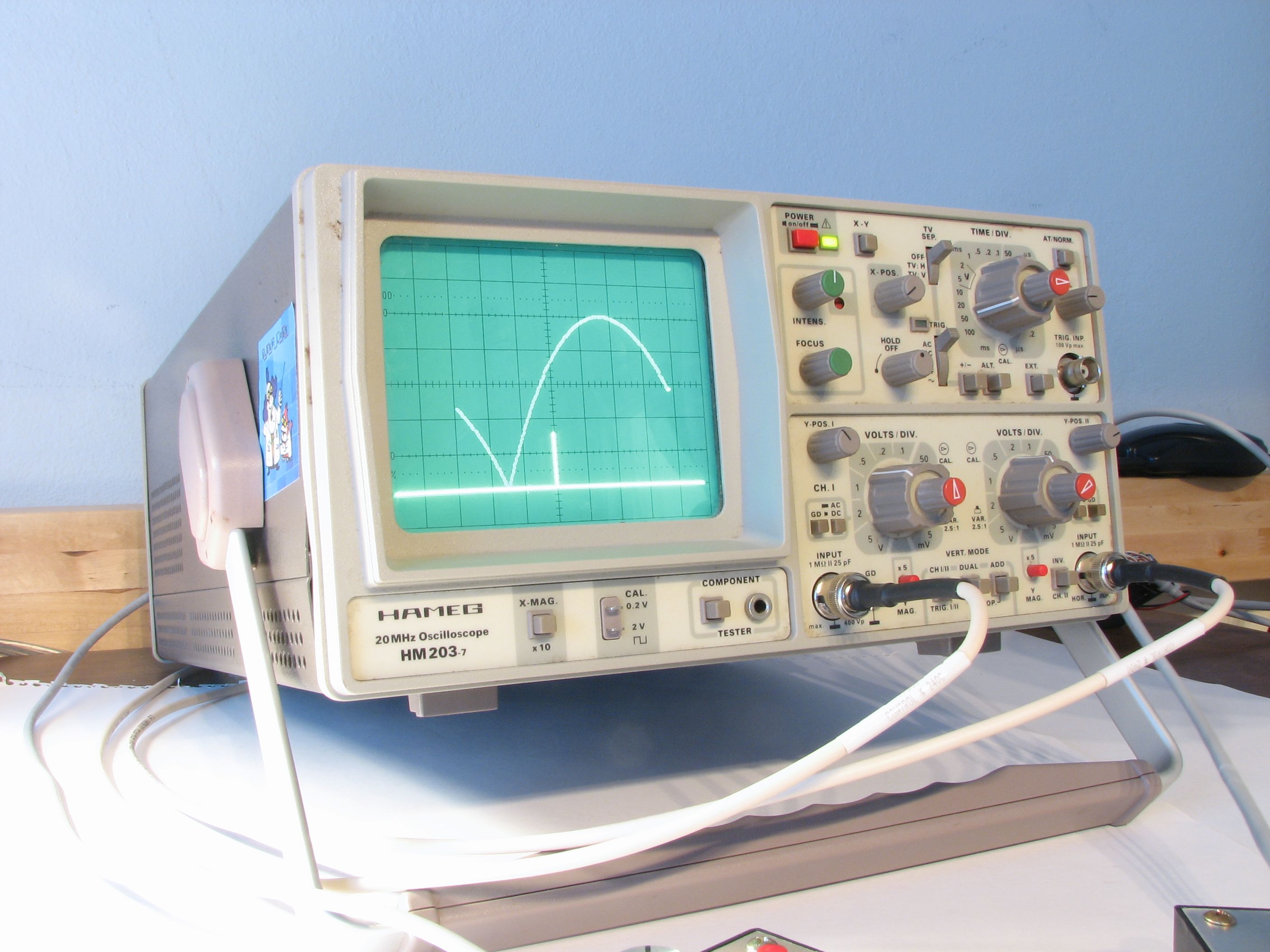
Tennis for Two-Romain1

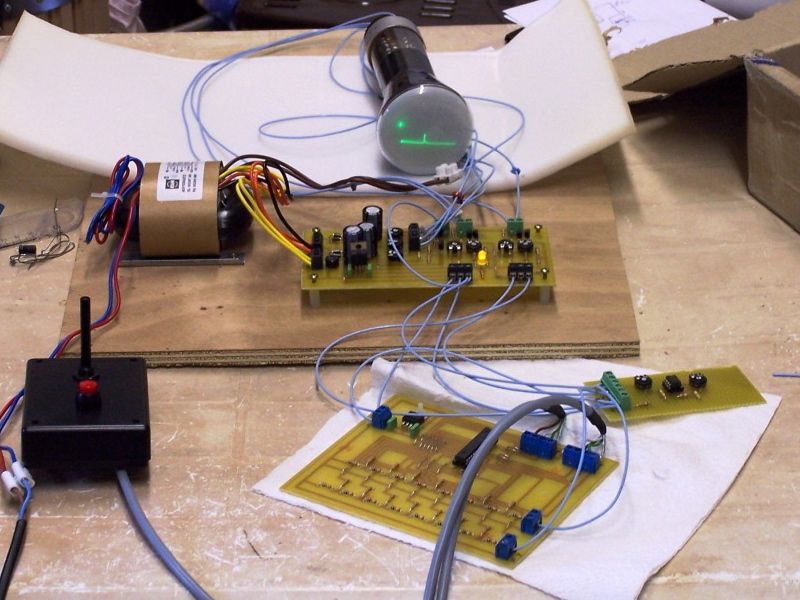
Romain saw our post on our Tennis for Two project and decided he wanted to make his own. He ordered a preprogrammed microcontroller from us and got to work. Once he was done, he was kind enough to share build photos and circuit diagrams with us.

Tennis for Two-Romain2

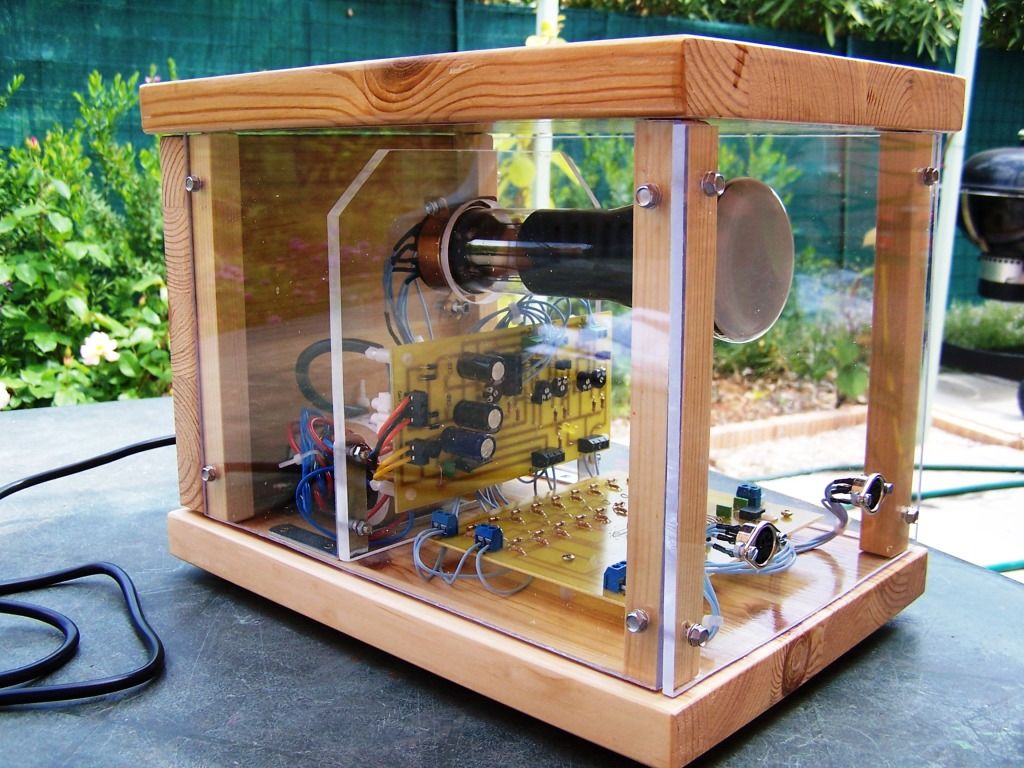
Since he was starting with a bare CRT rather than a full scope, he built a wood and plexiglass enclosure which shows off the electronics very nicely.

Time exposure

We’re glad to see really retro gaming getting the attention it deserves!

Continue reading More Tennis for Two

Mad Science 101: Inducing giantism in living organisms

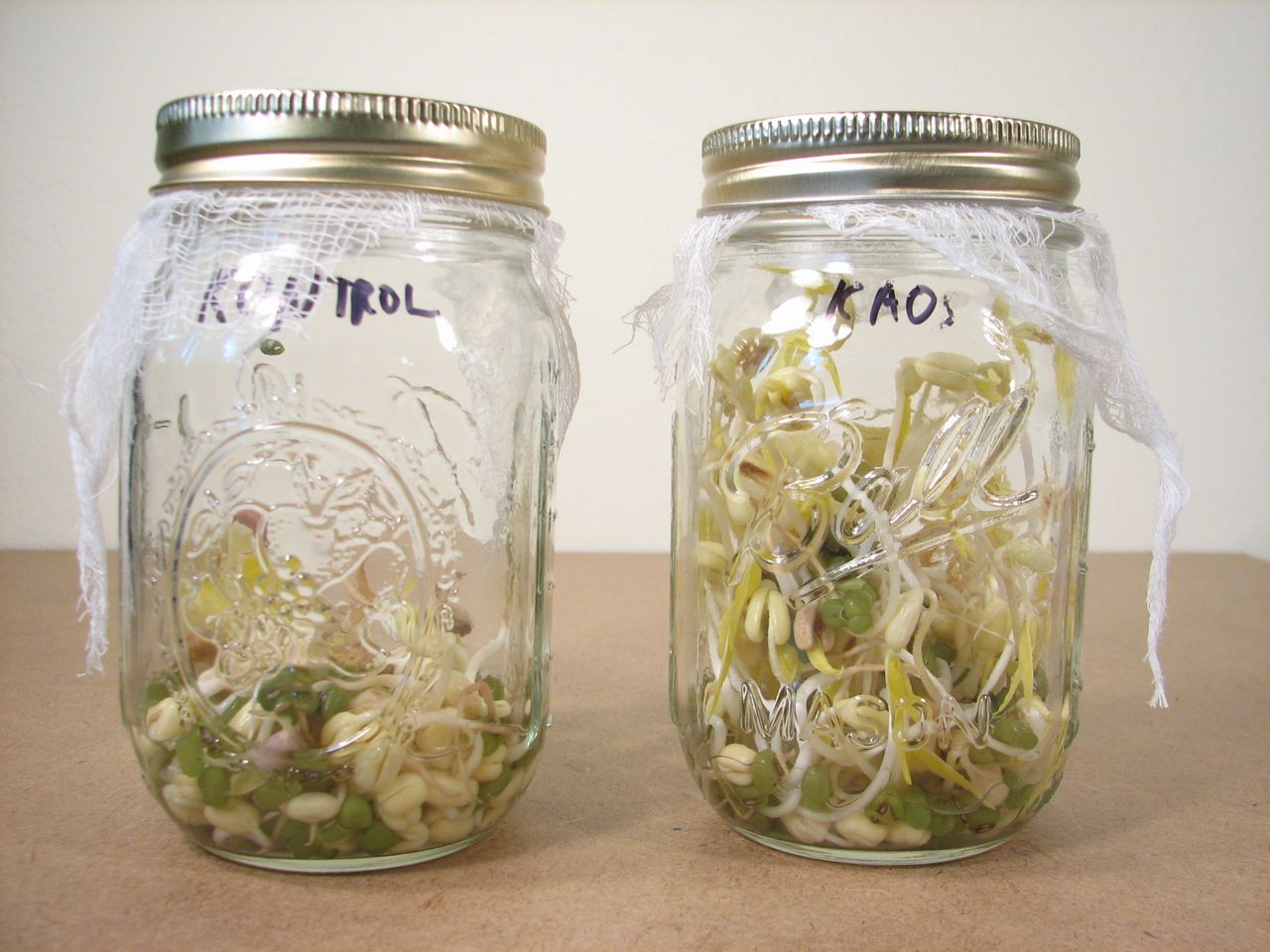
Beans day five

Ask any group of mad scientists how they plan to take over the world, and one of the answers that you just might hear is “With giant monsters!” And rightly so. Mucking with the workings of life itselfis one of the key skills in the mad scientist’s arsenal.

Of course, we need to start small. The easiest way to begin is by experimenting on plants. Not only is it much less expensive, but your laboratory will remain more pleasant to work at, since PETP protestors tend to be fewer in number than those from PETA.

Plant growth, in all of its different aspects, is regulated by a complex system of hormones (signal chemicals) that are responsible for phenomena as complex as geotropism and phototropism, rooting and branching, dwarfism, and seed dormancy. It turns out that many of these chemicals are actually used in horticulture and are relatively easy to obtain.

One of the most interesting chemicals to play with is Gibberellic acid, a well-known and easily available plant hormone that can be used to stimulate growth. It is available in liquid form from United Nuclear, and can induce frankly absurdgrowth in many types of plants.

In order to see results quickly, it’s nice to start with a plant that grows quickly. We chose to experiment with mung been sprouts, which ordinarily reach maturity (from a particular salad-eater’s perspective) in about five days.

Continue reading Mad Science 101: Inducing giantism in living organisms

Bike Lunch Bag in Print

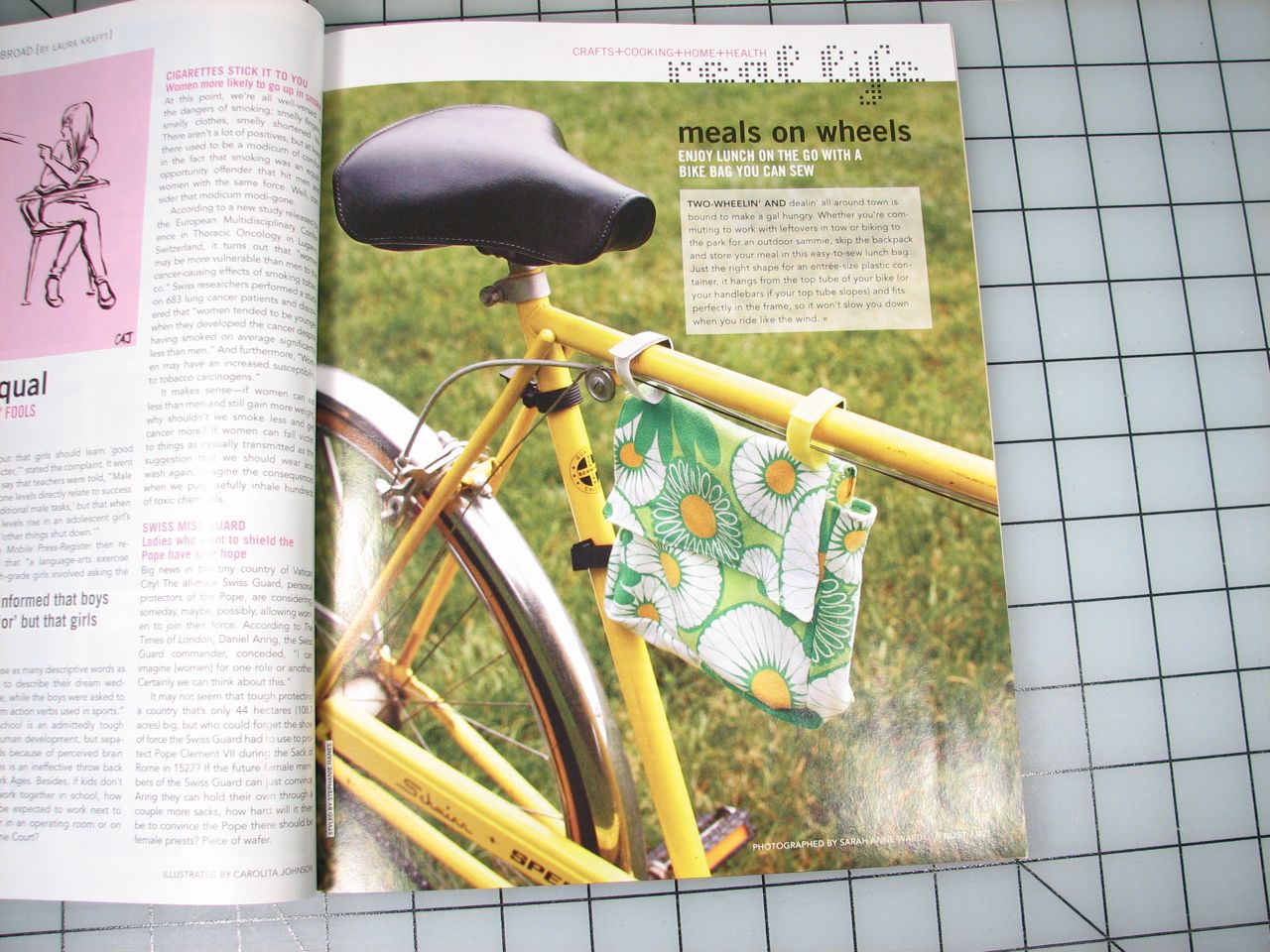
bike bag in print2

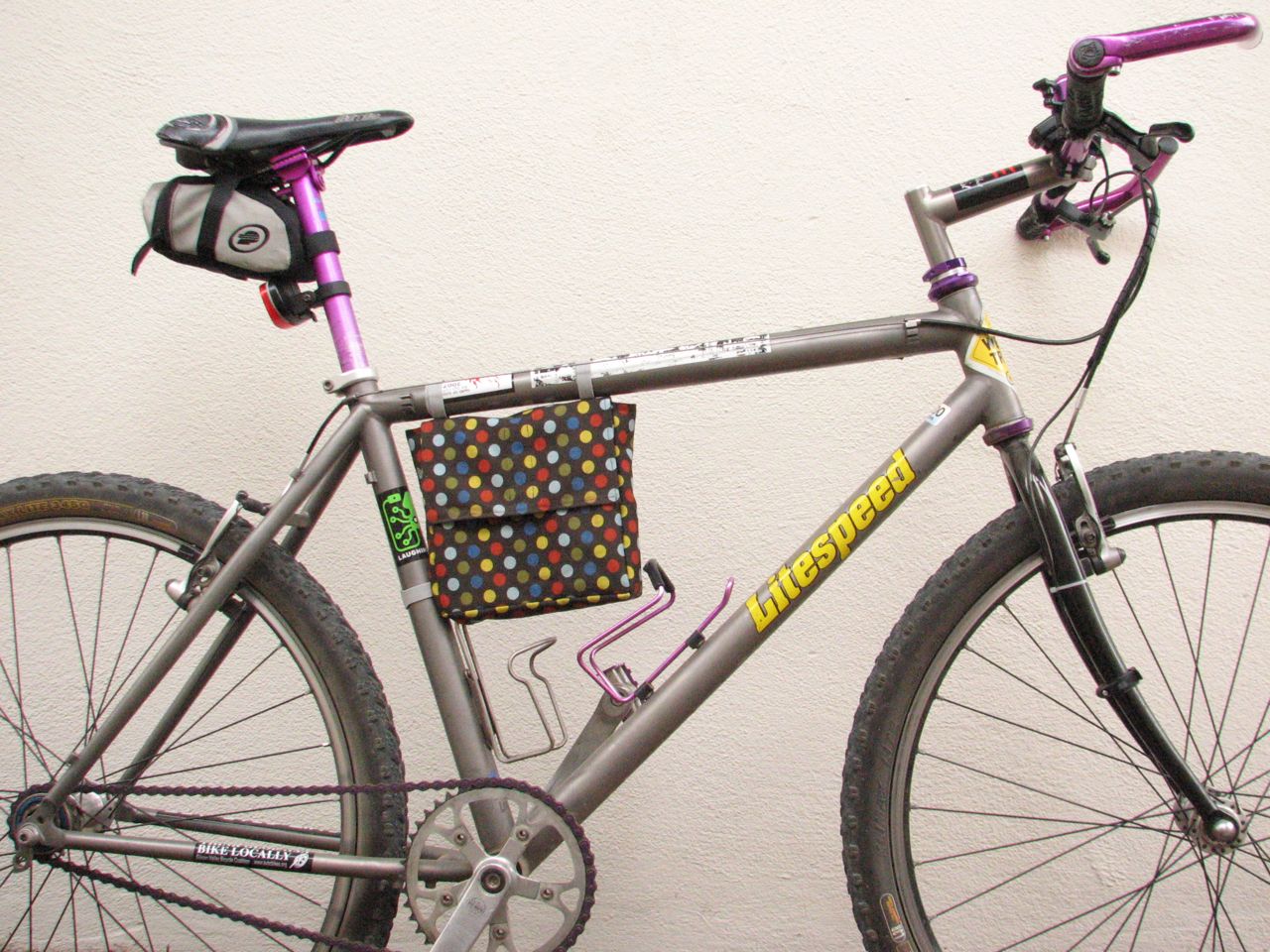
Our bicycle frame lunch bag project is showing up in print in a couple of places. The August/September issue of Bust magazine is running the project along a couple of other bicycle-themed articles. It’s nice to see bicycle fashion spreads that don’t include spandex! I like the Schwinn they used for the article photo, too.

bike bag in print1

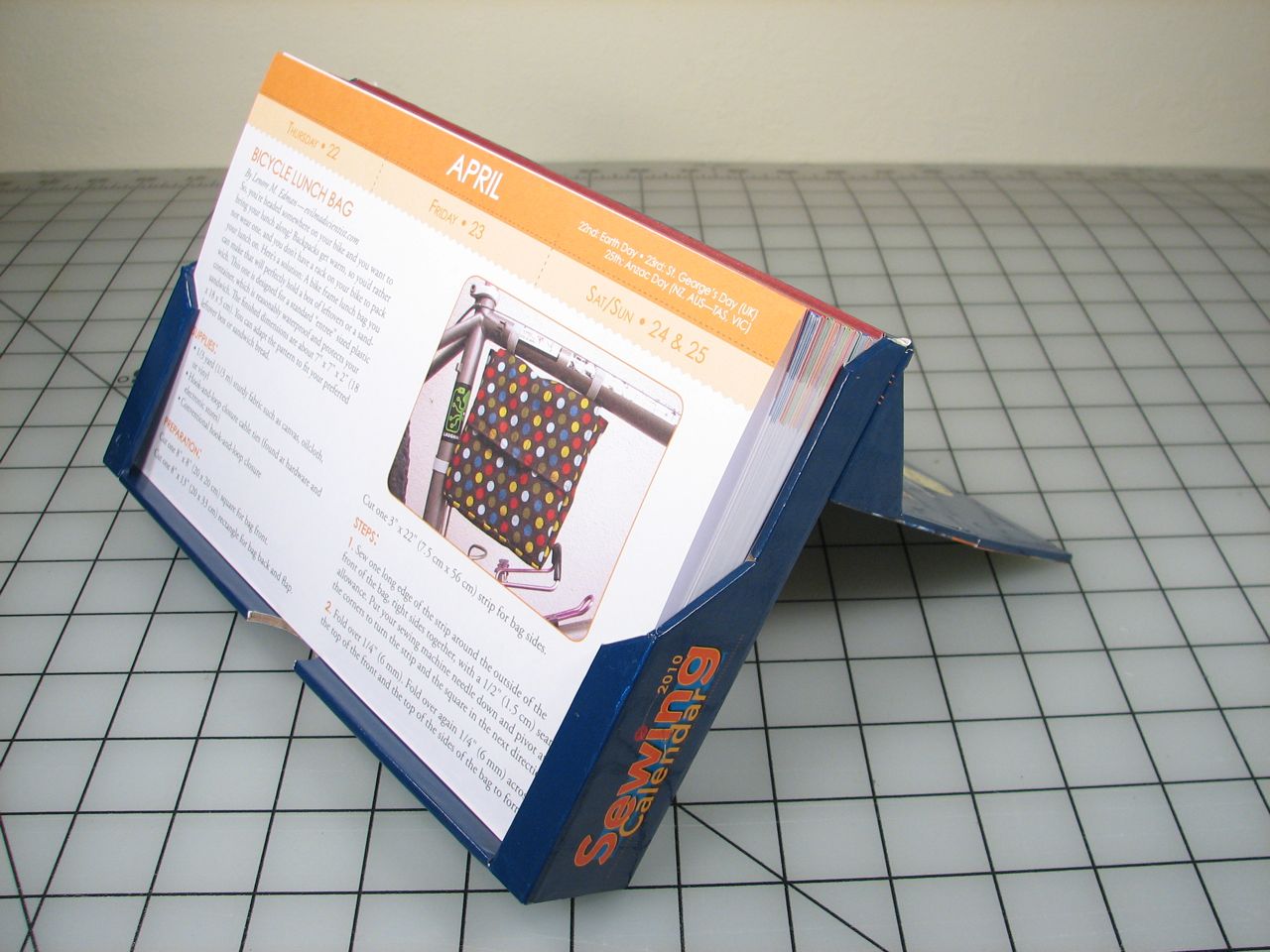
The bag is also included in a calendar for next year, Sewing: 2010 Day-to-Day Calendar, which just arrived in the mail today. There are two projects each week, and each project is printed on an 8 1/2″ x 11″ sheet of paper folded in half. The loose leaf sheets are stored in a magnetic closure box which converts to an easel, which also locks in place with a magnet. Magnetic boxes are awesome! The box would be great to reuse as a recipe box/stand, especially since you don’t have to use funny sized cards for it. The calendar format is a little odd, showing three or four days at a time, but that’s probably fine for a decorative calendar. The bike bag appropriately shows up on Earth day. I appreciated that the calendar included a project index, and that every project author was listed with their website so you can look up their other projects, too.

Bicycle lunch bag

The original project post is here.

Related projects: