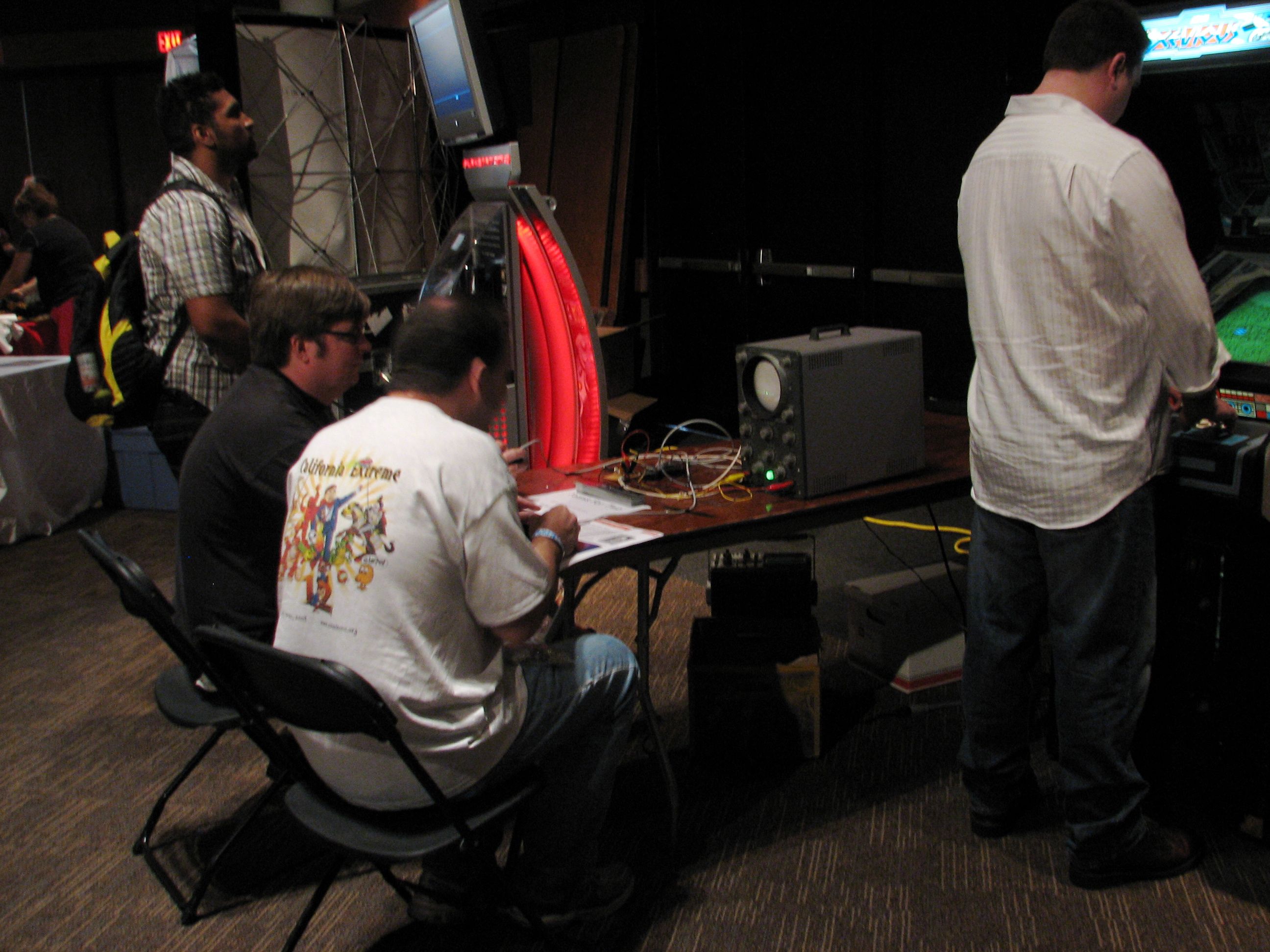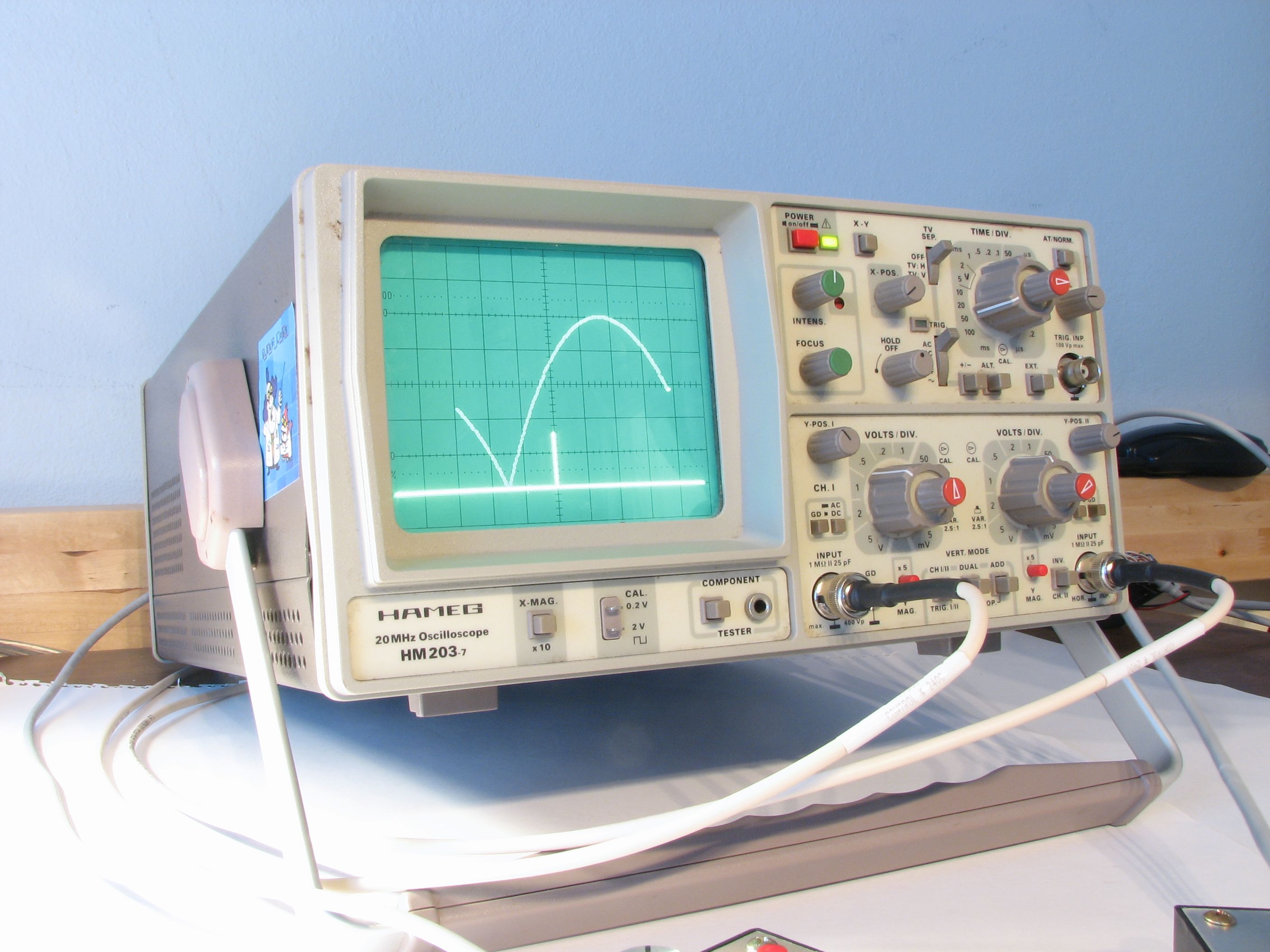
Last weekend we went to California Extreme and took along Tennis for Two, which got to sit right next to a PlayStation 3. Video games have come a long way in fifty years, but as one Tennis for Two player commented, good game play doesn’t have to have fancy graphics.
Category Archives: EMSL Projects
Resurrecting Tennis for Two, a video game from 1958
In the year 1958– fourteen years before the 1972 debut of Pong— a physicist named William Higinbotham demonstrated a remarkable video game called Tennis for Two.
Higinbotham, head of the Instrumentation Division at Brookhaven National Laboratory, designed his game as an exhibit to improve what was an otherwise lackluster visitors’ day at the lab. Tennis for Two presented a tennis court– shown from the side– on an oscilloscope screen, where handheld controllers allowed the two players to toss the ball to each other. Each controller had two controls: a button and a knob. With the button, you could hit the ball at any time of your choosing when it was on your side of the net, and with the knob you could choose the angle at which the ball was hit.
The game was based on the best contemporary technology: analog electronic computers built out of op-amps, relays, and the occasional transistor. It took Higinbotham and his technicians several weeks to design and build the game. Of course, some things have changed over the last 50 years. Using convenient modern electronics, we have designed a functional and playable replica of the original that can be put together by a hobbyist in a couple of evenings. You can watch the video of our recreation on YouTube or embedded here:
Continue reading Resurrecting Tennis for Two, a video game from 1958
The Peggy Strikes Back
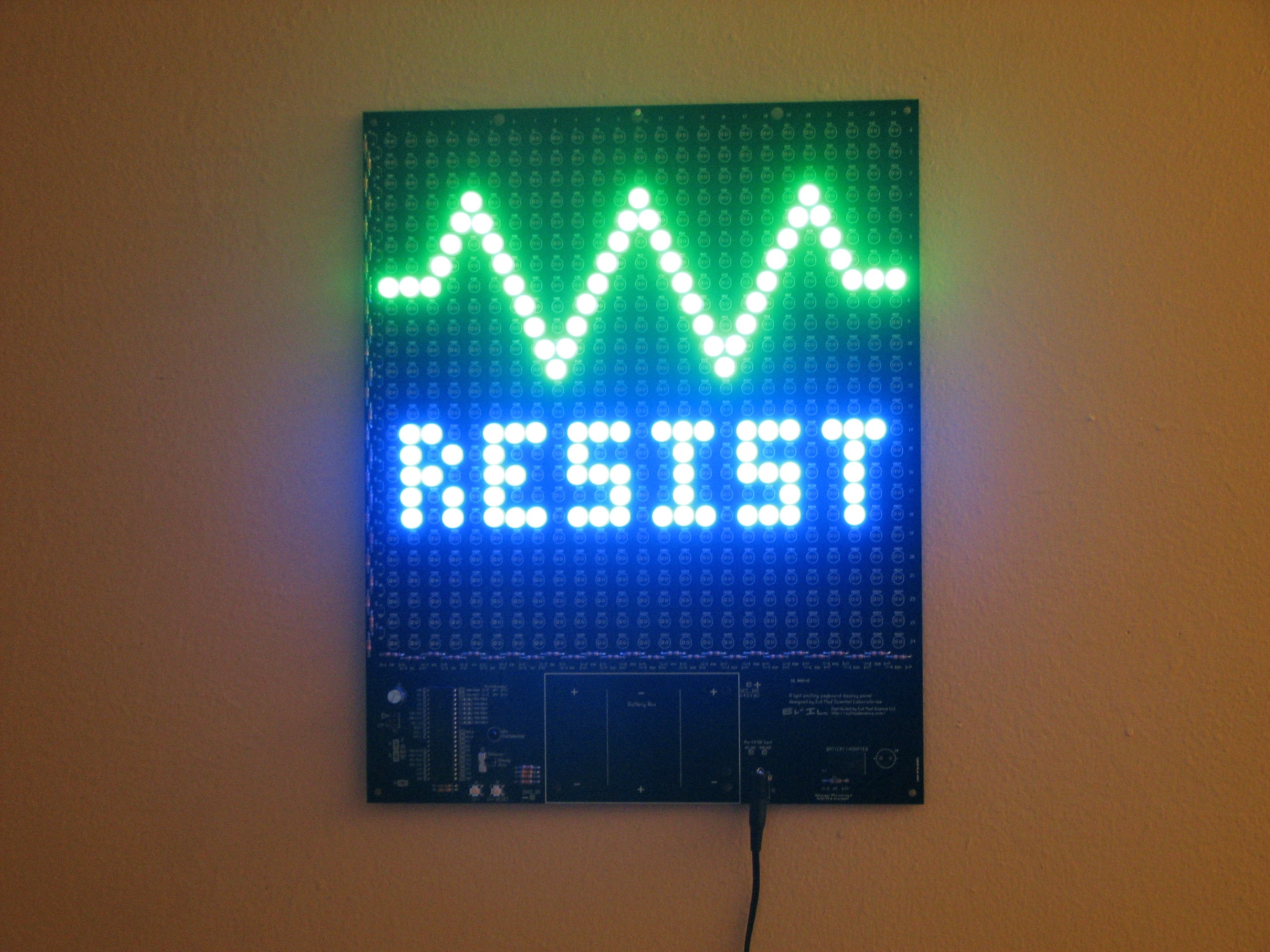
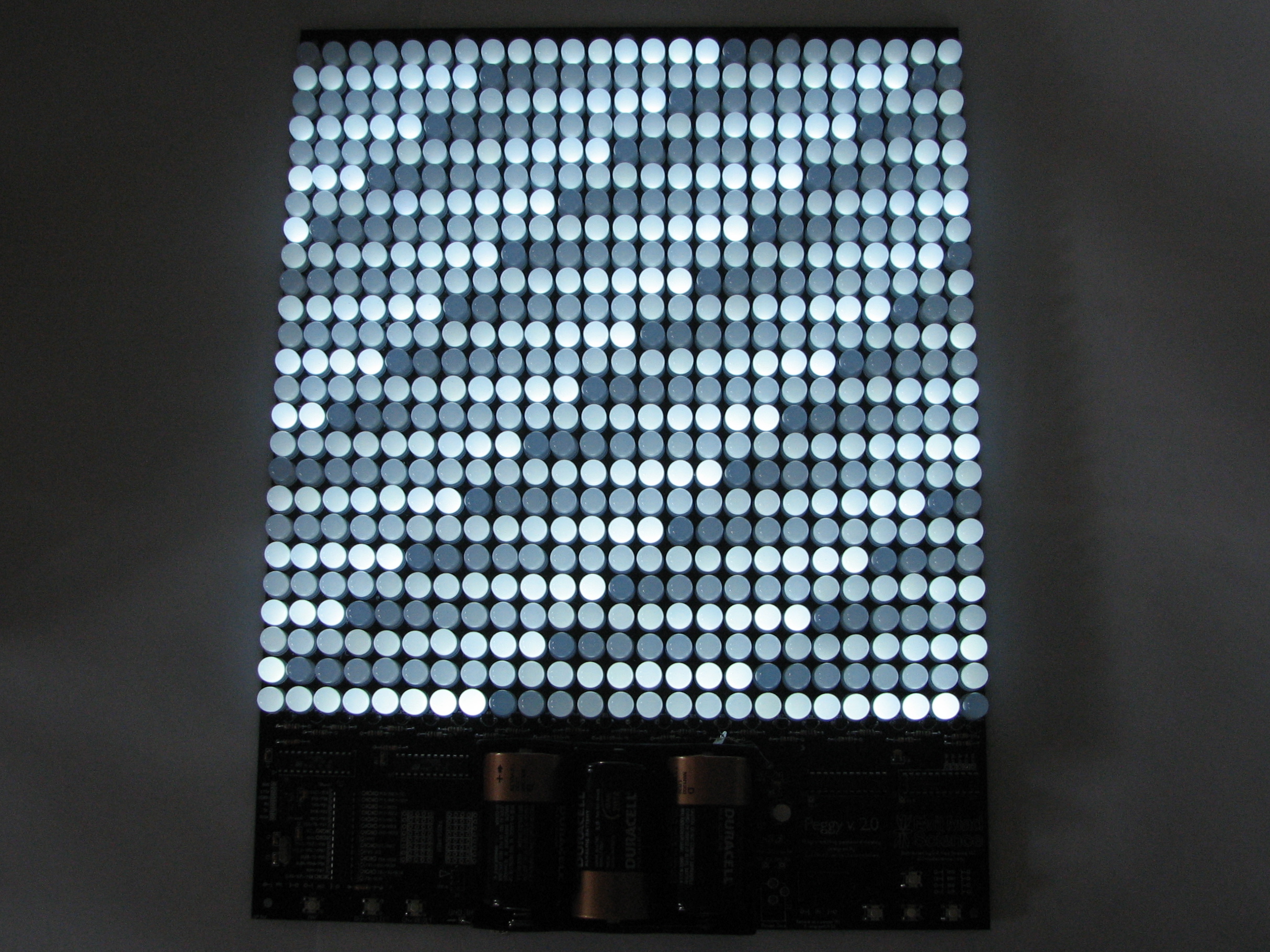
Today we have an update on our Peggy 2.0 Light Emitting Pegboard project, with (1) a new and improved version of the Peggy2 Arduino library, (2) links to several awesome examples of Peggy hacks– including a full-motion video hack, and (3) a new GUI application example that lets you display an image on the Peggy without writing a single line of code.
Continue reading The Peggy Strikes Back
The Classic American Workbench
DIY d12 Handbag (of Holding)
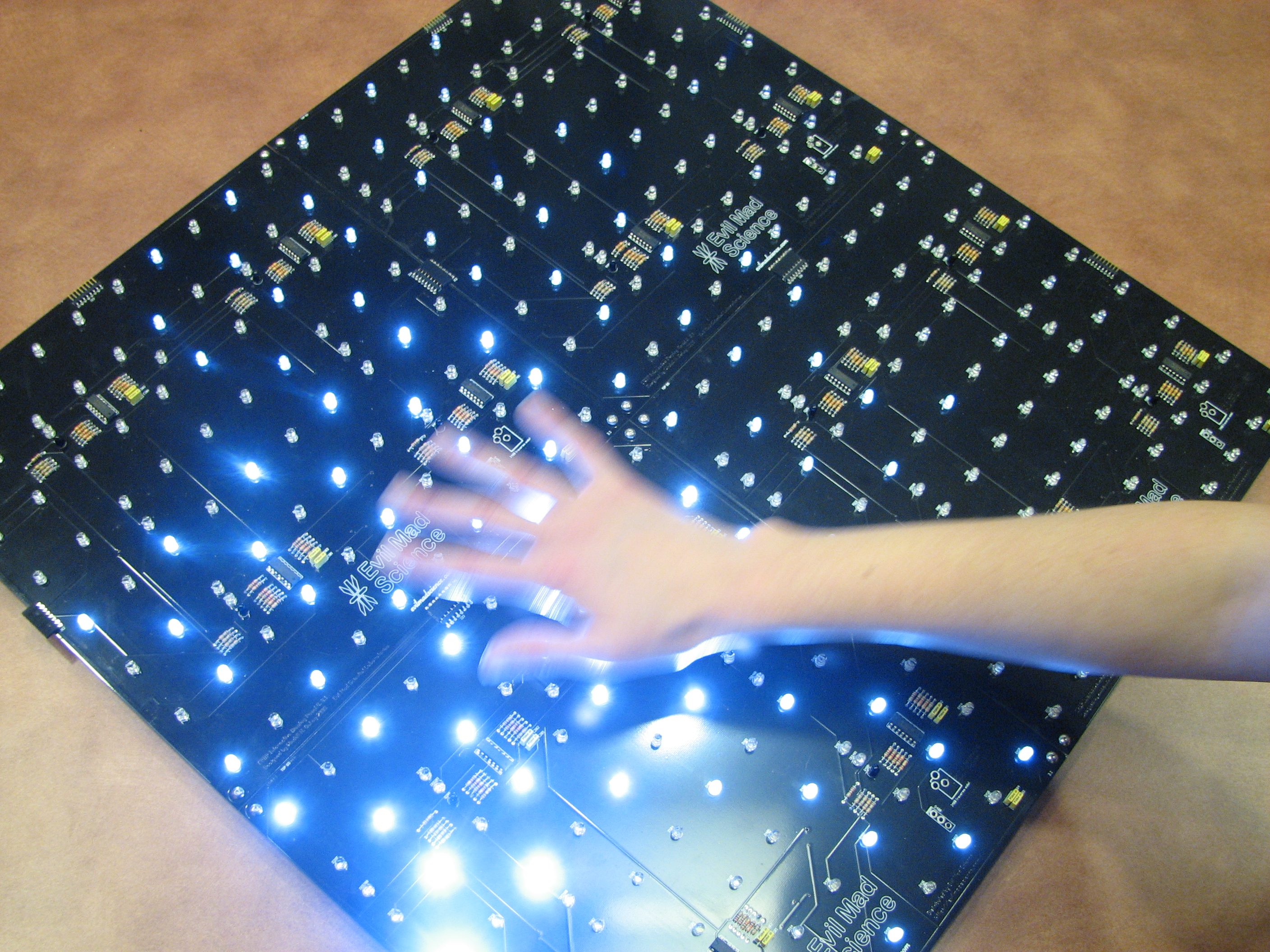
Interactive LED Dining Table Circuit
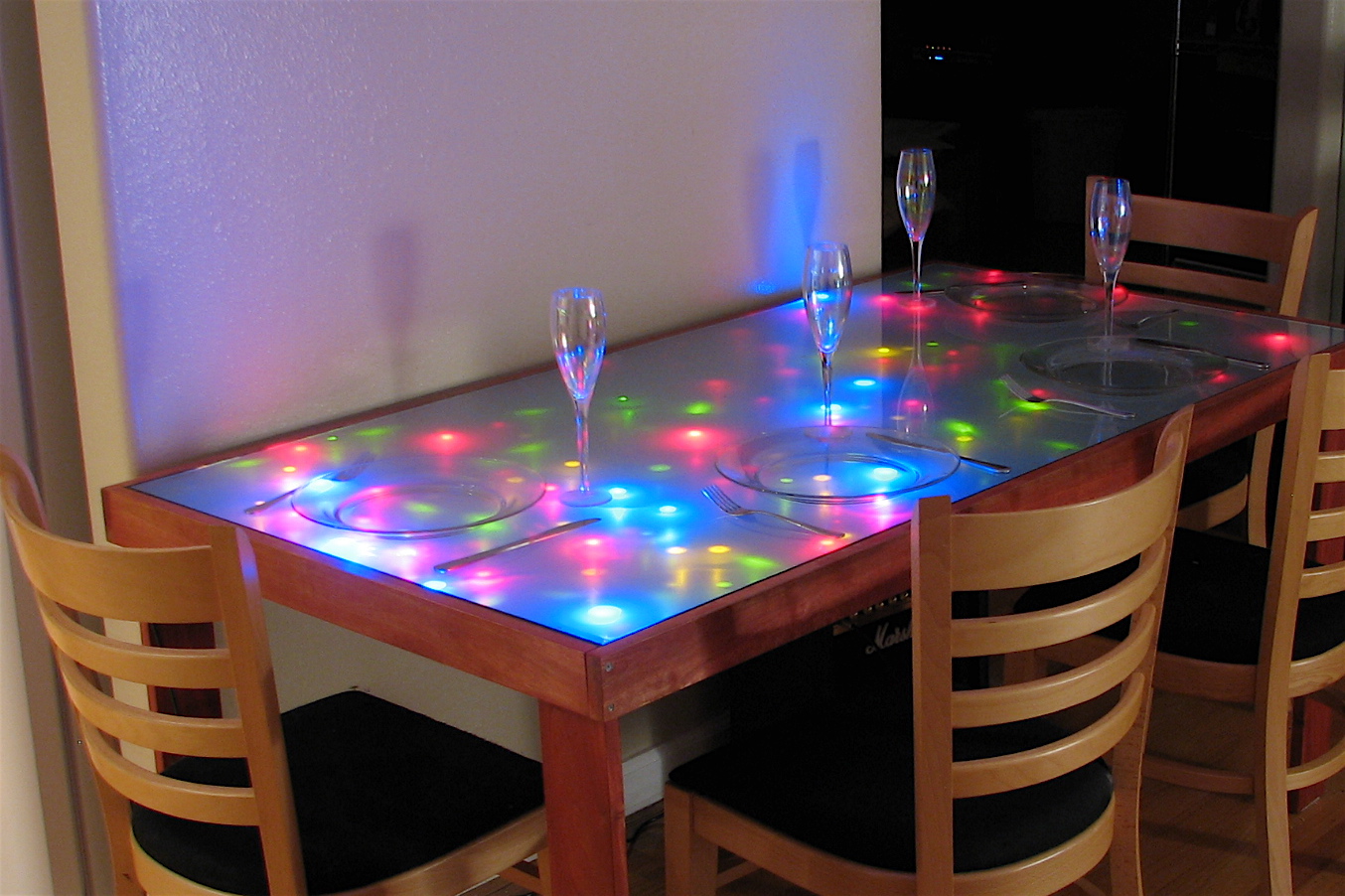
Today we’re releasing the circuit diagram for the Interactive LED Dining Table (aka our kitchen table).
Continue reading Interactive LED Dining Table Circuit
20 millicenturies of Evil Mad Scientist Laboratories
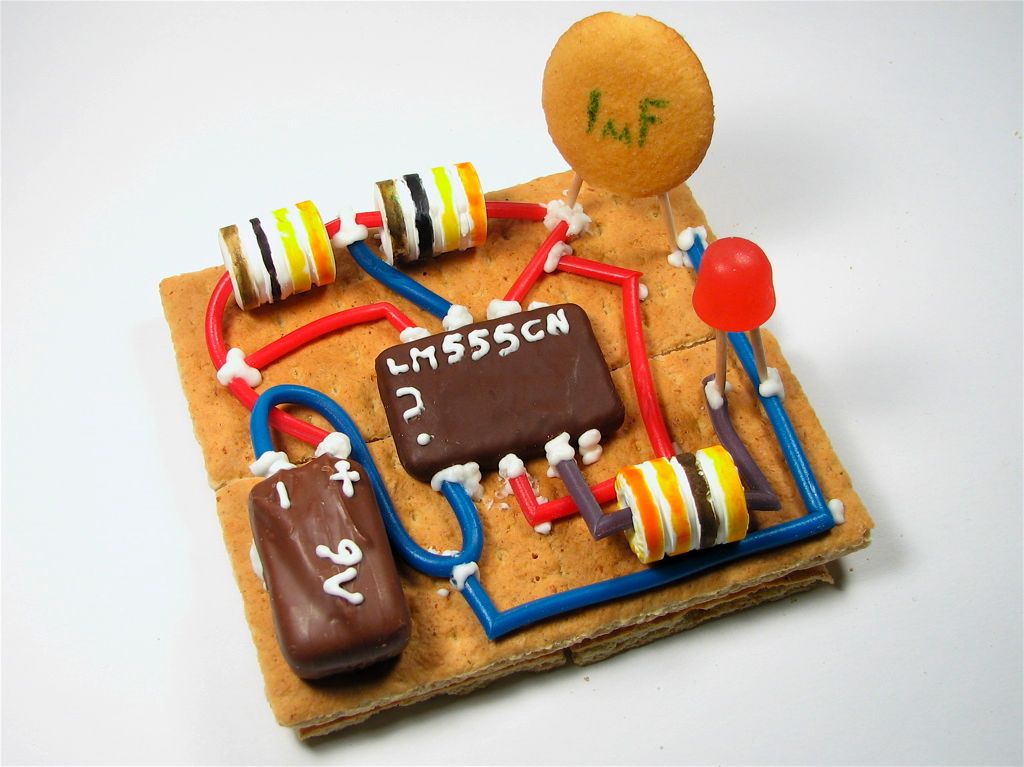
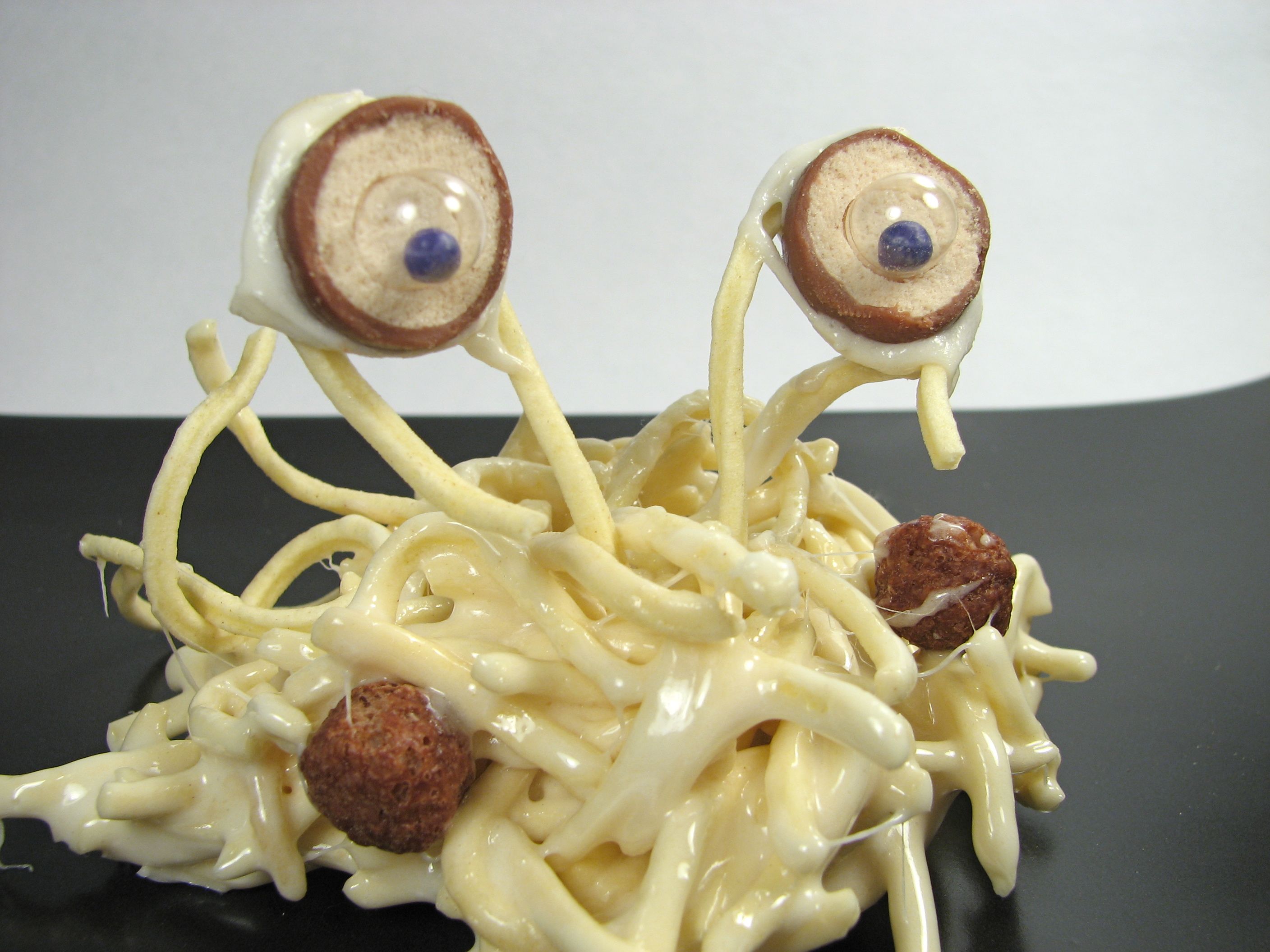
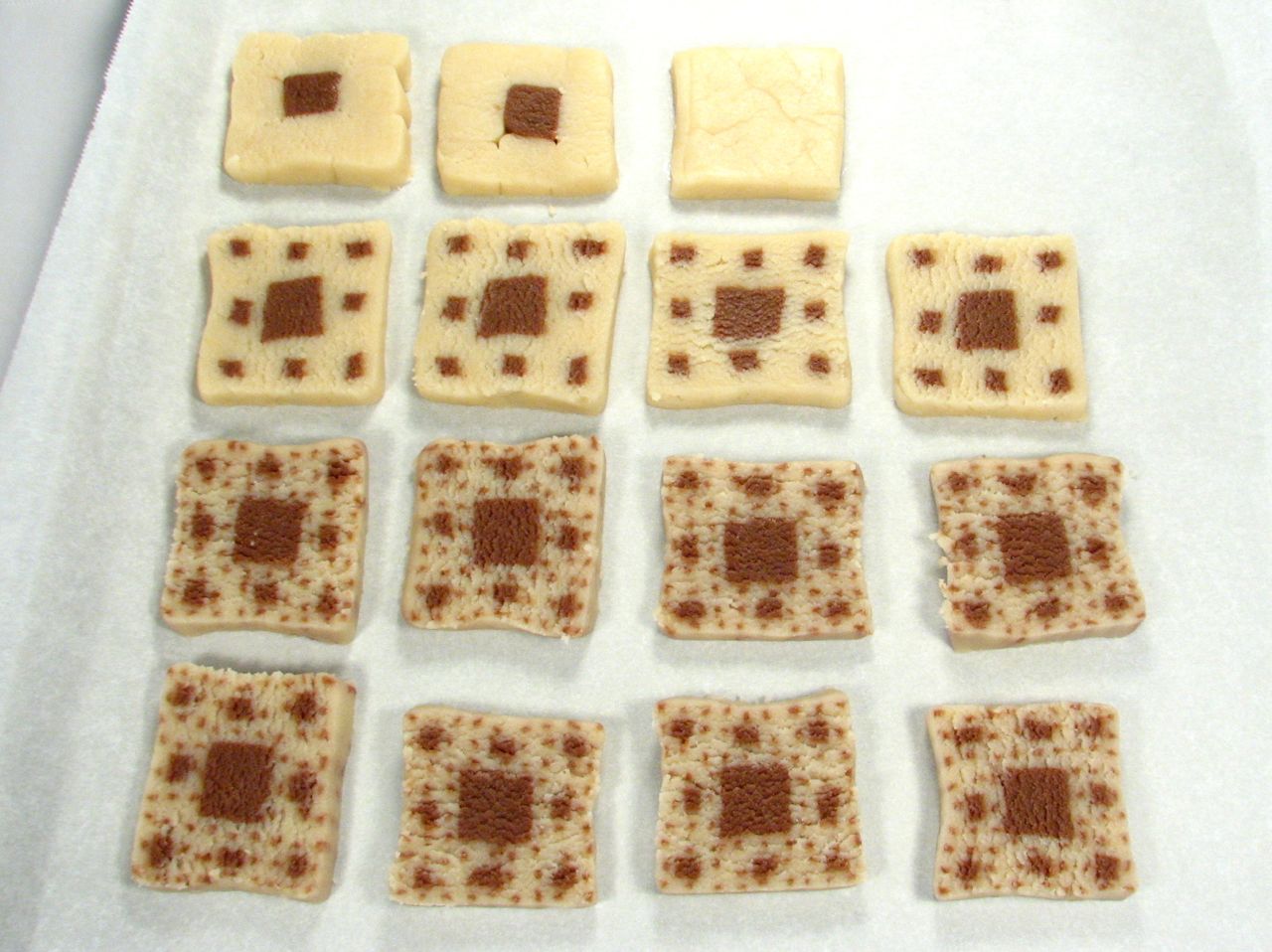
Happy birthday to us! Evil Mad Scientist Laboratories is now two years of age. Collected below is a “Best of Evil Mad Scientist” for the past year: Some of our favorite projects that we’ve published over the last twelve months. Here’s to the next year!
Quick projects:

Rubberbands made from old bicycle innertubes.

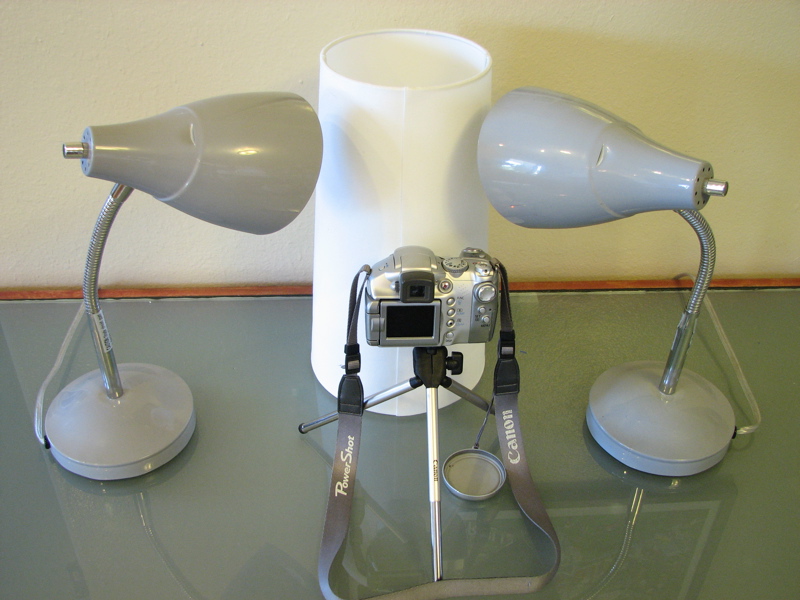
Light tent made from a lampshade.

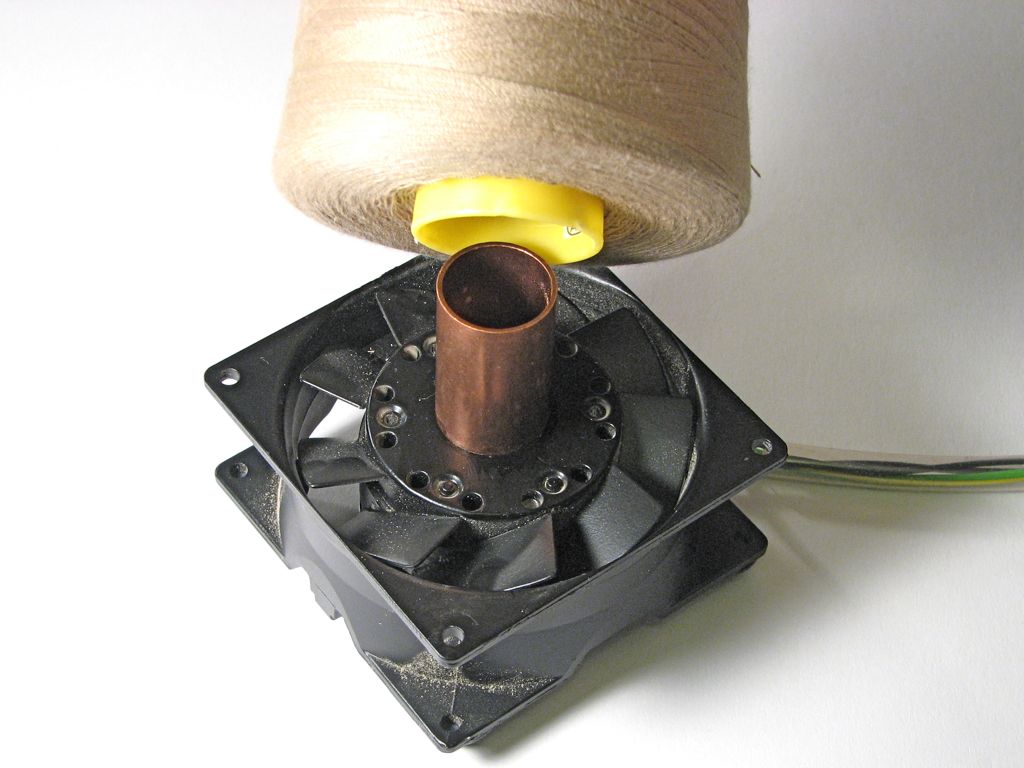
Spool spinner from an old fan.

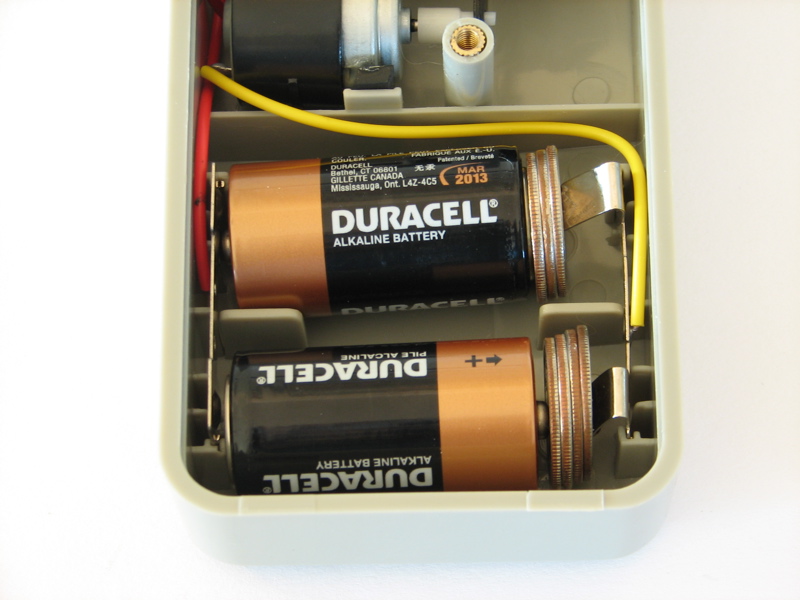
The $1.00 C to D adapter
Electronics projects

How to make a Joule Thief from Make: Weekend Projects.

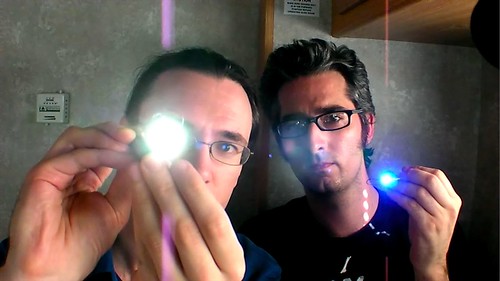
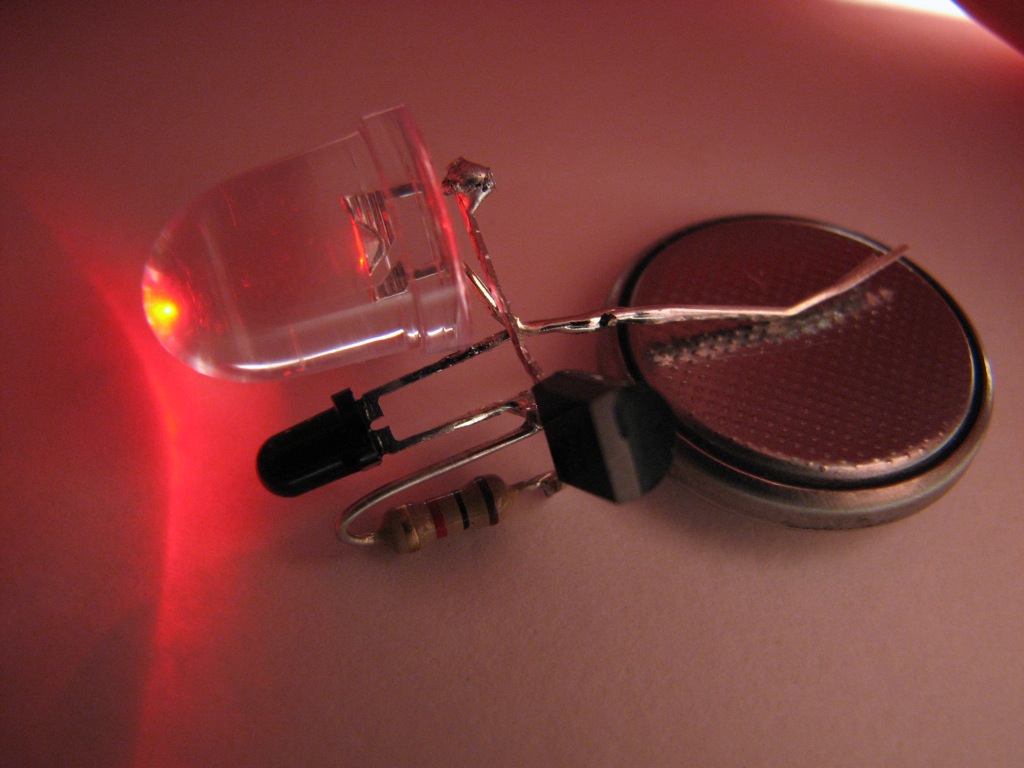
How to make a dark-detecting LED night light.

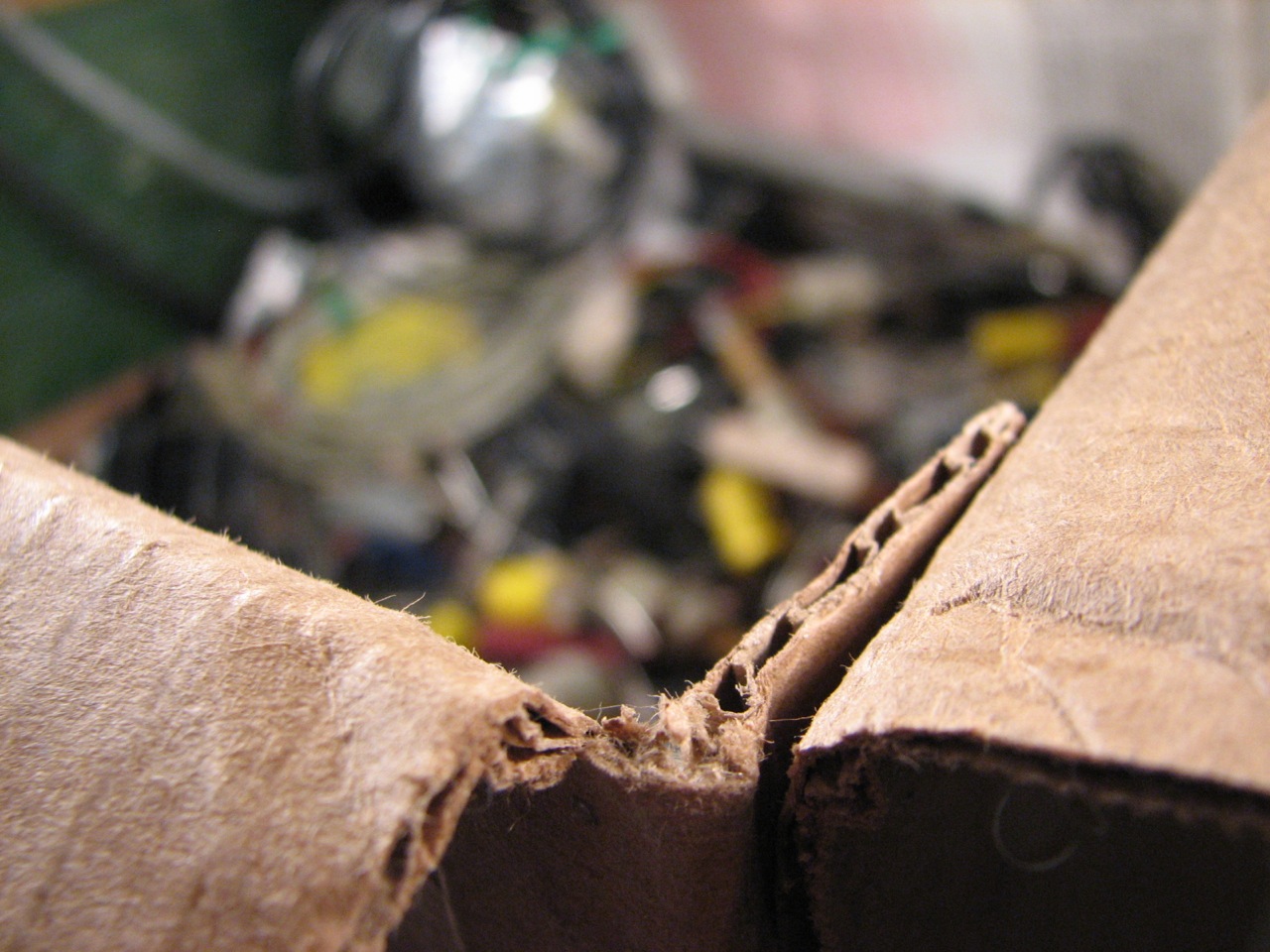
The Great Internet Migratory Box of Electronic Junk

How to make a Sawed-off USB Key
AVR microcontroller projects

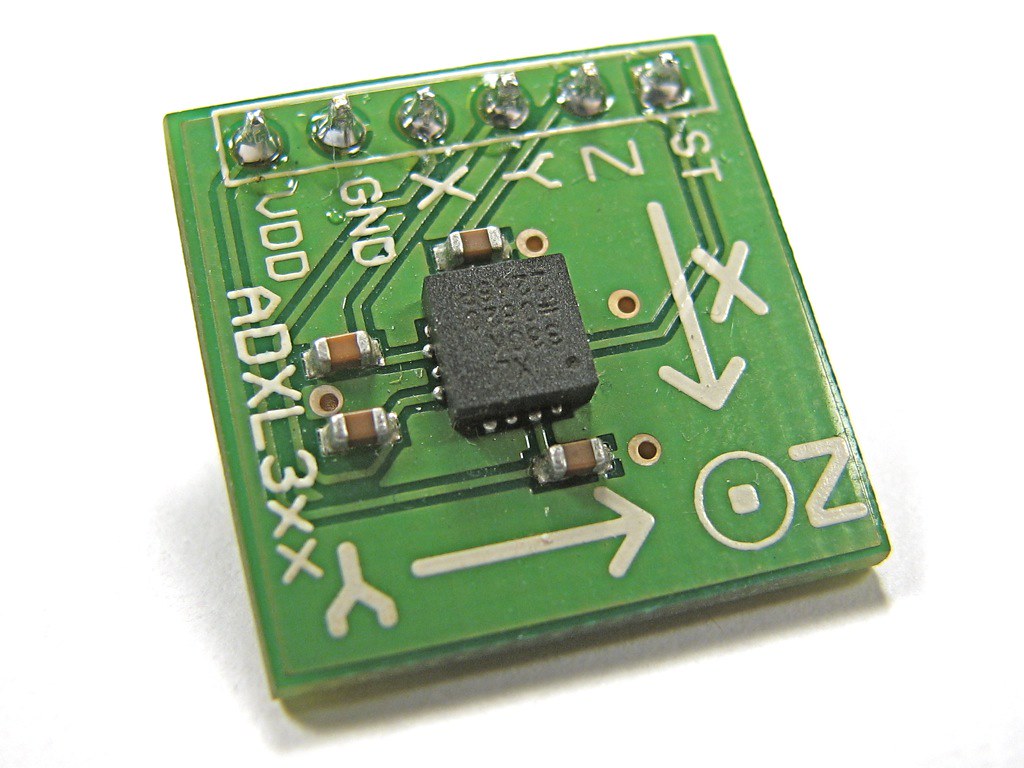
Using an ADXL330 accelerometer with an AVR microcontroller
Kit Projects
Crafty Projects
Food Hacking
CandyFab

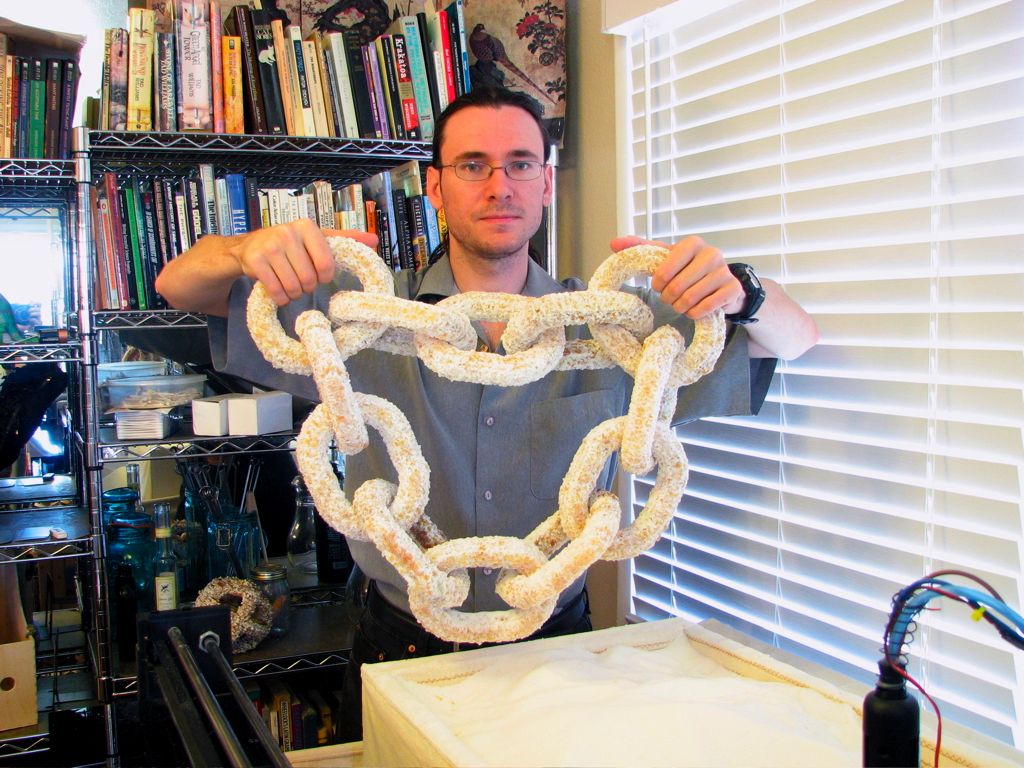
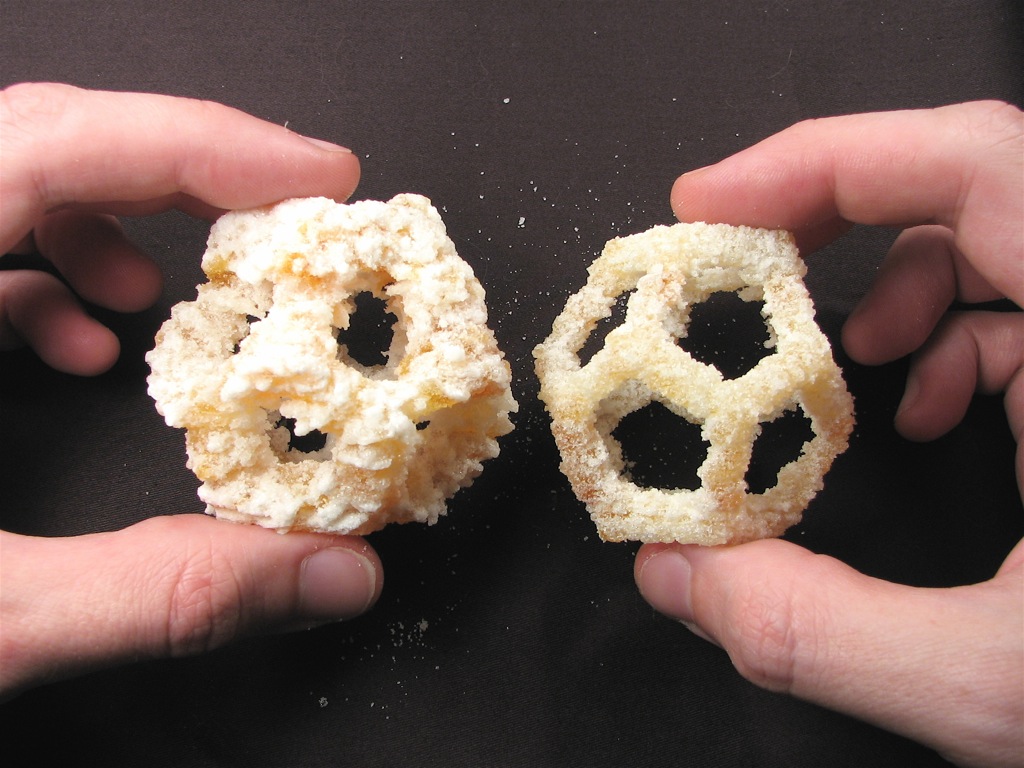
Printing complex shapes: Sugar Chain

Candyfab improvements: higher resolution and edible output
Papercraft:

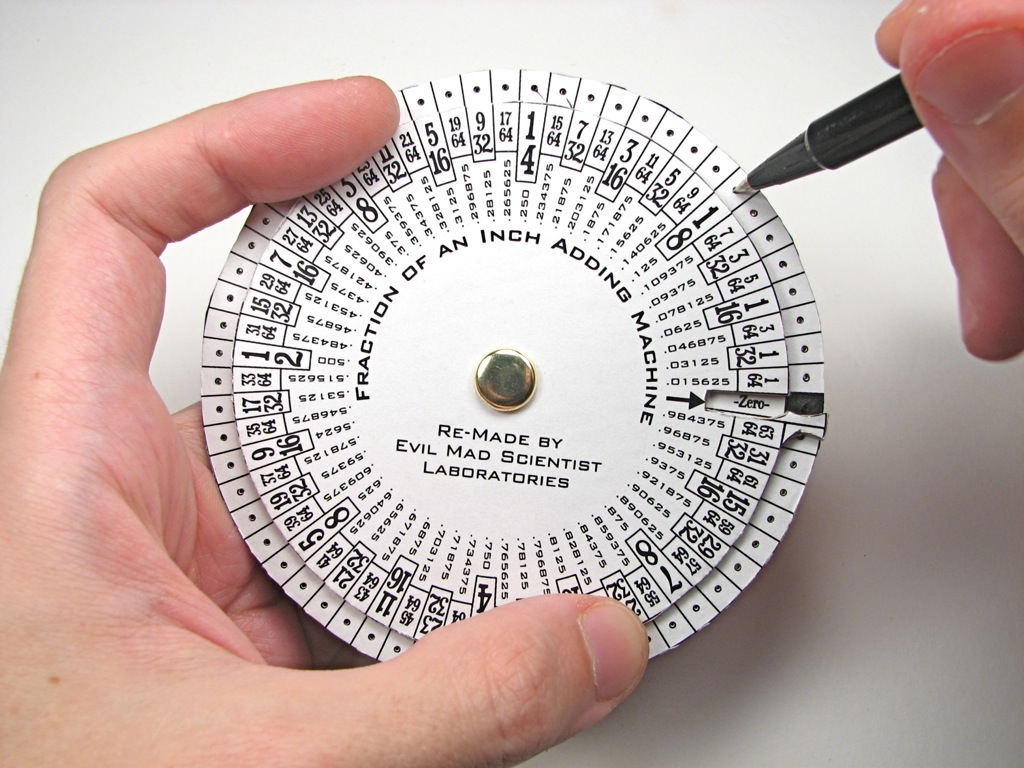
Rotary Fraction Adding Machine
Observations & silly projects:
Lego Projects:

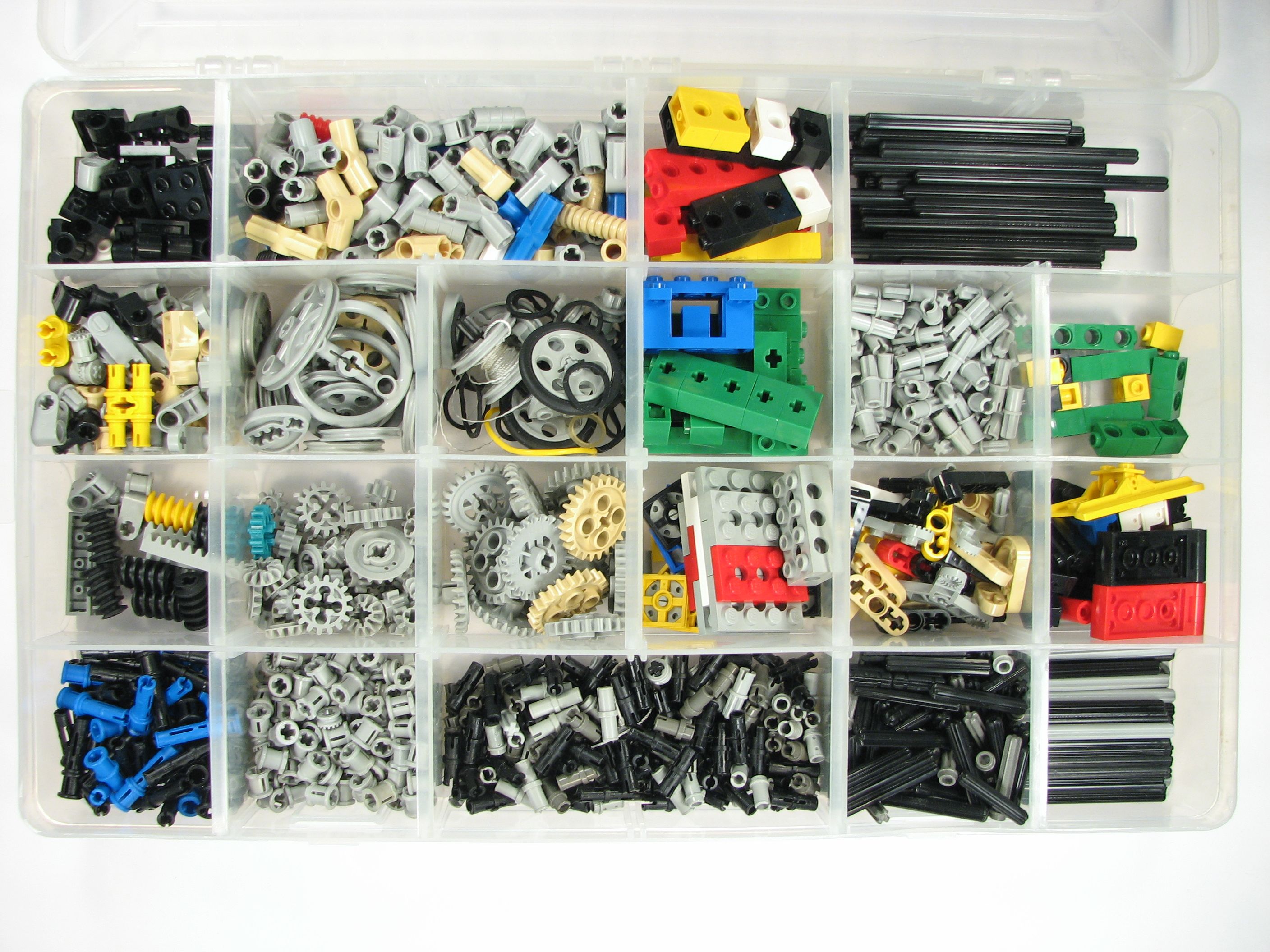
Forbidden Lego review & build
Reviews:

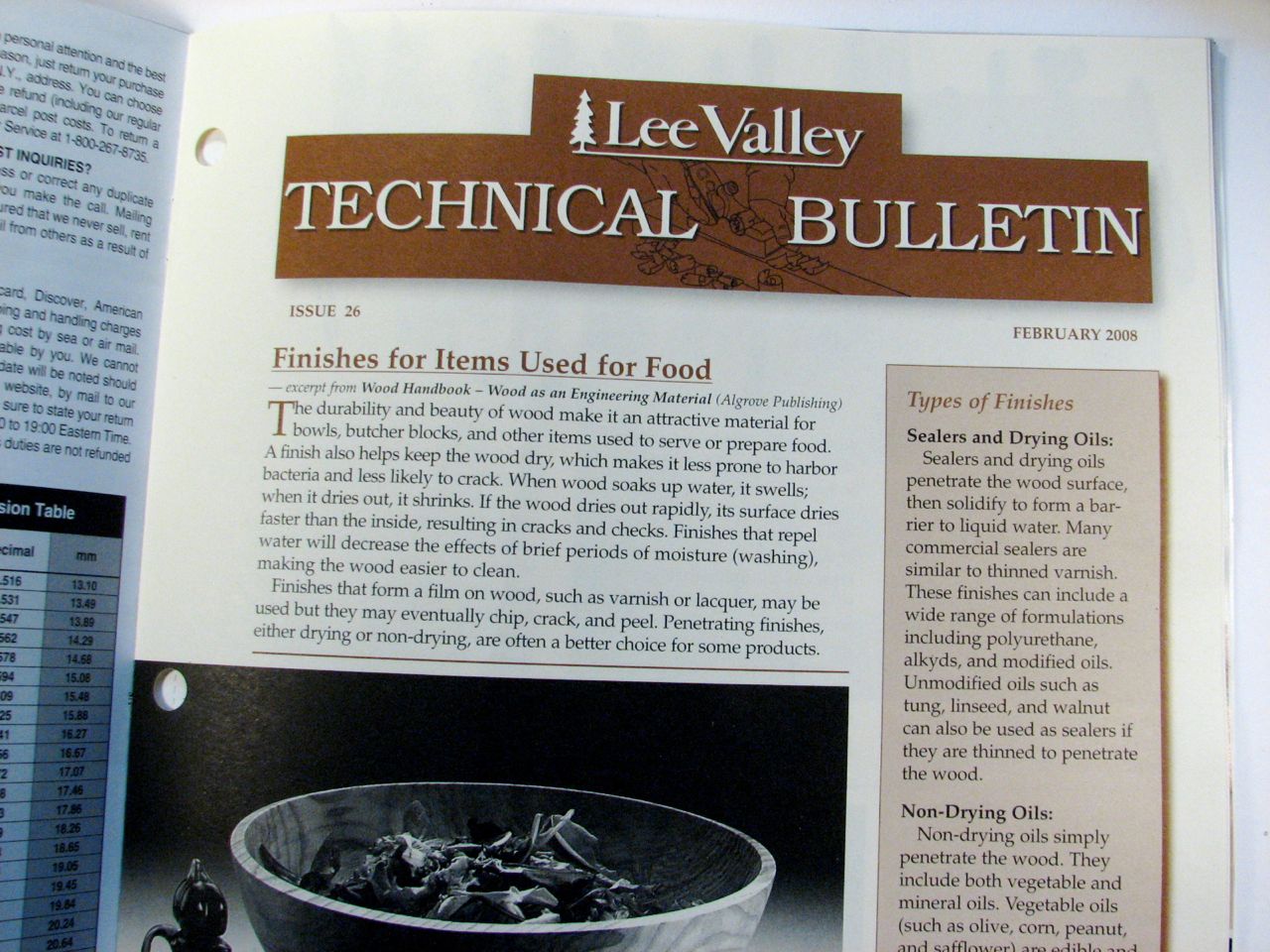
Lee Valley & Veritas Catalog Review
Teardowns:
Easy high-power LED blinking circuit
Often times when people get started in electronics, they want to blink LEDs. This is this a great idea, and we really like blinking LEDs, so we’re happy to help. In the last year or two there’s also a growing chorus of people that want to drive high powered LEDs. That’s not always as easy, but it can be done.
Now by the time that you start talking about blinking the high power LEDs– you shouldn’t be surprised if people start whipping out the heavy artillery: 555 timer chips, transistors, boost converters, microcontrollers, solid state relays, and/or dedicated LED driver chips. While each of those does have its place, sometimes it’s nice to have a simpler and much less expensive alternative.
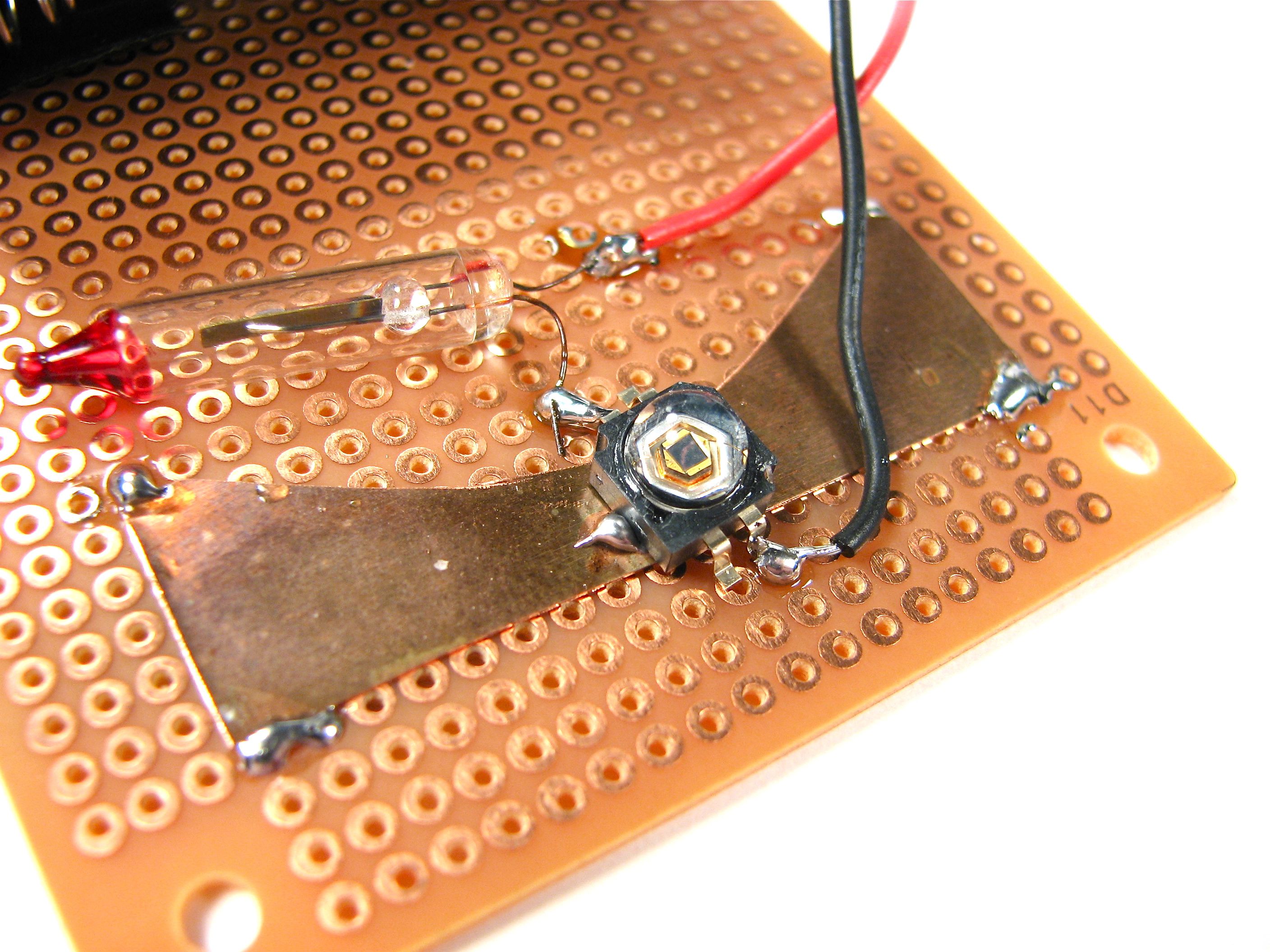
Here we describe what is possibly the simplest and cheapest circuit for driving and blinking high-power LEDs. The secret ingredient? Our good old friend the blinking incandescent light bulb.
Hop Trellis
Even if you’re not a home brewer dealing with the hops shortage, hop plants are great to have in your garden. The trick is that they like to grow vertically up twine, so you have to rig a trellis. You can make one using scraps of soaker hose and antenna wire while taking advantage of tree trunks already in your garden.
Epic take-apart: HP Color LaserJet 2600n
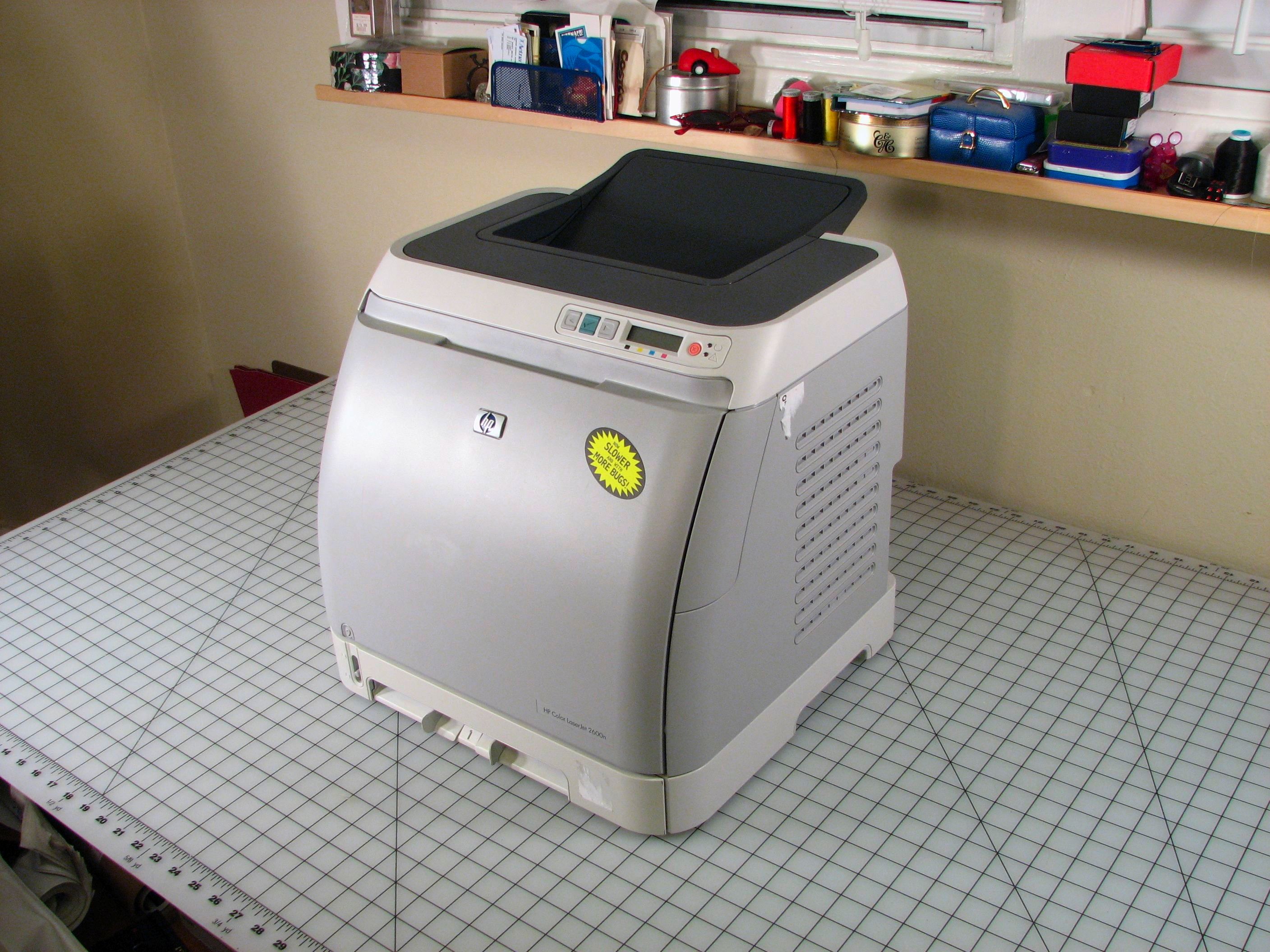
On the bench today: an HP Color LaserJet 2600n, a modern compact color laser printer.
This printer is a curious beast. To an end user, how it works is pretty straightforward– you plug in an ethernet or USB cable and install the driver. But it’s really a technological marvel– a remarkably compact and precise “black box” that wields lasers, high voltage, motors, heaters, sensors, gears, and esoteric electromagnetic properties of specially formulated powders to produce photorealistic images on a sheet of paper.
From an economic perspective, it’s even more of a mystery. Brand new printers like this one are often on sale for about $300, complete with a set of full toner cartridges. You can also buy a set of replacement toner cartridges for it, for about $330. Thus from a crude economic perspective (that is, ignoring the extreme environmental irresponsibility of the remainder of this thought) it could possibly make more sense to just go ahead and buy a new printer when you run out of ink. Certainly, loss-leader printers have been the standard for some time in low end inkjets– is that what’s going on here, only at a higher scale? Maybe, but it’s not an open-and-shut case: the initial set of toner cartridges will last for years for infrequent home users, so it’s hard to imagine that HP would make money on every sale if they had to rely on many cartridges to be sold for every printer.
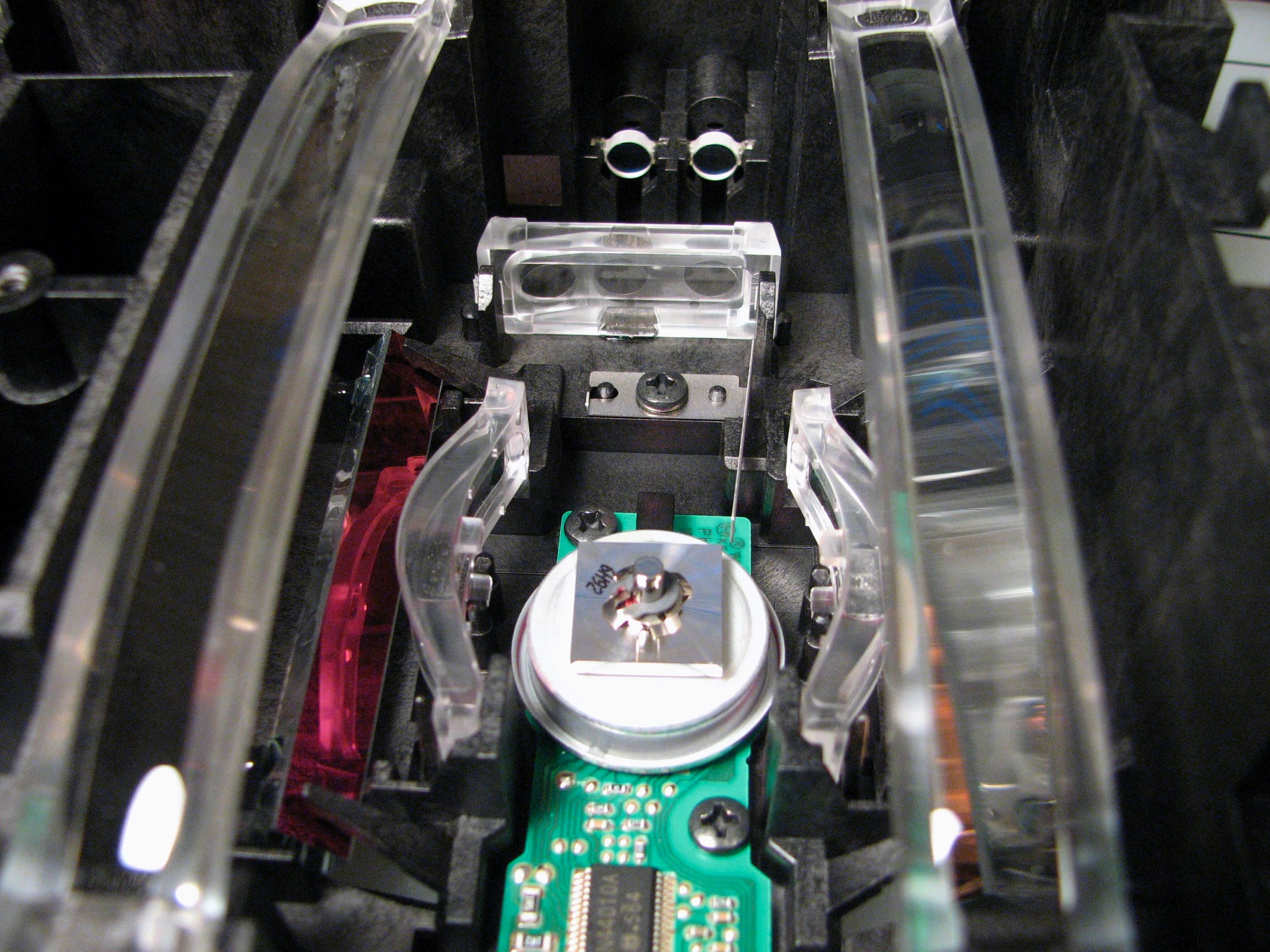
The printer on the bench today has served us well, but its time has finally come. In taking it apart, we’ll take a look at the design and see what interesting components are inside that might be reusable for other projects. (Hint: lots.) We’ll also see some of the very interesting guts in much more detail than your average teardown. We set out to make a photo essay of this, but at well over 200 photos (exchanged at the standard rate) this actually turns out to be less of an essay than an epic novel.
Continue reading Epic take-apart: HP Color LaserJet 2600n